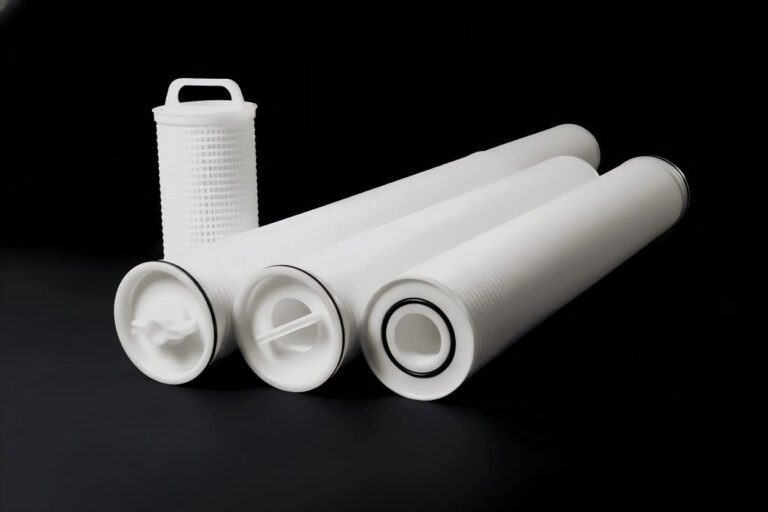
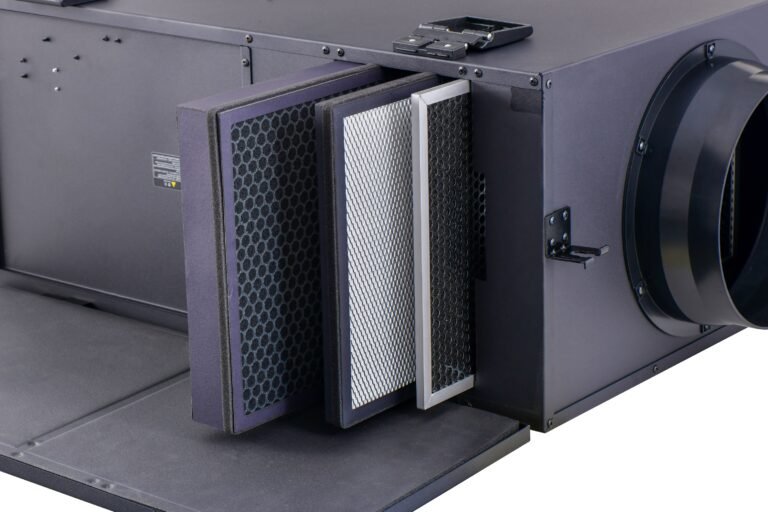
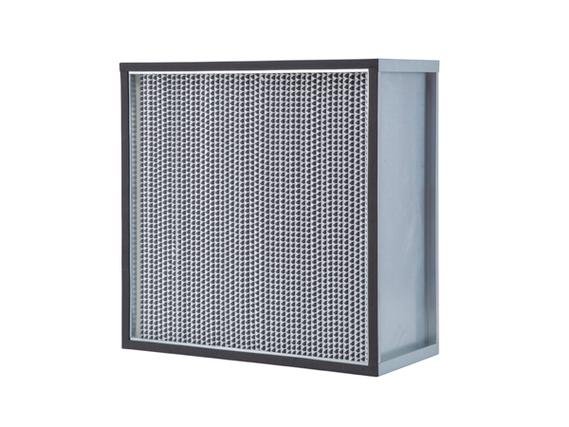
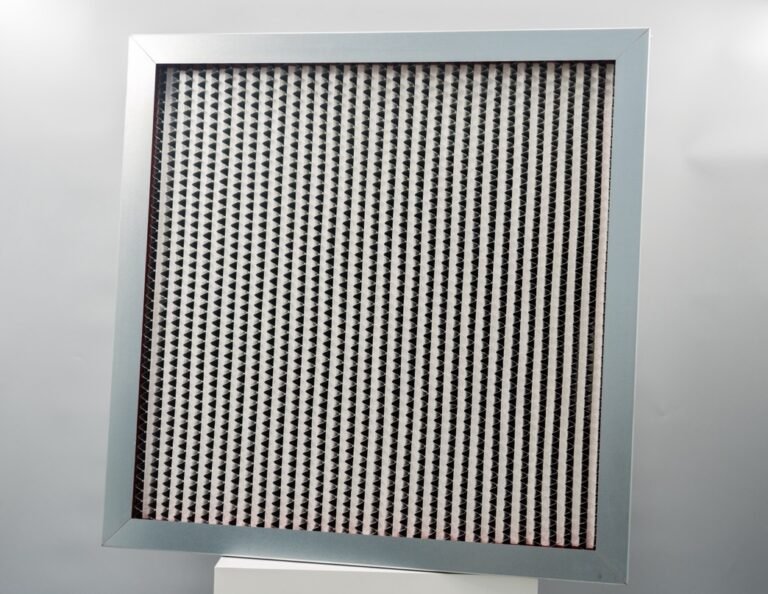
High-efficiency particulate air (HEPA) filters are essential components in modern air purification systems, designed to capture particles as small as 0.3 microns with exceptional efficiency. Whether used in vacuum cleaners, air purifiers, or HVAC systems, HEPA filters play a crucial role in maintaining clean air environments. Explore this comprehensive guide to understand their functionality, benefits, maintenance, and more.
What is Hepa Filter?
HEPA filters are advanced air filtration devices that capture microscopic particles, including pollen, dust, and smoke, with a 99.97% efficiency rate. Designed to improve air quality, they are commonly found in residential and commercial air purifiers, vacuum cleaners, and HVAC systems.
Understanding HEPA Filters
HEPA filters consist of a dense mat of randomly arranged fibers, typically made from fiberglass. The filter traps contaminants through mechanisms like interception, impaction, and diffusion, effectively removing particles as small as 0.3 microns.
ClearFilter Pro Tip: We recommend checking your HEPA filters every six months for wear and tear to ensure maximum efficiency in air purification.
How Does Hepa Filter Work?
HEPA filters operate by trapping airborne particles in a fine mesh as air flows through, effectively capturing contaminants like dust, pollen, mold, and bacteria. Their unique construction allows them to target particles without significantly hindering airflow.
Mechanisms of Action
Interception: Particles flowing with the air stream get caught in the fibers.
Impaction: Larger particles collide with filter fibers and adhere.
Diffusion: Smaller particles move erratically, increasing chances of capture by fibers.
ClearFilter Pro Tip: Regular airflow checks help verify filter performance, particularly in dusty environments where efficiency can degrade over time.
What are the benefits of Hepa Filter?
HEPA filters provide significant health benefits by removing allergens, pollutants, and pathogens from the air. This leads to improved respiratory health, reduced allergy symptoms, and enhanced overall air quality, making them ideal for homes and offices.
Health and Environmental Advantages
HEPA filters are critical in environments where air purity is paramount, such as hospitals and laboratories. They significantly reduce airborne diseases and allergens, contributing to a healthier living space.
ClearFilter Pro Tip: We advise using HEPA filters in conjunction with regular cleaning routines to maximize indoor air quality and reduce health risks.
How to maintain a Hepa Filter?
Maintaining a HEPA filter involves regular inspection, cleaning, and timely replacement. Proper maintenance ensures the filter’s longevity and optimal performance in air purification tasks, preventing clogging and airflow reduction.
HEPA Filter Maintenance Steps
Inspect: Regularly check for visible dirt and damage.
Clean: Use a vacuum or mild detergent solution for washable filters.
Replace: Follow manufacturer guidelines for replacement intervals.
ClearFilter Pro Tip: We found that replacing HEPA filters every 12 months is optimal for consistent air quality improvement.
What is the price of Hepa Filter?
The cost of HEPA filters varies depending on size, brand, and application, typically ranging from $20 to $150. Factors influencing price include filter quality, efficiency rating, and compatibility with various devices.
Pricing Factors Explained
HEPA filters are priced based on their filtration capacity, material quality, and brand reputation. Premium models offer enhanced durability and efficiency, often justified by a higher upfront cost for long-term savings.
ClearFilter Pro Tip: Choosing filters with higher MERV ratings can offer better value by providing superior air filtration at competitive prices.
Key Features & Comparison
Based on our internal data and market analysis, here is the breakdown:
Feature
Standard HEPA
Premium HEPA
Industrial HEPA
Efficiency Rate
99.97%
99.99%
99.999%
Particle Size
0.3 microns
0.3 microns
0.1 microns
Lifespan
6-12 months
12-18 months
12-24 months
Cost Range
$20-$50
$60-$100
$100-$150
HEPA Filter Selection Criteria
Choosing the right HEPA filter involves considering factors like efficiency, compatibility, and cost. Evaluate your specific needs to select a filter that offers the best fit for your environment.
ClearFilter Pro Tip: We recommend premium filters for areas with high dust or allergen levels, ensuring superior performance.
Cost & Buying Factors
HEPA filter cost is influenced by brand, efficiency, and application type. Consider factors such as filter lifespan, replacement frequency, and specific air quality needs when making purchasing decisions.
Buying Guide for HEPA Filters
When purchasing HEPA filters, assess the balance between upfront cost and long-term savings. High-quality filters may have a higher initial price but offer extended lifespan and improved filtration, which can reduce replacement frequency and enhance air quality.
ClearFilter Pro Tip: Select filters from reputable brands with proven track records to ensure reliable performance and warranty support.
Conclusion
HEPA filters are a vital component in achieving clean air environments, providing significant health benefits through efficient particle removal. By understanding their functionality, maintenance needs, and cost factors, you can make informed decisions to improve air quality in your space. Consider integrating ClearFilter solutions for enhanced performance and reliability.
ClearFilter Pro Tip: To maximize air purification benefits, combine HEPA filters with complementary technologies like UV light or activated carbon filters.
You should pick a filter that fits your water and system. This helps you get the best results. To choose the right string wound filter cartridge, you must know what is in your water. You also need to know how your system works. Different filters do different jobs. String wound filters are good for bigger particles and lots of dirt. Other filters are better for tiny particles. Look at the micron rating, graded density, and service life. These things help you get clean water and protect your system.
Key Takeaways
Pick a filter that fits your water and system. This helps the filter work well.
Look at the micron rating. It shows what size particles the filter can catch. Make sure it matches what you need.
Find filters with graded density winding. This helps the filter hold more dirt. It also makes the filter last longer.
Take care of your filter often. Change it when needed. This keeps your water clean. It also protects your pipes.
Choose a trusted company that makes good filters. This helps your filter work the right way.
What Are the Basics of a String Wound Filter Cartridge?
A string wound filter cartridge is a type of water filter designed to remove sediment, rust, and other particulate matter from liquids. It consists of a core made of materials like polypropylene or stainless steel, around which a string is tightly wound in a specific pattern to enhance filtration efficiency.
Construction and Function
A string wound filter cartridge has a simple design that works well. Yarn or thread is wrapped tightly around a center core. This makes many layers that catch dirt as water passes through. The way the yarn is wrapped and how many layers there are help the filter do its job.
Here is a table that lists the main parts and materials found in a string wound filter cartridge:
Component
Description
Core Material
Options include polypropylene, gas-filled polypropylene, stainless steel, or tinned steel.
Yarn Type
Includes natural cotton, bleached cotton, glass fiber, polypropylene, nylon, rayon, and polyester.
End Cap
Must be durable and compatible with the housing.
Gasket
A high-quality gasket prevents bypass and ensures a reliable seal.
You can pick different materials for different needs. Polypropylene is good with many chemicals and works for water and organic solvents. Cotton is used for oil and water separation and is common in food and drink factories. Glass fiber can handle chemicals and high heat. Some filters use stainless steel wire for very hot or harsh liquids.
Tip: Always pick the filter material that matches your water and system for the best results.
Common Uses
String wound filter cartridges are used in many places. They work in homes and in factories. The table below shows some common uses:
Application Type
Description
Industrial Processes
Effective in reducing fine sediments like sand, silt, rust, and scale in various water streams.
Residential Use
Suitable for filtering water in home systems, ensuring clean water for consumption and use.
These filters help keep dirt and rust out of your home’s water. Factories use them to protect machines from particles in water. You can trust a string wound filter cartridge to handle lots of dirt and keep water clean.
Why Does Selecting the Right String Wound Filter Cartridge Matter?
Choosing the correct string wound filter cartridge is crucial for efficient filtration and operational longevity. The right cartridge ensures optimal removal of contaminants, protecting downstream equipment and processes. It minimizes pressure drop and maximizes dirt-holding capacity, resulting in reduced maintenance costs and downtime.
Water Quality Impact
Picking the right filter helps your water get cleaner. If you choose a filter that fits your needs, it takes out more dirt and bad stuff. You want water that looks nice and tastes good. A good filter helps you get there.
Here are some ways a good filter helps water quality:
Takes out dirt, sand, and sediment from your water.
Catches big and small particles because of how it is wound.
Helps give you clean water to drink by removing impurities.
Takes out more bad stuff and gives you better water.
Precision Manufacturing
Makes sure the filter works the same every time.
Rigorous Testing
Shows the filter meets high standards for cleaning your water.
Note: Clean water keeps you healthy and makes your water taste better.
System Longevity
The right filter does more than clean water. It helps your system last longer too. If you use a filter that fits, it protects pumps and pipes from damage. You save money because you do not fix or replace things as much.
Holds more dirt, so you change filters less often.
Long Service Life
You do not need to buy new filters as much.
Structural Integrity
Works well even when water pressure is high or tough.
🛠️ A good String Wound Filter Cartridge keeps your water system working well and saves you time and money.
What Key Criteria Should You Consider When Choosing a String Wound Filter Cartridge?
When selecting a string wound filter cartridge, prioritize filtration efficiency, compatibility with the fluid, and operational conditions. These factors ensure optimal performance and longevity of the filtration system.
Micron Rating
You should check the micron rating before picking a filter. The micron rating shows what size particles the filter can catch. If the micron rating is smaller, the filter removes tinier particles. There are two main types of ratings:
Absolute micron rating means the filter stops almost every particle of a certain size (99.9% efficiency).
Nominal micron rating means the filter catches most particles of a certain size (about 85% or more).
If you want cleaner water, choose a filter with a smaller micron rating. These filters can get clogged faster because they trap more dirt. You need to decide how clean you want your water and how often you want to change the filter.
Tip: Pick a micron rating that matches the particles in your water and what your system needs.
Graded Density
Graded density is a special way some filters are made. The filter has layers that get tighter as water goes through. This helps the filter hold more dirt and last longer. You get better water flow and the filter does not clog as quickly.
You can buy standard graded density filters or ask for custom ones for special jobs.
These filters give you good water flow and hold lots of dirt.
If you want a filter that lasts longer and works well, look for a graded density String Wound Filter Cartridge.
Service Life
Service life means how long your filter will work before you need a new one. You want a filter that lasts a long time. Many things can change how long it lasts:
If your water has lots of dirt, you will need to change the filter more often.
You can help your filter last longer by taking care of it and using it the right way.
Chemical Resistance
Think about chemical resistance if your water has chemicals. The filter material must handle the chemicals in your water. Polypropylene filters work well with many acids and bases. The table below shows why chemical resistance matters:
The layers may come apart under high pressure, which can lower performance.
Durability
Strong filters last longer in tough jobs.
Pick a filter that matches the chemicals in your water to keep your system safe.
Liquid Type Compatibility
You need to match the filter material to the liquid you want to clean. Polypropylene String Wound Filter Cartridge is safe for food and sanitary liquids. You can use these filters in many industries, like electronics, cosmetics, and water-based paints. The material you pick decides what liquids the filter can clean.
Bleached cotton and FDA-compliant polypropylene work well for food and drinks. Other materials, like polyester or rayon, fit different jobs. Always check if the filter is right for your liquid, especially for food or clean water.
Note: You can ask for custom filters if you have special needs, but always make sure the material is safe for your use.
When you pick a String Wound Filter Cartridge, look at the micron rating, graded density, service life, chemical resistance, and liquid compatibility. These steps help you choose the best filter for your water and system.
What Technical Specifications and Winding Parameters Affect String Wound Filter Performance?
String wound filter performance is primarily influenced by material type, micron rating, winding pattern, and tension. These factors determine the filter’s efficiency, pressure drop, and dirt holding capacity, which are crucial for optimal filtration.
Evaluating Specs
You need to check some important details before picking a filter. These details help you find the best filter for your water and system. The table below lists the main things to look at:
PP yarn core: ≤ 60 °C, Degreased wool yarn core: ≤ 120 °C, Fiberglass yarn core: ≤ 250 °C
Flow rating
High flow rating varies by filter rating (μm) and length
You should also look for these things:
High permeability lets water move fast.
Low-pressure drop helps your system run well.
High structural stability keeps the filter strong.
Resistance to particle unloading stops dirt from coming back.
Excellent knife edge sealing keeps water from leaking.
High dirt-holding capacity means you change filters less.
Tip: Always pick filter specs that match your water and system for the best results.
Winding Layers
How the filter is wound changes how well it works. Winding tension and pattern help the filter catch more dirt. If the winding is tight and even, the filter traps more particles and lasts longer. This saves you money because you do not need new filters often.
A good winding pattern helps the filter separate different sizes of dirt. More winding layers let the filter hold more dirt. The thickness and winding method help the filter last longer and protect your system.
Even winding helps the filter separate particles better.
More layers let the filter hold more dirt.
Note: Picking the right winding design helps your String Wound Filter Cartridge work better and last longer.
How Do String Wound Filters Compare with Pleated Filters?
String wound filters are ideal for capturing larger particles due to their depth filtration, while pleated filters excel in filtering smaller particles with their large surface area. String wound filters are constructed by winding yarn around a central core, providing a gradient density structure. In contrast, pleated filters use folded media to maximize surface area, enhancing their ability to trap fine contaminants.
Filtration Accuracy
You need to know how well each filter type removes particles from water. String wound filters and pleated filters work in different ways. String wound filters trap larger particles. Pleated filters catch smaller particles and give you cleaner water. You can see the difference in the table below:
If you want to remove fine dirt or sand, pleated filters do a better job. You should use a String Wound Filter Cartridge when you need to catch bigger particles or when your water has a lot of dirt. Pleated filters work best for very clean water or when you need to remove tiny particles.
Tip: Choose a filter that matches the size of the particles in your water. This helps you get the best results for your system.
Pressure Resistance
Pressure resistance tells you how much force a filter can handle before it breaks or leaks. String wound filters can handle higher pressure than pleated filters. This means they last longer in tough jobs or when your water system has strong flow. Look at the table below to compare:
Filter Cartridge Type
Maximum Differential Pressure (MPa)
String wound filter cartridge
0.5
Pleated filter cartridges
0.4
You should pick a string wound filter if your system has high pressure or if you need a filter that will not break easily. Pleated filters work well in systems with lower pressure and when you want to catch very small particles.
Note: Always check your system’s pressure before you choose a filter. This keeps your water clean and your system safe.
How Should You Evaluate Manufacturers and Brands of String Wound Filter Cartridges?
To evaluate manufacturers and brands of string wound filter cartridges, focus on their quality standards, material expertise, and customer feedback. Ensure they comply with industry certifications and offer transparency in product specifications.
Reliability Factors
You want a filter that works well and comes from a trusted company. When you look for a manufacturer, check if they are reliable. Reliable companies send your filters on time. They make sure the filters work as promised. The table below shows what makes a manufacturer reliable:
Reliability Factor
Description
Production Capacity
Companies with strong production can deliver filters fast.
Quality Control
Good checks mean you get the same quality every time.
Certifications
Certifications show the company follows important rules.
Case References
A good reputation means many happy customers in different places.
After-Sales Service
Helpful support gives answers and solutions if you have problems.
Ask about these things before you buy. A strong company will answer your questions. They will show proof of their work. You can look for reviews or ask other users about their experience.
Tip: Pick a manufacturer that gives good support and has reliable products.
Quality Standards
You need to make sure your filter meets safety and quality rules. Trusted brands follow strict standards. They get certifications from well-known groups. These certifications show the filters are safe for water. The table below lists some important certifications:
Certification
Standard
IAPMO
ANSI/NSF 42, 61
NSF
ANSI 42, 61
If you see these marks, you know the filter is tested for safety. Always check for these labels when you pick a String Wound Filter Cartridge. This helps you trust your water will stay clean and safe.
Note: Certified filters protect your health and your water system.
What Application Factors Influence the Selection of a String Wound Filter Cartridge?
The selection of a string wound filter cartridge is primarily influenced by factors such as fluid type, temperature, and desired filtration efficiency. It’s crucial to match the filter’s specifications with the application’s requirements to ensure optimal performance and longevity.
Well Water
If you use well water, you can have special problems. Well water often has dirt, sand, and small bits in it. You need a filter that can handle these things. A String Wound Filter Cartridge is good because it catches big and small particles. It also helps protect other filters in your system, like reverse osmosis membranes, by being used first.
Effective removal of a wide range of particle sizes
Presence of fine particulate matter
High removal efficiencies due to depth filtration
Need for pre-filtration in systems
Protects delicate membranes in reverse osmosis systems
Tip: If your well water looks cloudy or leaves stains, check your filter often.
Residential Systems
At home, you want clean water for drinking, cooking, and bathing. You might have city water or well water. Each type needs something different. If your water has lots of dirt or rust, you need a filter that can hold a lot. You should also think about how often you want to change the filter. A good filter keeps your pipes, faucets, and appliances safe from harm.
You can pick different sizes and micron ratings for your house. Smaller micron ratings catch more dirt but may need changing more often. Always check how long the filter lasts and make sure it fits your water system.
Note: Clean water at home keeps your family healthy and your plumbing safe.
Commercial Use
Many businesses need strong and dependable filters. Factories, labs, and food companies all use water in their work. Each place has its own rules for clean water. You must pick a filter that matches your job.
Effectively filters alkalis and dilute acids for chemical purity
Laboratories and Chemical Processing
Handles organic acids and solvents efficiently
Food and Beverage
Purifies potable drinks to meet health and safety standards
Petroleum Industry
Eliminates contaminants from petroleum oils to enhance performance
Water Treatment
Manages mineral acids for reliable filtration
You should always check what chemicals or liquids you need to filter. Some filters work better with acids, while others are best for food and drink. Picking the right filter helps your business run well and keeps your products safe.
How Should You Install and Maintain a String Wound Filter Cartridge?
To install a string wound filter cartridge, first, ensure that the water system is turned off. Remove the filter housing and insert the cartridge, ensuring it fits snugly. Reattach the housing and gradually turn on the water to check for leaks. Regular maintenance involves replacing the cartridge every 2-6 months, depending on water quality and usage.
Setup Tips
You can install a String Wound Filter Cartridge by following a few simple steps. Start by turning off your water supply. Use a wrench to loosen the bolts or nuts on the filter housing. Remove the housing cover and set it aside in a clean spot. If you see an old filter, pull it out gently and place it in a waste container. Clean the inside of the housing with a soft brush and a mild cleaner. Rinse it well so no dirt remains. Check all O-rings for cracks or damage. Replace any that look worn. Take your new filter out of its package and check the direction. Insert the new filter into the housing, making sure it sits straight and snug. Put the cover back on and tighten the bolts evenly. Fill the housing with water to remove air pockets. Turn the water supply back on and check for leaks. Watch the system for a few days to make sure everything works well.
Maintenance Schedule
You should keep a regular schedule to maintain your filter. If you use your water system often, you may need to replace the filter more frequently. Watch the flow rate. If it drops by more than 25%, it is time to check the filter. Look at the water. If it looks cloudy or dirty, the filter may need attention. Clean the housing and inspect the filter every few months. Write down the dates when you change the filter so you can track its lifespan.
Tip: Regular checks help you catch problems early and keep your water clean.
Replacement Signs
You can spot signs that your filter needs replacement. If you notice a big drop in water pressure, around 30-40%, your filter may be clogged. Sediment in your water means the filter is not working well. If your water tastes or smells bad, check the filter for contamination. Discolored water can show rust or dirt buildup. Always follow the manufacturer’s guidelines for filter lifespan. Using a filter too long can lower water quality and harm your system.
Replacement Sign
What It Means
Low water pressure
Filter may be clogged
Sediment in water
Filter needs changing
Bad taste or odor
Possible contamination
Discolored water
Rust or dirt present
Old filter
Time to replace
🛠️ Quick action keeps your water safe and your system running smoothly.
Selection Checklist
Step-by-Step Guide
You can use this checklist to help you pick the right string wound filter cartridge for your needs. Follow each step to make sure you get the best filter for your water and system.
Identify the Micron Rating You Need Start by finding out what size particles you want to remove. If your water has sand or rust, you may need a 5 or 10 micron filter. For finer particles, choose a smaller micron rating.
Check for Graded Density Winding Look for filters with a tight core and a looser outer layer. This design helps trap more dirt and keeps water flowing well.
Consider Service Life Pick a filter with a high dirt holding capacity. This means you will not have to change the filter as often.
Look for Minimum Media Migration Choose filters made with high-quality yarn. This prevents fibers from getting into your clean water.
Ensure No Tunneling Make sure the filter has strong construction. A sturdy filter will not let water create channels that let dirt pass through.
Avoid Chemical Leaching Select filters that do not release harmful chemicals. This keeps your water safe for drinking and other uses.
Check for Temperature and Chemical Resistance If your water is hot or contains strong chemicals, pick a filter that can handle these conditions.
Choose a Reliable Supplier Work with a trusted seller. Good support and fast delivery help you keep your system running smoothly.
📝 Tip: Write down your choices for each step. This helps you compare filters and make the best decision.
Note: Review your checklist before you buy. This ensures you do not miss any important details.
How often should you replace a string wound filter cartridge?
You should replace your filter every three to six months. If your water has a lot of dirt, you may need to change it sooner. Watch for low water pressure or cloudy water as signs.
Can you use a string wound filter for hot water?
You can use some string wound filters for hot water. Check the temperature rating on the filter label. Polypropylene works up to 60°C. Fiberglass can handle up to 250°C.
What micron rating is best for home use?
Most homes use filters with a 5 or 10 micron rating. These sizes remove sand, rust, and dirt. If you want to catch smaller particles, choose a lower micron rating.
Do string wound filters remove chemicals from water?
String wound filters remove dirt and particles. They do not remove chemicals like chlorine or pesticides. You need a carbon filter or another special filter for chemical removal.
How do you know if your filter is installed correctly?
Check for leaks around the housing. Make sure water flows smoothly. The filter should sit straight and snug inside the housing. If you see air bubbles or hear strange noises, check the installation again.
These differences are important because you need good air for your space. People at home want to get rid of things that cause allergies. Business owners and managers must follow strict rules for safe and healthy air. Picking the right HEPA filter keeps your space comfortable and safe for everyone.
Key Takeaways
Residential HEPA filters are smaller. They are also easier to take care of. Commercial filters are bigger. They are made for places with lots of people.
MERV ratings show how well a filter works. Residential filters usually have ratings from 11 to 13. Commercial filters often have ratings of 17 or more.
Pick the right filter for your air needs. Filters with higher efficiency are needed in places like hospitals. Homes may not need such strong filters.
It is important to do regular maintenance. Change residential filters every 2 to 3 years. Change commercial filters every 6 to 12 months.
Make sure your HVAC system works with your filter. This helps your system work well and keeps the air clean.
How Does HEPA Filter Efficiency Differ Between Residential and Commercial Systems?
HEPA filter efficiency in residential systems typically ranges between 85-99.97%, while commercial systems often achieve higher efficiency, close to 99.99%. This difference arises from the specific air quality standards and operational demands of each environment.
Filtration Standards
You want clean air at home or work, but not all filters work the same way. The main difference between residential and commercial HEPA Filter systems comes from their filtration standards. These standards tell you how well a filter can trap tiny particles like dust, pollen, and germs.
Residential HEPA filters often use grades H10 to H12. These grades remove most common allergens and dust in your home. Commercial HEPA filters use higher grades, such as H13 and H14. These can trap almost all particles, even the smallest ones, which is important in places like hospitals or labs.
You can see that as the grade goes up, the filter catches more and smaller particles. This matters if you need very clean air, like in a hospital or a clean room.
Countries set their own rules for HEPA filters. For example, in the United States, both residential and commercial filters follow the IEST-RP-CC001 standard. In China and Japan, other standards apply, but the goal stays the same: keep your air as clean as possible.
Country/Region
Residential HEPA Filter Standards
Commercial HEPA Filter Standards
United States
IEST-RP-CC001
IEST-RP-CC001
China
GB/T 13554-2020
GB/T 13554-2020
Japan
Based on EN and ISO standards
MERV Ratings
You may have seen the term “MERV rating” when shopping for a HEPA Filter. MERV stands for Minimum Efficiency Reporting Value. This rating tells you how well a filter can catch particles of different sizes.
Filters with a MERV rating of 11 to 13 work well for homes. They trap most dust, pollen, and pet dander.
Commercial spaces often use filters with a MERV rating of 17 or higher. These can remove even smaller particles, like smoke and bacteria.
Tip: If you pick a filter with a very high MERV rating for your home, make sure your HVAC system can handle it. Some systems may not work well with thick filters, and this can lower airflow or raise energy costs.
Higher MERV ratings mean the filter can catch more allergens, dust, and mold spores.
You need to balance air quality with your system’s ability to move air. Using a filter that is too strong for your system can make it less efficient.
New technology helps both residential and commercial filters work better. Some filters now use nanofibers or smart sensors to improve air quality and save energy. These advances help you get cleaner air without using more power.
You can see that both filtration standards and MERV ratings play a big role in how well a HEPA Filter works. By understanding these ratings, you can choose the right filter for your needs, whether you want to keep your family healthy or meet strict rules at work.
What Are the Differences in Cost and Maintenance Between Residential and Commercial HEPA Filters?
Residential HEPA filters typically cost less and require less frequent maintenance compared to commercial HEPA filters. Commercial units are designed for larger spaces and higher filtration demands, leading to higher initial and ongoing costs.
Physical Dimensions
When picking a HEPA Filter, size is important. The right size helps the filter work well. In homes, filters are small and easy to put in. You can move or change them without much trouble. In commercial buildings, filters are much bigger. They go into large systems for places like offices or hospitals.
A filter that is too small will not clean the air well. A filter that is too big might not fit or could waste energy.
Airflow And Coverage
Airflow and coverage are different for homes and businesses. At home, you have a simple system for bedrooms and living rooms. In a business, you need to clean air in many areas, like offices or gyms. Commercial systems use smart controls and move more air at once.
Commercial systems need more planning and cost more to set up and keep working. They also need filters that last longer and handle more air. At home, you can use a simple system that costs less and is easier to care for.
What Are the Differences in Cost and Maintenance Between Residential and Commercial HEPA Filters?
Residential HEPA filters are generally less expensive and require less maintenance compared to commercial HEPA filters. Commercial HEPA filters, designed for larger areas and higher air quality standards, involve higher initial costs and more frequent maintenance.
Initial Cost
When you look at the price of a HEPA Filter, you will notice a big difference between home and business systems. In your home, installing a HEPA Filter can cost from $2,000 to $5,000 or more. This price includes the filter and the changes you might need to make to your HVAC system. Many homes do not have these filters because of the high cost and the work needed to fit them.
In commercial buildings, the cost goes up even more. Businesses pay more because commercial filters use advanced technology and stronger materials. These systems need special installation, which adds to the price. For many companies, this high cost can make it hard to use HEPA filters, especially if they need to watch their budget. However, commercial filters often last longer and need fewer replacements, which can save money over time.
Note: Some filter cabinets and parts come with a 10-year limited warranty. This can help protect your investment and lower repair costs.
Replacement And Upkeep
You also need to think about how often you will replace your filter and how much care it needs. In your home, you usually change the filter every 2 to 3 years. This means you do not have to worry about it very often. In a business, you need to replace the filter much more often—every 6 to 12 months. In busy places like hospitals, you might even need to change it every few months.
Commercial filters need more care because they work in places with lots of people and more air pollution. You will spend more time and money on upkeep in these settings. Some commercial systems use smart controls to help you know when to change the filter, which can make maintenance easier.
Residential filters: Replace every 2 to 3 years.
Commercial filters: Replace every 6 to 12 months, or even sooner in high-traffic areas.
If you choose a commercial HEPA Filter, you will need to plan for more frequent checks and changes. This helps keep the air clean and the system working well.
Where Are Residential and Commercial HEPA Filters Commonly Used?
HEPA filters are commonly used in both residential and commercial settings to improve air quality by trapping pollutants, allergens, and other harmful particles. They are integral in environments where clean air is crucial.
Residential Use
HEPA filters are used in homes and apartments. People want cleaner air to breathe. Many families use them for allergies or asthma. Asthma is more common in apartments than in houses. This makes clean air very important in places with many people.
Common things that cause problems at home are:
Dust mites
Pet dander
Mold spores
Strong cleaning chemicals
Pollen from outside
You can put HEPA filters in bedrooms or living rooms. Some people use them in nurseries too. HEPA filters have been around for a long time. They were first made for gas masks in World War II. Later, they helped protect workers in big science projects. Now, they help keep the air in your home safe.
If someone in your family has allergies or asthma, you should pick the right filter. True HEPA filters catch almost all tiny particles. Some filters also use activated carbon. This helps trap gases and smoke. These features make them good for people who want very clean air at home.
Tip: Put your HEPA filter in the room you use most. This way, you get the best clean air where you need it.
Commercial Use
Commercial HEPA filters are used where air must be very clean. Hospitals and clinics use them to protect people from germs. Cleanrooms and labs need them to keep everything sterile. Drug factories use them to stop contamination.
Note: Commercial filters need experts to install and check them often. This keeps them working well.
Both homes and businesses use HEPA filters. But the reasons are not the same. At home, you want less dust and better comfort. In businesses, you must follow strict health and safety rules.
How Can You Choose Between a Residential and a Commercial HEPA Filter?
To choose between a residential and a commercial HEPA filter, consider the size and usage needs of your space. Residential filters are designed for smaller areas and lower usage, while commercial filters are built for larger, high-traffic areas and more intensive use.
Assessing Needs
You should start by thinking about your air quality needs. Every space is different. Some homes need basic filtration, while hospitals or labs need the highest level of clean air. Ask yourself these questions:
Does your system need a filter with a high airflow rating, or will a standard one work?
Is the filter compatible with your current setup?
How often can you perform maintenance or change the filter?
If you have allergies or asthma, you may want a filter that removes more particles. In a business, you might need to follow strict health rules. Always match the filter’s CFM (cubic feet per minute) rating to your system. This helps your system work well and keeps the air clean.
Practical Tips
Manufacturers offer helpful advice when you pick a HEPA Filter. You can use these tips to make a smart choice:
Choose a filter that fits your application. A good filter is a long-term investment, so pick one that matches your needs.
Check the filter’s standards. Some filters resist high temperatures or harsh conditions. Make sure the filter works in your environment.
Plan for regular maintenance. Clean or replace filters on schedule to keep your air fresh.
Tip: Always read the product details before you buy. This helps you avoid mistakes and keeps your system running smoothly.
When you take time to assess your needs and follow these tips, you can select the right filter for your home or business. Clean air starts with the right choice.
You have learned that residential and commercial HEPA filters are not the same. Picking the right filter helps you stay healthy and fits your space and money plan.
Think about these things to pick the best filter for your air.
FAQ
What does “HEPA” mean?
HEPA stands for High-Efficiency Particulate Air. You can trust a HEPA filter to trap very small particles from the air. These filters help you breathe cleaner air at home or work.
Can you use a commercial HEPA filter at home?
You can use a commercial HEPA filter at home, but it may not fit your system. Commercial filters are bigger and need more power. Always check your HVAC system before you buy one.
How often should you change a HEPA filter?
You should change a residential HEPA filter every 2 to 3 years. In commercial spaces, you need to replace filters every 6 to 12 months. Busy places may need even more frequent changes.
Do HEPA filters remove odors?
HEPA filters trap dust and allergens, but they do not remove odors. For odors, you need a filter with activated carbon. Look for this feature if you want to get rid of smells.
You can expect hepa filter testing to cost between $292 and $585. The average price is about $420. Some labs say the cost per filter can be up to $300. Independent, certified testing helps you make sure your filter meets true hepa standards. The type of filter, how often you test, and certification needs can change the price.
Key Takeaways
HEPA filter testing costs from $292 to $585. The average price is about $420. Plan your budget so you do not get surprised.
You can pick on-site or off-site testing. On-site testing is easier but may cost more money.
Testing often is very important. Test your HEPA filter every 6 to 12 months. This helps make sure it catches bad particles well.
Pick labs that are accredited for testing. These labs follow strict rules and give good results. This helps your filter meet safety needs.
Ask for a full quote before you test. Know what services you get so you do not pay extra fees.
What Is the Cost of HEPA Filter Testing?
The cost of HEPA filter testing typically ranges from $200 to $1,000 per filter, depending on factors such as filter size, testing method, and service provider.
When you look at hepa filter testing cost, you see a range from $292 to $585 for most filters. The average price sits at about $420. If you need to test a biosafety cabinet, you might pay around $450. These prices help you plan your budget and understand what you get for your money.
Standard Lab Fees
You pay standard lab fees when you send your hepa filter for testing. These fees usually cover the basic steps needed to check if your filter meets true hepa standards. Labs will:
Inspect the hepa filter for damage or defects.
Run efficiency tests to see if the filter captures at least 99.97% of particles at 0.3 microns.
Check for leaks that could let particles through.
Provide a report with the results.
Most labs include these steps in the base price. You can see a typical breakdown in the table below:
Service Included
Description
Visual Inspection
Checks for damage or flaws in the hepa filter
Efficiency Test
Measures how well the filter traps tiny particles
Leak Test
Finds any spots where air escapes
Results Report
Gives you proof of the filter’s performance
You should always ask the lab what their standard fee covers. Some labs may offer extra services for an added cost.
On-Site vs Off-Site
You can choose between on-site and off-site testing for your hepa filter. Each option has its own benefits and costs.
On-site testing means a technician comes to your location. This works well if you have large equipment or many filters. You save time because you do not need to remove and ship the filters. On-site testing often costs more because the lab must send staff and equipment to you.
Off-site testing means you send your hepa filter to a lab. This option usually costs less. You pay only for the testing and shipping. Off-site testing works best for smaller filters or when you do not need fast results.
Tip: If you have many hepa filters or use them in sensitive areas like hospitals, on-site testing can help you avoid downtime.
Extra Charges
You may see extra charges added to your bill. These can include:
Certification fees: Some labs charge more if you need official documents that prove your hepa filter meets certain standards.
Expedited service: If you need results fast, you might pay a rush fee.
Travel fees: On-site testing may include travel costs for the technician.
Special standards: If you need your hepa filter tested to meet rules like EN1822 or ISO 29463, you may pay more.
Always ask for a full price list before you agree to any testing. This helps you avoid surprises and keeps your costs under control.
By understanding these costs, you can make smart choices about your hepa filter testing. You get the right service for your needs and avoid paying for things you do not need.
What Factors Affect the Cost of HEPA Filter Testing?
Understanding what drives the price of hepa filter testing helps you plan your budget. Several key factors can change how much you pay for each test.
Filter Type & Size
The type and size of your filter play a big role in cost. True hepa filters, which trap at least 99.97% of particles at 0.3 microns, often cost more to test than standard filters. Some filters follow DOE standards, while others meet stricter rules. Larger filters need more time and special equipment during testing. You might see higher prices for bigger or custom-made hepa filters.
Note: Always check the size and type of your filter before booking a test. This step helps you avoid surprise fees.
Number of Filters
The number of filters you need tested can also affect your total cost. Labs may offer discounts if you test several hepa filters at once. Testing one filter costs more per unit than testing a group. If you manage a facility with many hepa filters, ask about bulk pricing. This approach can save you money over time.
Here is a quick look at how quantity impacts cost:
Number of Filters
Cost Per Filter
1
Highest
2-5
Medium
6+
Lowest
Testing Standards
Different hepa filter performance standards can change the price of testing. Some common standards include EN1822, ISO 29463, and IEST. If you need your filter tested to meet these rules, you may pay more. Labs must use special tools and follow strict steps for these tests. Always tell the lab which standard you need before you start.
Tip: Choosing the right standard ensures your hepa filter works as needed in your setting.
You can control your costs by knowing these factors. Pick the right filter, test in groups, and choose the correct standard for your needs.
How Can You Ensure Genuine True HEPA Filter Testing?
You want your hepa filter to work really well. Genuine true hepa filter testing checks if it can trap tiny, harmful particles. Labs use tough tests to make sure your filter does its job. You should pick labs that follow trusted rules. These labs use special tools to check how well the filter works and to find leaks.
Efficiency & Leak Tests
Your filter must catch at least 99.97% of 0.3 micron particles. This is the main rule for a true hepa filter. Labs use efficiency and leak tests to check this. They blow a special aerosol through the filter and count how many particles get past. If too many particles go through, the filter fails.
The U.S Department of Energy says HEPA filters must trap 99.97% of 0.3 micron particles. There is no official HEPA certification for home air purifiers. The standard is mostly for government and military use.
Three groups have rules for testing filters. These are the Institute of Environmental Sciences and Technology (IEST) and the American Society of Heating, Refrigeration, and Air Conditioning Engineers (ASHRAE).
Independent labs test HEPA filters using rules from groups like IEST and Underwriters Laboratories (UL). They use chemical aerosols to check if the filter traps at least 99.97% of 0.3 micron particles.
In-situ testing is important. It checks if the filter works after it is installed. This test makes sure all air goes through the filter and finds leaks in seals, ducts, or the filter.
Always ask for efficiency and leak tests when you want real hepa filter testing. These tests show if your filter works well and if it has weak spots.
Particle Count & Airflow
Labs use special machines to count particles and check airflow. These steps help you see if your filter meets the strict rules. The machines scan the filter and look for leaks. You want your filter to have very few leaks and high efficiency.
Measurement Method
Description
Aerosol Photometry Test
Measures particle count with a detection limit of 0.003% by DOP scan testing, with newer instruments achieving 0.0003%.
The probe traverse scan rate should be approximately 15/WP cm/s, where WP is the width of the probe.
Maximum allowed leak: 0.01%
Unacceptable leak for high-grade filters: 0.0025%
Lower values may be needed in clean areas: 0.001%
Check your test report for these numbers. If your filter does not meet these limits, it is not a true hepa filter. Good airflow and low particle count mean your filter protects you well.
Certification Fees
When you ask for real hepa filter testing, you might pay extra for certification. Labs charge these fees to give you papers that prove your filter passed. These papers show the filter’s efficiency, leak test, and particle count. You need these papers for hospitals, labs, or cleanrooms.
Always ask what the certification fee covers. Some labs give a basic report for free, but others charge more for detailed papers. Make sure you know what you are paying for. This helps you avoid spending too much on hepa filter testing.
Tip: Always pick independent labs for your hepa filter testing. They follow strict rules and give honest results. This is the best way to make sure your filter meets the true hepa standard.
Genuine true hepa filter testing helps you feel safe. You know your filter works and keeps you protected. Always ask for efficiency and leak tests, check the particle count and airflow, and ask for clear certification. This way, you get the best from your hepa filter and keep your air clean.
What Is the Total Cost of Ownership for HEPA Filter Testing?
Knowing the total cost of owning your hepa filter helps you plan ahead. You need to think about more than just testing costs. You also have to pay for regular care and new filters. These extra costs add up as time goes on. Let’s see how often you test and how much maintenance costs can change your budget.
Testing Frequency
You should test your hepa filter often to keep air safe. Experts say to check for leaks every six to twelve months. If you work in a very clean room, test every six months. In less strict areas, test once a year. If your filter fails a leak test, you must replace it right away. Only trained professionals should do these tests to make sure your system works well.
Regular testing keeps your system strong and helps you avoid big problems.
Maintenance Costs
Maintenance can cost more than the first test. You need to change your hepa filter often. Most filters last from 6 to 12 months. True hepa filters with sealed edges can last up to five years. New filters cost between $20 and over $100 each. Over five years, you may need to buy several new filters, especially if your system runs all the time.
How often you change your filter affects the total cost. Air quality, how much you use the filter, and pollution can change how long it lasts. If you change filters too soon, you spend more money. Watch your system and only change filters when you need to.
Tip: Keep track of your filter’s performance and air quality. This helps you save money and keeps your system working well.
When you add up testing, care, and new filters, you see the real total cost of owning your hepa filter. Planning ahead helps you avoid surprises and keeps your system running well.
How Can You Get Certified HEPA Filter Testing Results Without Overpaying?
You want the best results from your hepa filter without spending too much. Smart choices help you get certified results and keep your costs low. Use these tips to make sure you pay only for what you need.
Accredited Labs
Always choose an accredited lab for your hepa filter. Accredited labs follow strict rules and use the right methods for filtration testing. They check if your filter meets standards like EN1822:2019 and ISO 29463. These labs also do regular DOP scan testing to make sure your filter works well. If you use filters in cleanrooms, pick grades H13 or H14. The right frame material and pressure drop also matter for energy savings.
Criteria
Description
Testing Standards
Labs must follow EN1822:2019 and ISO 29463 for certification.
Filter Integrity Testing
DOP scan testing checks filter efficiency and compliance.
Filter Grade
Use H13-H14 filters for cleanrooms.
Frame Material
Pick aluminum or stainless steel for tough environments.
Pressure Drop
Choose filters with 200-250 Pa for energy savings.
Routine Testing
Regular DOP/PAO testing keeps filters working well.
Get quotes from different labs before you decide. Look at what each lab includes in the price. Some labs may charge extra for reports or faster service. Ask if the quote covers all the tests you need for your filter. Make sure the lab uses the right standards for your filtration system. This step helps you avoid paying for things you do not need.
Compare what is included in each quote.
Check if the lab uses the right standards for your filter.
Ask about extra fees for reports or fast results.
Avoiding Add-Ons
Watch out for add-ons that raise your bill. Some labs may suggest higher-grade filters when you do not need them. Others may use the wrong testing settings, which can cost more. Only pay for the filtration tests and services you need.
Make sure the lab uses the correct testing settings.
Ask for a clear list of all charges before you agree.
Tip: The right choices help you save money and keep your air clean. Good filtration protects your health and your budget.
You will pay between $292 and $585 for HEPA filter testing. The price can change because of different reasons. Certified, independent testing makes sure your filters catch 99.97% of bad particles. This testing also checks if your filters meet tough health rules.
Certified testing helps you:
Follow safety rules
Keep air clean in important places
Make sure your filters meet IEST and ASHRAE rules
Saving money on filters starts with smart choices. Pick filters that last longer and hold more dirt. This means you do not have to change them as much, and you make less waste. The table below shows ways to spend less money over time:
Strategy
Description
Extended Service Life
Filters last longer, so you do not change them a lot.
Lower Disposal Impact
Less waste means you pay less to throw things away.
Operational Efficiency
Good filters keep air moving well and save energy.
Pick the best filtration plan to keep your system safe, working well, and not too expensive.
FAQ
How often should you test your HEPA filter?
You should test your HEPA filter every six to twelve months. Testing keeps your air clean and helps you spot problems early. If you use filters in a hospital or lab, test more often.
What does a HEPA filter test include?
A HEPA filter test checks for leaks, measures efficiency, and counts particles. Labs use special machines to make sure your filter traps tiny particles. You get a report with the results.
Can you test HEPA filters at home?
You cannot test HEPA filters at home with regular tools. Certified labs use special equipment and follow strict rules. Home tests do not show if your filter meets true standards.
Why do labs charge extra for certification?
Labs charge extra for certification because they provide official documents. These papers prove your filter meets strict standards. You need them for hospitals, cleanrooms, or government use.
What happens if your HEPA filter fails the test?
If your HEPA filter fails, you must replace it right away. A failed filter cannot trap harmful particles. You keep your air safe by using only filters that pass all tests.
You may see the words HEPA filter and laminar air flow in labs or cleanrooms. A HEPA filter is a special filter. It takes out very small bits from the air. This helps keep your work area clean. Laminar air flow means air moves in one way at a steady speed. This stops dust or germs from spreading. These tools help keep important places safe.
HEPA filters catch at least 99.97% of tiny particles as small as 0.3 microns. This helps meet very strict cleaning rules.
HEPA filters take out at least 99.97% of tiny particles. These particles can be as small as 0.3 microns. This makes HEPA filters very important in hospitals and labs for clean air.
Laminar air flow systems give a steady flow of clean air. This stops dust and germs from getting into special work areas.
Use HEPA filters when you need to clean the air in general. Laminar air flow systems work best where the air must be super clean, like in surgery rooms.
Using both HEPA filters and laminar air flow systems together makes the air even cleaner. This lowers the chance of germs or dust in important places.
It is very important to check and clean filters and systems often. This helps them work well and keeps them safe to use.
What Is the Basic Difference Between a HEPA Filter and Laminar Air Flow?
When you work in a lab or cleanroom, you need clean air. Two main tools help with this. These are HEPA filters and laminar air flow systems. Both are important, but they do different things. They also help in different ways.
Key Difference
You might ask how a HEPA filter is different from a laminar air flow system. The big difference is how they move air and stop germs.
A HEPA filter grabs tiny things from the air. It has thick fibers that catch dust, pollen, and germs. You can find HEPA filters in air purifiers, hospital rooms, and cleanrooms.
A laminar air flow system does more than just filter air. It pushes clean air in one direction. This is usually from top to bottom or side to side. The smooth air stops dust and germs from moving around and landing on your work.
Laminar air flow systems have HEPA filters inside them. The system moves the clean air in a straight line. This makes the air even cleaner. This is very important in places like surgery rooms.
Inertial impaction: Big particles hit the fibers and get stuck.
Interception: Medium particles follow the air and stick to the fibers.
Diffusion: Tiny particles move randomly and bump into the fibers.
You can use this information to pick the right system. If you only need basic air cleaning, a HEPA filter is good. If you need super clean air, like in surgery or medicine making, use a laminar air flow system.
What is HEPA Filter?
A HEPA (High-Efficiency Particulate Air) filter is a type of air filter that removes at least 99.97% of airborne particles 0.3 micrometers in diameter. These filters are essential in environments requiring high air quality.
Definition
You may wonder what makes a HEPA Filter special. This filter stands for High Efficiency Particulate Air filter. It removes tiny particles from the air, making your environment much cleaner. According to international standards, a HEPA Filter must trap at least 99.97% of particles that are 0.3 micrometers in size. This size is important because it is the hardest for filters to catch.
You can trust a HEPA Filter to meet strict rules set by agencies around the world. These filters often have a MERV rating between 17 and 20, which means they work at a very high level.
The European Standard EN 1822-1:2019 groups air filters by how well they catch particles. Here is a simple table to show the main groups:
Classification
Description
Group E
EPA filters (Efficient Particulate Air filter)
Group H
HEPA filters (High Efficiency Particulate Air filter)
Group U
ULPA filters (Ultra Low Penetration Air filter)
A true HEPA Filter also needs to have clear markings. This helps you install it the right way. The filter must not leak air around the edges. It should also be safe for you to use, with no harmful dust or fibers coming out.
Role in Air Filtration
You use a HEPA Filter when you want to remove dust, pollen, mold, bacteria, and even some viruses from the air. This filter works by forcing air through a fine mesh. The mesh traps harmful particles and keeps them from spreading.
You will find HEPA Filters in hospitals, labs, cleanrooms, and even in some home air purifiers.
These filters help protect you from breathing in dangerous particles.
They also keep sensitive work areas free from contamination.
A HEPA Filter uses three main ways to catch particles:
Large particles hit the fibers and get stuck.
Medium particles follow the air flow and touch the fibers.
Tiny particles move in random paths and bump into the fibers.
When you choose a HEPA Filter, you make sure your air stays clean and safe. This is why so many professionals trust these filters for critical jobs.
What is Laminar Air Flow?
Laminar air flow refers to a streamlined flow of air in which air particles move in parallel layers, with minimal disruption between the layers. This technique is crucial in environments requiring contamination control, such as operating rooms and cleanrooms.
Definition
You often see laminar air flow in labs and cleanrooms. This system moves filtered air in one direction, usually downward, in a steady stream. You get a constant flow that covers the whole workspace. Laminar air flow is also called unidirectional air flow. You find it in cleanrooms with strict standards, such as ISO-1 to ISO-4. The system often covers the entire ceiling to make sure air moves smoothly and evenly. You can use laminar air flow in portable workstations, too. The main goal is to keep the air free from dust and germs.
Laminar air flow creates a protective shield over your work area. You get clean air that pushes away particles and keeps your workspace safe.
Here is a simple table to show how laminar air flow works:
You need laminar air flow to keep your workspace sterile. The system pushes air through a HEPA filter, then sends it in a single direction. This stops air from swirling and keeps dust and microbes from settling. You avoid stagnant air, which can let germs grow. Laminar flow hoods help you do sensitive work, like preparing medicine or running experiments, without worrying about contamination.
You get a barrier of clean air that protects your samples and tools.
You lower the risk of mistakes caused by dirty air.
You keep your results accurate and your workspace safe.
Laminar air flow hoods use a continuous stream of filtered air. This air sweeps away dust and germs, whether the flow is horizontal or vertical. The HEPA filter traps tiny particles, so only clean air reaches your work area. You can trust laminar air flow to keep your environment clean, especially when you need to follow strict safety rules.
Tip: Always check that your laminar air flow system uses a certified HEPA filter. This helps you meet high standards for cleanliness and safety.
What Are the Main Applications of HEPA Filters and Laminar Air Flow Systems?
HEPA filters and laminar air flow systems are primarily used in environments requiring stringent air quality control. Key applications include healthcare facilities, pharmaceutical manufacturing, and cleanrooms.
HEPA Filter Uses
HEPA Filter technology is used in many places. It helps keep air clean and safe. Factories use these filters to catch almost all tiny particles in the air. This helps them follow strict rules about the environment. Hospitals put HEPA filters in their HVAC systems. This protects patients and workers from germs and dust. Food processing plants also use these filters. They help keep food fresh and safe by removing small things that could spoil it. In places where people make computer chips, HEPA filters control dust and gases. Even a tiny bit of dust can ruin a microchip.
Here is a table that shows where you might find HEPA filters and why they matter:
Makes hospital air better by filtering out bad stuff.
Food Processing
Keeps food clean and helps it last longer.
Semiconductor Manufacturing
Controls dust and gases in cleanrooms for chips.
Tip: You can use HEPA filters in home air purifiers. This helps lower allergies and keeps your air clean.
Laminar Air Flow Uses
Laminar air flow systems are used where super clean air is needed. Drug makers use these systems to keep medicine free from germs. This happens during filling and packing. You also see laminar air flow in factories that make microchips. The system stops even tiny dust from landing on chips. Research labs use laminar air flow to protect experiments from getting dirty. Hospitals use these systems in surgery rooms. Clean air moves over the patient and lowers the chance of infection.
Here is a table that shows common uses for laminar air flow:
Industry
Primary Use
Pharmaceutical
Keeps medicine clean during making and packing.
Semiconductor
Stops dust from causing problems with microchips.
Biotechnology/Research
Protects experiments by giving clean air.
Medical Environments
Lowers infection risk in surgery rooms.
Note: Laminar air flow systems often have HEPA filters inside. This gives you extra protection from germs and dust.
How Do HEPA Filters Compare With Laminar Air Flow?
HEPA filters and laminar air flow systems both aim to reduce airborne contaminants, but they operate differently. HEPA filters trap particles as air passes through, while laminar air flow directs air in a uniform, unidirectional stream to minimize contamination.
Features
You might wonder how HEPA filters and laminar air flow systems are different. Both help keep air clean, but they work in their own ways. They also help with different jobs. Here are their main features:
Feature/Aspect
HEPA Filter
Laminar Air Flow System
Mechanism
Filters air by trapping particles in a dense mat of fibers
Moves filtered air in a single, steady direction over a workspace
Removes dust, pollen, bacteria, and some viruses from the air
Provides a constant stream of clean air to prevent contamination
Application
Used in air purifiers, HVAC, cleanrooms, hospitals, and labs
Used in clean benches, surgical rooms, pharmaceutical production
Contamination Control
Reduces airborne particles in general spaces
Maintains ultra-clean zones for sensitive work
Air Flow Direction
Non-directional
Unidirectional (vertical or horizontal)
Maintenance
Replace filter every 1-3 years; inspect for damage
Clean work surface daily; monitor airflow; replace filters regularly
Energy Use
Lower, depends on fan and filter resistance
Higher, due to need for steady airflow and pressure drop across filter
Regulatory Standards
Required by FDA, ISO, USP for cleanrooms
Must meet ISO Class 5 or better for critical environments
Tip: Using both systems together gives you the best protection. Laminar air flow systems always have a HEPA filter inside. This makes sure only clean air gets to your workspace.
Particle Removal and Air Quality
HEPA filters catch almost all tiny particles in the air. They trap at least 99.97% of things that are 0.3 microns or bigger. Laminar air flow systems use these filters too. But how well they work also depends on how fast and steady the air moves. If the air slows down or swirls, dust can settle and make your work dirty.
Aspect
HEPA Filter
Laminar Airflow
Efficiency
99.97% for particles ≥ 0.3 microns
Depends on air velocity and filtration system used
Function
Filters particles from the air
Provides clean, unidirectional airflow
Where You Use Each System
HEPA filters are found in many places. They help keep labs, hospitals, and food factories safe. Laminar air flow systems are used where the air must be super clean. You see them in surgery rooms and medicine factories.
Protect experiments and samples from outside contaminants, ensure research results stay accurate.
Pharmaceutical
Keep drugs sterile during production, ensure product safety.
Food
Help with yeast culture, mushroom growing, and food packaging.
Technology & Electronics
Keep dust away during assembly of electronics, like phones and hard drives.
Healthcare
Maintain sterile conditions during surgery and medication prep.
How HEPA Filters Work Inside Laminar Air Flow Systems
Every laminar air flow system has a HEPA filter inside. The system pushes air through the filter before it reaches your workspace. This keeps your area free from dust and germs. The design must think about airflow speed, filter power, and how easy it is to take care of.
Vertical laminar flow sends clean air straight down. This keeps your work safe from dust above.
Horizontal laminar flow pushes air across your table. You need to stand so you do not block the clean air.
Modern laminar air flow systems have monitors and controls. These help you check if the air and filter are working right. You must keep up with cleaning and checks to avoid problems.
Faster air means the fan works harder. The HEPA filter makes the fan use more power.
Keeping the right speed saves energy and keeps air clean.
Maintenance and Lifespan
You should clean the work surface every day. Check pre-filters each week. Change HEPA filters every 1-3 years, depending on use and air dirtiness. Smart systems can help your filters last longer and save money.
Replacement Method
Average Filter Lifespan
Cost Efficiency
Fixed Schedule
12-24 months
Baseline
Condition-Based
18-36 months
25-40% improvement
Predictive Maintenance
24-48 months
40-60% improvement
Note: Using pre-filters and smart systems can help your HEPA filter last longer and make less waste.
Environmental Impact
Making and throwing away filters uses up resources and makes trash. Most old filters cannot be recycled. They end up in landfills. Choosing energy-saving systems and changing filters only when needed helps the environment.
Regulatory Standards
If you work in healthcare or medicine, you must follow strict rules. Groups like the FDA, WHO, and ISO say you must use HEPA filters and keep air at ISO Class 5 or better. You need to test and check your systems often to follow the rules and keep things safe.
HEPA filters catch bad stuff in the air and help you meet air quality rules.
Laminar air flow systems make the cleanest spaces for your most important work.
Remember: Both HEPA filters and laminar air flow systems are needed to control germs and dust. Pick the right one based on what you need, how clean the air must be, and how much work you can do to keep it running.
What Are the Typical Use Cases for HEPA Filters Compared to Laminar Air Flow Systems?
HEPA filters are commonly used in environments where high levels of air purity are required, such as hospitals, laboratories, and cleanrooms. Laminar air flow systems, on the other hand, are typically utilized in surgical theaters and certain laboratory settings where both air purity and airflow direction control are critical.
When to Use HEPA Filter
You should use a HEPA Filter when you want to remove dust, pollen, or germs from the air. You often see these filters in hospitals, labs, and even some homes. If you have allergies, a HEPA Filter can help you breathe easier. You also find them in places where people make medicine or food. These filters keep the air clean and protect products from getting dirty. When you need to meet strict air quality rules, this filter is a smart choice.
Hospitals use them to protect patients.
Labs use them to keep experiments safe.
Factories use them to keep products clean.
Tip: If you want to lower the risk of sickness from the air, choose a HEPA Filter.
When to Use Laminar Air Flow
You should use laminar air flow when you need a very clean workspace. This system works best in surgery rooms, medicine factories, and research labs. Laminar air flow moves clean air in one direction. This stops dust and germs from landing on your work. If you work with sensitive tools or samples, this system helps you avoid mistakes.
Use it for surgery to protect patients.
Use it in drug making to keep medicine safe.
Use it in labs to protect your work.
Note: Laminar air flow gives you a shield of clean air over your workspace.
Combined Use
You get the best results when you use both systems together. Many cleanrooms and labs use a HEPA Filter inside a laminar air flow system. This setup gives you cleaner air and better protection. You lower the number of germs and dust in the air. You also help stop the spread of sickness.
Here is a table that shows what you gain and what you need to watch out for when you use both systems:
Challenges of Using HEPA Filters and Laminar Air Flow Systems
Enhanced air quality and reduced infection rates
High air resistance
Continuous flow of bacteria-free air
Higher energy consumption
Lower levels of particles and bacteria in the air
Retrofit limitations
Improved indoor air quality (IAQ)
Protection against airborne pathogens
Using both systems gives you cleaner air, but you may need more power and special equipment.
If you want the cleanest air for your work, think about using both a HEPA Filter and laminar air flow. This helps you meet strict safety rules and keeps your workspace safe.
How Should You Choose Between a HEPA Filter and a Laminar Air Flow System for Your Needs?
Choosing between a HEPA filter and a laminar air flow system depends on your specific air quality requirements. HEPA filters are suitable for general air purification, while laminar air flow systems are ideal for environments needing sterile conditions, like laboratories.
Factors
When you choose a HEPA Filter for your lab or cleanroom, you need to think about several important factors. Each factor helps you make sure your air stays clean and safe. You want your filter to work well in your environment.
Factor
Description
Airflow and Pressure Drop
Check how much air you need and how the filter affects airflow. A high pressure drop can slow down air movement.
Environmental Conditions
Look at the temperature and humidity in your space. Most filters work up to 160°F and 95% humidity.
Chemical Resistance
If you use chemicals, make sure your filter can handle them. Some filters need special materials.
Testing and Validation
Test your filter to make sure it works. Use methods like DOP testing and particle counting.
Installation and Maintenance
Install your filter the right way to stop leaks. Watch the pressure drop and change filters when needed.
Tip: Always check the filter’s label and instructions before you install it. This helps you avoid mistakes and keeps your air clean.
You have learned that a HEPA Filter takes out tiny bits from the air. Laminar air flow gives a steady stream of clean air over your work area. In surgery, a mobile laminar air flow screen with a HEPA Filter keeps the space free from germs, even if people walk around. For rooms that need very clean air, using positive or negative pressure with HEPA filters works best. Look at this table to help you decide:
Choose the system that fits your safety and cleanliness needs.
FAQ
What does a HEPA filter remove from the air?
A HEPA filter removes dust, pollen, mold, bacteria, and some viruses. You can trust it to catch at least 99.97% of particles that are 0.3 microns or larger.
Can you use a laminar air flow system without a HEPA filter?
No, you cannot. Every laminar air flow system needs a HEPA filter. The filter makes sure the air that flows over your workspace stays clean and safe.
How often should you replace a HEPA filter?
You should replace a HEPA filter every 1 to 3 years. The exact time depends on how dirty your air is and how much you use the system.
Where do you see laminar air flow systems most often?
You see laminar air flow systems in hospital surgery rooms, labs, and places where people make medicine or computer chips. These systems help keep the air very clean.
What is the main benefit of using both systems together?
Using both systems gives you the cleanest air. You lower the risk of germs and dust. This helps protect your work, your products, and your health.
Ask for samples and warranties. You can try the filters before you buy a lot.
Think about what your space needs, like how big the room is and what kinds of pollutants are there, when you choose air purifiers.
What Is the Ultimate Guide to HEPA Filters?
HEPA filters, or High-Efficiency Particulate Air filters, are designed to capture 99.97% of particles as small as 0.3 microns. They are essential for improving air quality in various settings, including homes, hospitals, and industrial spaces.
Why Supplier Choice Matters
When you look for the best hepa filter ultimate guide, you might ask why the supplier is important. The supplier you pick can change your health and how well your air gets cleaned. Not all hepa filters are the same, and not every supplier uses the same rules.
If you choose a supplier with no good reputation or little experience, you could have big problems. Here are some things that can go wrong if you pick a bad hepa filter supplier:
False safety: Filters that are not tested can make you think your air is clean. But dangerous things can still be in the air.
Bad performance: Filters that are not checked often can stop working well. More germs and dust can get into your space.
Legal and money problems: If you use poor hepa filters in places like hospitals, you could get fined or sued if someone gets sick. Your reputation can also get worse.
You want your hepa filter ultimate guide to help you find suppliers who care about your health and safety. Good suppliers test their hepa filters and make sure they follow strict rules. This helps you trust your air cleaning system.
Tip: Always ask your supplier how they test their filters and what certificates they have. A good supplier will share this information with you.
What Makes a True HEPA Filter
You may see many products called hepa filters, but not all meet the best standards. The hepa filter ultimate guide will help you see the difference between a True HEPA filter and a regular one.
A True HEPA filter must remove at least 99.97% of tiny particles that are 0.3 microns. This is important because it catches dust, pollen, germs, and other small things that can hurt your health.
Removes 99.97% of particles as small as 0.3 microns
Less effective, often not listed
Testing Rigorousness
Tested very carefully
Not tested as much
Ideal Use Cases
Hospitals, cleanrooms, allergy sufferers
General use, less important places
You want your hepa filter ultimate guide to show you True HEPA filters for the best air cleaning. Many other filters say they remove 99.97% of particles, but this is often only for bigger particles, like those 2 microns or more. True HEPA filters work on much smaller particles, which helps your health more.
True HEPA filters can remove 99.97% of particles that are 0.3 microns and bigger.
Many other filters only remove 99.97% of particles that are 2 microns and bigger.
When you pick a supplier, make sure they sell True HEPA filters and can prove their filters meet these tough rules. This is the best way to get the clean air you need for your home, office, or hospital.
Note: If you want the cleanest air, always look for the True HEPA label and ask for proof of testing.
The hepa filter ultimate guide is your best helper when you want clean air. By choosing trusted suppliers and True HEPA filters, you keep yourself healthy and get the best from your air cleaning system.
What Are the Supplier’s Experience and Certifications?
The supplier’s experience and certifications are critical indicators of their reliability and competency. Experience shows their track record and expertise, while certifications validate compliance with industry standards and regulations.
Industry Expertise
When you look for a supplier, you want someone who knows a lot. Experience is very important. Suppliers with many years in the business know about different hepa filters. They also know how these filters help clean the air inside. You can trust their advice when you need to pick a filter.
Here is a table that shows how long some top suppliers have worked:
If a supplier has over 40 years of work, they have seen many types of hepa filters. They have fixed lots of air problems. You can feel safe working with them.
Medical
Some places, like hospitals or labs, need hepa filters. In these places, safety is very important. Suppliers must follow strict rules and have special papers called certifications. These show their hepa filters can keep people safe.
Checks cleanrooms and makes sure systems work well.
NSF
Makes sure safety cabinets protect health.
CSA
Creates rules for safety and health.
ISO
Makes rules for quality and safety in many jobs.
CABS
Gives safety tips and rules for biology labs.
If your supplier has these, their hepa filters are safe for hospitals. You can ask to see proof before you buy.
Certification Standards
You want your hepa filters to follow world rules. This means the filters are tested and work well. Suppliers should use rules like ISO 29463 and EN 1822. These rules check if hepa filters are safe and work right.
Certification
Description
ISO 29463
Tests if hepa filters work well and follow world rules.
EN 1822
Checks if filters catch tiny things and work in many places.
The IEST-RP-CC001.7 rule is also important for cleanrooms. Filters that pass this rule remove at least 99.97% of tiny things. Some brands, like Camfil, test their hepa filters with these rules. You can ask your supplier if their filters follow these rules.
Tip: Always look for certifications before you buy. Certified hepa filters help keep your air clean and everyone safe.
Now you know what to check in a supplier. Experience, medical papers, and world rules all matter when you pick hepa filters.
What Types of HEPA Filters Are Available in the Product Range?
HEPA filters come in various types such as True HEPA, HEPA-type, and HEPA-like, each offering different levels of filtration efficiency.
Filter Types
When you look for HEPA filters, you will see many kinds. Each filter works best in a certain place. Some are good for homes. Others are better for hospitals or factories. You should pick the filter that matches your needs. This helps you get the cleanest air.
Industrial dust collectors, automotive air systems
Some HEPA filters catch more tiny things than others. These high-efficiency filters keep your air cleaner. If you want the best protection, choose True HEPA filters. They are used in places where clean air is very important.
Tip: Check the efficiency rating before you buy. The right HEPA filter can help your air quality a lot.
Custom HEPA filters help with special air problems.
You can choose filters with bigger surfaces for dusty places.
Some filters use special stuff to catch smaller things.
You can ask for washable HEPA filters to reuse and save money.
Some jobs need filters that pass strict tests. Custom filters help you meet these rules and keep air safe. If you work in a hospital or lab, you may need special filters. Suppliers can help you pick the best HEPA filter for your work.
What Types of Air Purifiers Are Suitable for Different Application Needs?
Picking the right air purifiers can seem hard at first. But you can make it easier by thinking about your room, what you want to clean, and what you want out of your air. Let’s look at how to choose the best one for your needs.
Room Size & Coverage
The size of your room is very important when picking air purifiers. If you use a small purifier in a big room, it will not work well. First, measure your room. For rooms up to 200 square feet, small air purifiers like the Pure Air City model are good. They are quiet and work well in small spaces. For a 400-square-foot room, you need a purifier with a smoke CADR of at least 267 cubic feet per minute. Always match the purifier’s power to your room size for the best results.
Big places like stores or offices need bigger air purifiers. Commercial air purifiers use special filters to catch dust, pollen, mold spores, and bacteria. You can pick from bag filters, compact filters, panel filters, HEPA filters, and activated carbon filters. These help make the air better in large spaces.
Tip: Check the purifier’s coverage area before you buy. This helps you get the right air purifier for your room.
Air Purity Levels
Not all air purifiers clean the air the same way. Some use simple filters, but others use hepa filters for better cleaning. Here’s a table that shows what different filters can do:
Filter Type
Particle Capture Efficiency
Particle Size (microns)
Air Purity Level
True HEPA
99.97%
0.3
High (removes fine dust, bacteria)
HEPA-type
85-90%
0.3
Moderate (allows more particles)
Medical-grade HEPA
99.999%
0.3
Very High (critical in healthcare)
ULPA
99.9995%
0.12
Extremely High (used in clean rooms)
If you want super clean air, pick medical-grade hepa filters or ULPA filters. For homes and offices, true hepa filters work well and help keep the air clean.
Pollutant Types
Different air purifiers remove different things from the air. HEPA filters are best for dust, pollen, pet dander, and mold spores. They do not remove gases or smells, so you may need an activated carbon filter for those.
Pollutant Type
Particle Size (microns)
Effectiveness
Dust
≥ 0.3
Effective
Pollen
≥ 0.3
Effective
Pet Dander
≥ 0.3
Effective
Mold Spores
≥ 0.3
Effective
Gases and Odors
< 0.3
Not Effective
You can find hepa filters in hospitals, cleanrooms, offices, classrooms, and homes. They help protect people and equipment by cleaning the air in many places.
If you know your room size, what you want to clean, and what you want to remove, you can pick the right air purifier for your needs. Room air purifiers with hepa filters work well for most spaces. Commercial air purifiers are best for big jobs. Always match your air purifier to your needs for the best results.
How Is Quality and Reliability Guaranteed?
Quality and reliability are ensured through rigorous testing, adherence to industry standards, and continuous improvement processes. Employing robust quality assurance (QA) methodologies and regular audits ensures product consistency and dependability.
Testing Procedures
You want your hepa filters to work well every time. The best suppliers use careful tests to make sure your air is clean. They do not guess if the filter works. They use special tools and follow strict rules for each high-efficiency particulate air filter.
Some tools they use are:
Particle counters with lasers that find tiny particles, even 0.3 microns.
Aerosol generators that make a steady flow of test particles.
Flow meters that check if air moves through the filter at the right speed.
Suppliers test hepa filters in many ways. They do integrity tests to make sure there are no leaks. They also do leak tests from time to time to check the filter as it gets older. Some use aerosol photometry to find very small leaks. For big jobs, like hospitals or factories, they follow ISO EN14644-1 and EN14644-3 rules. These rules help keep your air safe.
Look at this table to see how often filters get tested and what counts as a pass:
Rules like FDA 21 CFR Part 211 and ISO 13485 say you must prove your hepa air filter works. You can ask your supplier for these test records.
Tip: Always ask for test reports before you buy. This helps you trust the filter and know it works well.
Build Quality
You want your hepa air filter to last a long time. Good build quality means your filter works better and keeps your air safe. High-quality hepa filters use strong materials. The main part is usually fiberglass, which traps tiny things. Some filters use polypropylene to make them stronger. Aluminum separators keep the filter layers apart. Polyurethane sealant stops air from leaking out the sides.
Here is a quick look at what goes into a high-efficiency particulate air filter:
Material
Function
Typical Thickness
Fiberglass
Main filter material
0.5-2.0 microns
Polypropylene
Extra filter material
1-5 microns
Aluminum
Keeps layers apart
0.1-0.3 mm
Polyurethane
Seals the edges
1-3 mm
When you pick a supplier, ask what materials they use. Good hepa filters have strong frames and tight seals. This keeps your air clean and helps your filter last longer.
Note: A strong hepa filter gives you better air and less worry about leaks.
How to properly clean a HEPA filter?
To properly clean a HEPA filter, remove it from the device, gently tap it to dislodge loose debris, and use a vacuum cleaner with a brush attachment to remove remaining particles. Avoid using water unless the filter is explicitly labeled washable.
Recommend
You want your HEPA filter to work well and last a long time. Cleaning it the right way helps keep your air fresh and lowers the chance of illness. Most HEPA filters are not made to be washed, but you can do a few things to help them stay clean:
Check your filter’s manual before you try to clean it. Some filters are not meant to be cleaned at all.
If your filter is labeled as “washable” or “reusable,” follow the instructions from the maker.
For most HEPA filters, you can gently tap the filter to remove loose dust. Do this outside to keep dust out of your home.
Sometimes, you can use a vacuum cleaner with a soft brush to remove surface dust. This may help a little, but it does not make the filter like new.
Tip: Always handle your HEPA filter with care. Rough cleaning can damage the tiny fibers inside.
Not Recommend
Some cleaning methods can hurt your HEPA filter and make it less effective. You should avoid these actions to keep your filter working right and to keep a reduced risk of illness in your space.
Note: If your HEPA filter looks very dirty or damaged, it’s time to replace it. A clean filter helps protect you from illness and keeps your air fresh.
What’s the best price to use a HEPA filter?
The best price for a HEPA filter typically ranges from $200 to $500, depending on the size, brand, and specific features. Most standard household HEPA filters fall within this range.
Cost Comparison
You probably want to know how much a HEPA filter really costs. Prices can change a lot depending on the brand, size, and features. Some filters cost more because they last longer or work better in tough places. You might see a big difference between regular prices and sale prices.
Here’s a quick look at what you might pay for a HEPA filter from top suppliers:
You can see that sale prices often drop a lot below the regular price. If you want to save money, look for sales or bulk deals. Some suppliers offer discounts if you buy more than one filter at a time.
Tip: Always check if the filter is a True HEPA filter before you buy. A lower price might mean lower quality.
Delivery Times
Getting your HEPA filter fast can matter, especially if you need clean air right away. Delivery times can change based on the type of filter and if you want something custom-made.
Here’s a table to help you see how long it might take:
If you need a special filter, plan for a longer wait. Standard filters usually arrive faster. Some suppliers can rush your order, but you might pay more for that service.
Note: Ask your supplier about shipping times before you order. This helps you plan and keeps your air clean when you need it most.
Making Your Decision
Picking the right air filters can seem hard at first. But you can make it easier by following some simple steps. This way, you get cleaner air and feel better in your space.
Requesting Samples
Ask your supplier for filter samples before you buy a lot. This helps you check if the filters are built well and fit your system. You can see if they are true hepa filters and if they clean your air well. Testing samples helps you find problems early. You can talk to the supplier if something is wrong before you buy more.
Tip: Try the filters where you will use them. This shows how well they really work.
Warranty Policies
A good warranty means the supplier trusts their filters. Here’s what some top suppliers give:
Covers defects in materials and workmanship; repair or replace defective parts if documented.
Americair
Standard Warranty
5 years (motor/fan), 1 year (other parts)
Covers defects in material/workmanship; conditions apply for warranty validity.
Smart Air
General Warranty
Varies
Covers defects in materials and workmanship; specific terms may vary.
Always look at the warranty when you compare filters. A strong warranty keeps your money safe and helps you stay healthy.
Final Checklist
Use this checklist before you choose your filters and supplier:
Ask for samples and test them.
Look at the warranty and what it covers.
Check for certifications on true hepa filters.
Make sure filters are not dirty or broken.
Watch airflow and change filters when needed.
Teach workers how to handle filters safely.
Write down when you clean or change filters.
If you follow these steps, you can trust your filters to keep your air clean. Good filters help you stay healthy and feel calm.
You can now choose the best HEPA filter supplier. First, look at how long the supplier has worked. Check if they have certifications. Make sure their products match what you need. Use this checklist to help you:
Ask for samples
Look at warranties
Check for certifications
Want cleaner air? Begin by checking your suppliers today!
FAQ
How often should you replace a HEPA filter?
You should check your filter every six months. If you see dirt or notice less airflow, replace it. Some filters last longer, but changing them keeps your air fresh and helps you enjoy an allergen-free home.
Can you use HEPA filters in the best air purifiers?
Yes, you can. The best air purifiers use True HEPA filters to trap dust, pollen, and germs. This helps you breathe easier and keeps your space cleaner.
What is the difference between True HEPA and HEPA-type filters?
True HEPA filters catch 99.97% of tiny particles. HEPA-type filters do not meet this strict standard. Always ask your supplier for proof before you buy.
Are washable HEPA filters as effective as regular ones?
Washable HEPA filters are easy to clean, but they may not trap as many tiny particles. If you want the highest air quality, choose regular True HEPA filters.
Do HEPA filters remove odors from the air?
HEPA filters trap dust and allergens. They do not remove odors or gases. If you want to get rid of smells, look for air purifiers with activated carbon filters.
As an expert with over 12 years of experience in air quality and filtration, I’ve worked closely with a variety of clients, including contractors, facility managers, and environmental consultants, to help them choose the best air filtration solutions.
One of the most vital components of a high-quality air filtration system is the High-Efficiency Particulate Air (HEPA) filter. These filters are essential in environments where air purity is critical—such as in healthcare, research labs, industrial facilities, and cleanrooms.
In this article, I’ll introduce you to the top 100 HEPA filter manufacturers in the world, shedding light on their product offerings, reputation, and their impact on improving air quality standards across various industries in the Kingdom.
Our Company: ClearFilter
ClearFilter’s air filter performance evaluation room
ClearFilter is a provider of high-end filtration solutions, leveraging proprietary wet-process and ePTFE technologies since 2015. The company serves nuclear power plants as well as ventilation, energy, food, electronics, and manufacturing industries. Led by founder Steve Shi, ClearFilter delivers custom solutions, rigorous testing, no MOQ, and has supported over 200 projects in 20+ countries—continuing to expand and innovate.
As an expert in the field of air filtration for over 12 years, I have had the opportunity to assist numerous businesses, from healthcare facilities to large-scale industrial operations, in selecting the best air filtration products.
One of the most crucial elements in maintaining clean, safe, and controlled environments is the use of high-quality HEPA filters. These filters play a vital role in capturing airborne contaminants such as dust, pollen, mold spores, bacteria, and viruses, thereby ensuring superior indoor air quality and protecting critical processes.
In this article, I will introduce you to the top 6 HEPA filter manufacturers in Japan, providing an overview of their products, reputation, and contributions to advancing air purification efficiency across various industries.
Japan Vilene Company, Ltd., a global leader in air conditioning and air purification technologies, has earned a stellar reputation for its advanced filtration systems. The company’s HEPA filters are integrated into various HVAC units, ranging from residential air conditioners to large-scale commercial systems.
Country: Japan
Address: Hama-rikyu Mitsui Bldg., 6-4, Tsukiji 5-Chome, Chuo-ku, Tokyo 104-8423, Japan
Other products: Air Purifiers, Carbon Filters, Ventilation Systems, Indoor Air Quality Solutions
2.ClearFilter
ClearFilter is a provider of high-end filtration solutions, leveraging proprietary wet-process and ePTFE technologies since 2015. The company serves nuclear power plants as well as ventilation, energy, food, electronics, and manufacturing industries. Led by founder Steve Shi, ClearFilter delivers custom solutions, rigorous testing, no MOQ, and has supported over 200 projects in 20+ countries—continuing to expand and innovate.
A household name in Japan and around the world, NITTA CORPORATION offers a wide range of air quality solutions, including HEPA filters in their air purifiers and ventilation systems. NITTA CORPORATION is committed to sustainability and environmental health, with many of its air filtration products designed to meet high standards for reducing airborne pollutants and improving overall indoor air quality.
As a leading global player in air quality and filtration systems, NIPPON MUKI CO.. LTD.’s products are widely used in Japan for both residential and industrial air purification needs. Their advanced HEPA filters are integrated into a variety of air purifiers, ventilation systems, and HVAC units, designed to remove pollutants from the air with high efficiency.
Country: Japan
Address: Nisshin Ueno Bldg., 5-1-5, Higashi-ueno, Taito-ku, Tokyo 110-0015, Japan
One of the standout features of YAMASHIN-FILTER CORP’s HEPA filters is their multi-layer filtration system, which often includes not only a true HEPA filter but also additional layers designed to address specific types of contaminants. For instance, some models incorporate activated carbon filters that help eliminate odors and volatile organic compounds (VOCs), which can be common in indoor environments. These filters work synergistically to provide a more comprehensive solution to air purification.
AXEL GLOBAL’s HEPA filters are a key component in their extensive line of air purification products, which are renowned for their efficiency and technological sophistication. The company offers a variety of air purifiers for both residential and commercial applications, with each model equipped with advanced filtration systems designed to remove particulate matter from the air.
Country: Japan
Address: 2-1-27 Edobori, Nishi-ku, Osaka 550-8527 Japan
As an expert in the field of air filtration for over 12 years, I have had the opportunity to assist numerous businesses, from healthcare facilities to large-scale industrial operations, in selecting the best air filtration products.
One of the most crucial elements in maintaining clean, safe, and controlled environments is the use of high-quality HEPA filters. These filters play a vital role in capturing airborne contaminants such as dust, pollen, mold spores, bacteria, and viruses, thereby ensuring superior indoor air quality and protecting sensitive operations.
In this article, I will introduce you to the top 8 HEPA filter manufacturers in Thailand, providing an overview of their products, reputation, and contributions to advancing air purification efficiency across various industries.
LESHA’s filters are designed for ease of maintenance. With user-friendly indicator systems that signal when a filter needs to be replaced, users can manage their air filtration systems with minimal effort. The filters are also easy to replace, helping to reduce downtime and ensure continuous operation without compromising air quality.
Other products: Air Purifiers, Carbon Filters, Ventilation Systems, Indoor Air Quality Solutions
2.ClearFilter
ClearFilter is a provider of high-end filtration solutions, leveraging proprietary wet-process and ePTFE technologies since 2015. The company serves nuclear power plants as well as ventilation, energy, food, electronics, and manufacturing industries. Led by founder Steve Shi, ClearFilter delivers custom solutions, rigorous testing, no MOQ, and has supported over 200 projects in 20+ countries—continuing to expand and innovate.
AAF Thailand Filters ensures that its products meet international standards for air filtration, including ISO 9001 for quality management and ISO 14644-1 for cleanroom standards. These certifications demonstrate the company’s commitment to providing reliable and high-performing products that comply with global air quality requirements.
One of the standout features of WEDO AIR Filters’ products is their exceptional filtration efficiency. Their HEPA and ULPA filters provide highly effective removal of airborne particles, ensuring that environments such as hospitals, pharmaceutical production facilities, cleanrooms, and offices maintain the highest air quality standards.
To extend the lifespan of HEPA and activated carbon filters, TECHNIC ELECTRICAL ENGINEERING(THAILAND) Filters manufactures pre-filters that capture larger particles such as dust, pollen, and pet dander. By removing these larger particles before they reach the more sensitive HEPA or activated carbon filters, pre-filters help reduce the frequency of maintenance and the load on the primary filters.
AirDeveloppa is best known for its HEPA filters, which are designed to provide exceptionally high filtration efficiency in environments that require clean and pure air. These filters are capable of capturing particles as small as 0.3 microns with an efficiency rating of 99.97% or higher, ensuring that airborne pollutants, dust, bacteria, viruses, and other contaminants are effectively removed.
Toshiba Thailand specializes in providing high-efficiency filtration products across Southeast Asia, including Thailand. Their HEPA filters are used in a wide range of industries, from healthcare to manufacturing, ensuring that air quality standards are met across diverse applications.
Country: Thailand
Address: 111 True Digital Park West 5th Floor Unicorn Building Sukhumvit Rd, Bang Chak, Thailand
Coway, a global leader in HVAC systems, is also a key player in the air filtration industry, providing HEPA filters as part of their air conditioning and ventilation solutions. Their products are designed for both residential and commercial applications, making them versatile and efficient.
Country: Thailand
Address: G Floor Ocean Tower 2 Building soi sukhumvit 19 (wattana), Klongtoey Nua, Wattana, Bangkok 10110
As an expert in the field of air filtration for over 12 years, I have had the opportunity to assist numerous businesses, from healthcare facilities to large-scale industrial operations, in selecting the best air filtration products.
One of the most crucial elements in maintaining clean, safe, and controlled environments is the use of high-quality HEPA filters. These filters play a vital role in capturing airborne contaminants such as dust, pollen, mold spores, bacteria, and viruses, thereby ensuring superior indoor air quality and safeguarding critical processes.
In this article, I will introduce you to the top 7 HEPA filter manufacturers in Indonesia, providing an overview of their products, reputation, and contributions to advancing air purification efficiency across various industries.
Designed with durability in mind, Parker’s filters have a high dust-holding capacity, reducing the need for frequent replacements. This not only reduces maintenance costs but also ensures consistent performance over an extended period. The long life of Parker’s filters helps ensure that air purification systems operate at peak efficiency, keeping energy costs low.
Other products: Air Purifiers, Carbon Filters, Ventilation Systems, Indoor Air Quality Solutions
2.ClearFilter
ClearFilter is a provider of high-end filtration solutions, leveraging proprietary wet-process and ePTFE technologies since 2015. The company serves nuclear power plants as well as ventilation, energy, food, electronics, and manufacturing industries. Led by founder Steve Shi, ClearFilter delivers custom solutions, rigorous testing, no MOQ, and has supported over 200 projects in 20+ countries—continuing to expand and innovate.
Indonesia Micro Filter’s filters are engineered to minimize airflow resistance while maintaining high filtration efficiency. This design feature helps reduce the energy required to move air through the system, leading to lower operational costs. The energy-efficient design is especially important for large-scale applications, such as HVAC systems in commercial buildings, industrial facilities, and air filtration systems in manufacturing plants.
Country: Indonesia
Address: Nirwana sunter asri (Paradise III) Blok J1 No.23, Sunter Agung, Jakarta Utara, 14350, Indonesia.
PT. Central Filter Gunatama’s products comply with globally recognized standards such as ISO 14644 (for cleanrooms), EN 1822 (for HEPA and ULPA filters), and MERV ratings. This ensures that their filters consistently meet or exceed the air quality requirements set by industries that demand stringent standards, including healthcare, pharmaceuticals, electronics, and food processing.
Country: Indonesia
Address: Graha Raya Bintaro Jaya Blok G 10/3B, Pakujaya Serpong – Tangerang 15324 Indonesia
Kanwal Enterprises is committed to reducing its environmental impact. Many of their filters, including electrostatic filters and activated carbon filters, are reusable and washable, which reduces waste and contributes to a more sustainable solution. The company also uses recyclable materials in the construction of many of its filters, helping to minimize the ecological footprint of their products.
Country: Indonesia
Address: Khasra No. 4348/67, Daultabad Fatak Industrial Area Daultabad
PT Farrindo Nusantara Industri.’s air filtration systems are suitable for a wide range of applications, from residential and commercial environments to industrial and high-tech sectors. The company’s products meet the demands of diverse industries such as healthcare, electronics manufacturing, food production, automotive, and biotechnology, ensuring clean air in environments where the highest standards of air quality are critical.
Country: Indonesia
Address: Jl. Arif Rahman Hakim, Kp. Teleng RT 03 RW 03. Karang Baru, Cikarang Utara, Kab. Bekasi 17530, Jawa Barat, Indonesia
Pre-filters from Winix are designed to capture larger particles such as dust, hair, and dirt before they reach the primary HEPA or ULPA filter. By capturing these larger contaminants, the pre-filters help extend the life of the main filtration system, reduce maintenance costs, and improve overall filtration efficiency. Pre-filters are commonly used in HVAC systems, industrial air purifiers, and cleanroom air handling units.
Country: Indonesia
Address: Jl Panjang No. 2A, Jakarta Barat 11530, Indonesia