
If you want clean air at home or work, choosing the right supplier is crucial. About 40% of air cleaning systems rely on HEPA filters, so finding the best option matters. When searching for a HEPA Filter Ultimate Guide, keep these key points in mind:
The supplier’s experience and reputation are essential for trust.
A wide product range in the HEPA Filter Ultimate Guide helps you find exactly what you need.
Quality standards and certifications listed in the HEPA Filter Ultimate Guide show true value.
Competitive pricing is important, but the HEPA Filter Ultimate Guide reminds you not to sacrifice quality.
Reliable customer service, as highlighted in the HEPA Filter Ultimate Guide, makes your experience smoother.
Easy access to replacement filters, emphasized in the HEPA Filter Ultimate Guide, saves you valuable time.
Key Takeaways
Pick a supplier that many people trust and has lots of experience. This helps you get good and dependable products.
Find True HEPA filters that take out at least 99.97% of particles. This gives you cleaner air to breathe.
Look for certifications like ISO and EN. These show the filters are safe and work well.
Ask for samples and warranties. You can try the filters before you buy a lot.
Think about what your space needs, like how big the room is and what kinds of pollutants are there, when you choose air purifiers.
What Is the Ultimate Guide to HEPA Filters?
HEPA filters, or High-Efficiency Particulate Air filters, are designed to capture 99.97% of particles as small as 0.3 microns. They are essential for improving air quality in various settings, including homes, hospitals, and industrial spaces.
Why Supplier Choice Matters
When you look for the best hepa filter ultimate guide, you might ask why the supplier is important. The supplier you pick can change your health and how well your air gets cleaned. Not all hepa filters are the same, and not every supplier uses the same rules.
If you choose a supplier with no good reputation or little experience, you could have big problems. Here are some things that can go wrong if you pick a bad hepa filter supplier:
False safety: Filters that are not tested can make you think your air is clean. But dangerous things can still be in the air.
Bad performance: Filters that are not checked often can stop working well. More germs and dust can get into your space.
Legal and money problems: If you use poor hepa filters in places like hospitals, you could get fined or sued if someone gets sick. Your reputation can also get worse.
You want your hepa filter ultimate guide to help you find suppliers who care about your health and safety. Good suppliers test their hepa filters and make sure they follow strict rules. This helps you trust your air cleaning system.
Tip: Always ask your supplier how they test their filters and what certificates they have. A good supplier will share this information with you.
What Makes a True HEPA Filter
You may see many products called hepa filters, but not all meet the best standards. The hepa filter ultimate guide will help you see the difference between a True HEPA filter and a regular one.
A True HEPA filter must remove at least 99.97% of tiny particles that are 0.3 microns. This is important because it catches dust, pollen, germs, and other small things that can hurt your health.
Let’s compare True HEPA filters and regular hepa filters:
Feature | True HEPA Filters | Standard HEPA Filters |
|---|---|---|
Certification | Tested and certified to meet HEPA standards | May not meet strict rules |
Particle Removal Efficiency | Removes 99.97% of particles as small as 0.3 microns | Less effective, often not listed |
Testing Rigorousness | Tested very carefully | Not tested as much |
Ideal Use Cases | Hospitals, cleanrooms, allergy sufferers | General use, less important places |
You want your hepa filter ultimate guide to show you True HEPA filters for the best air cleaning. Many other filters say they remove 99.97% of particles, but this is often only for bigger particles, like those 2 microns or more. True HEPA filters work on much smaller particles, which helps your health more.
True HEPA filters can remove 99.97% of particles that are 0.3 microns and bigger.
Many other filters only remove 99.97% of particles that are 2 microns and bigger.
When you pick a supplier, make sure they sell True HEPA filters and can prove their filters meet these tough rules. This is the best way to get the clean air you need for your home, office, or hospital.
Note: If you want the cleanest air, always look for the True HEPA label and ask for proof of testing.
The hepa filter ultimate guide is your best helper when you want clean air. By choosing trusted suppliers and True HEPA filters, you keep yourself healthy and get the best from your air cleaning system.
What Are the Supplier’s Experience and Certifications?
The supplier’s experience and certifications are critical indicators of their reliability and competency. Experience shows their track record and expertise, while certifications validate compliance with industry standards and regulations.

Industry Expertise
When you look for a supplier, you want someone who knows a lot. Experience is very important. Suppliers with many years in the business know about different hepa filters. They also know how these filters help clean the air inside. You can trust their advice when you need to pick a filter.
Here is a table that shows how long some top suppliers have worked:
Supplier Name | Year Founded | |
|---|---|---|
TripleAir Technology BV | 2009 | 40+ |
Koch Filter Corporation | 1966 | 50+ |
Hengst Filtration | 1958 | 65+ |
AFPRO Filters | 1979 | 44+ |

If a supplier has over 40 years of work, they have seen many types of hepa filters. They have fixed lots of air problems. You can feel safe working with them.
Medical
Some places, like hospitals or labs, need hepa filters. In these places, safety is very important. Suppliers must follow strict rules and have special papers called certifications. These show their hepa filters can keep people safe.
Here are some important certifications for medical use:
Certification | Description |
|---|---|
NEBB | Checks cleanrooms and makes sure systems work well. |
NSF | Makes sure safety cabinets protect health. |
CSA | Creates rules for safety and health. |
ISO | Makes rules for quality and safety in many jobs. |
CABS | Gives safety tips and rules for biology labs. |
If your supplier has these, their hepa filters are safe for hospitals. You can ask to see proof before you buy.
Certification Standards
You want your hepa filters to follow world rules. This means the filters are tested and work well. Suppliers should use rules like ISO 29463 and EN 1822. These rules check if hepa filters are safe and work right.
Certification | Description |
|---|---|
ISO 29463 | Tests if hepa filters work well and follow world rules. |
EN 1822 | Checks if filters catch tiny things and work in many places. |
The IEST-RP-CC001.7 rule is also important for cleanrooms. Filters that pass this rule remove at least 99.97% of tiny things. Some brands, like Camfil, test their hepa filters with these rules. You can ask your supplier if their filters follow these rules.
Tip: Always look for certifications before you buy. Certified hepa filters help keep your air clean and everyone safe.
Now you know what to check in a supplier. Experience, medical papers, and world rules all matter when you pick hepa filters.
What Types of HEPA Filters Are Available in the Product Range?
HEPA filters come in various types such as True HEPA, HEPA-type, and HEPA-like, each offering different levels of filtration efficiency.

Filter Types
When you look for HEPA filters, you will see many kinds. Each filter works best in a certain place. Some are good for homes. Others are better for hospitals or factories. You should pick the filter that matches your needs. This helps you get the cleanest air.
Here is a table that shows common HEPA filters and where to use them:
Type of HEPA Filter | Efficiency | Best For |
|---|---|---|
Standard HEPA Filters (H10–H12) | 85–99.5% | Residential and commercial HVAC systems, vacuum cleaners, basic filtration |
True HEPA Filters (H13–H14) | 99.95–99.995% | Hospitals, cleanrooms, pharmaceutical facilities, ultra-clean air |
HEPA Panel Filters | N/A | HVAC systems, industrial dust collection units, modular cleanroom panels |
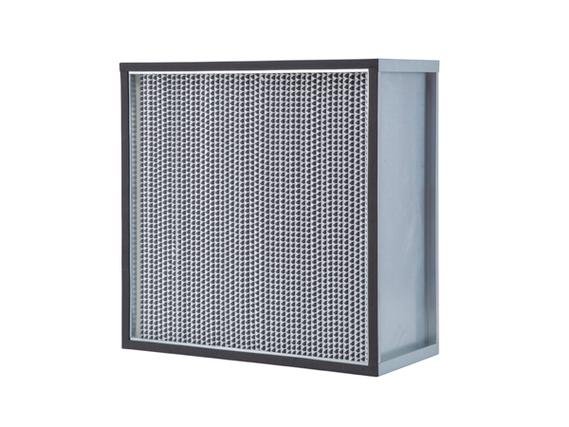
HEPA Box Type Filters | N/A | Cleanrooms, laminar airflow units, biosafety cabinets |
HEPA Flange Type Filters | N/A | Pharmaceutical and biotech facilities, electronics manufacturing |
Mini-Pleat HEPA Filters | N/A | Semiconductor manufacturing, aerospace, precision laboratories |
Washable / Reusable HEPA Filters | N/A | Industrial dust collectors, automotive air systems |
Some HEPA filters catch more tiny things than others. These high-efficiency filters keep your air cleaner. If you want the best protection, choose True HEPA filters. They are used in places where clean air is very important.
Tip: Check the efficiency rating before you buy. The right HEPA filter can help your air quality a lot.
Customization Options
Sometimes you need HEPA filters for special spaces or tough jobs. Custom filters let you change how your filter works. Many suppliers let you pick the size, shape, or materials.
Custom HEPA filters help with special air problems.
You can choose filters with bigger surfaces for dusty places.
Some filters use special stuff to catch smaller things.
You can ask for washable HEPA filters to reuse and save money.
Some jobs need filters that pass strict tests. Custom filters help you meet these rules and keep air safe. If you work in a hospital or lab, you may need special filters. Suppliers can help you pick the best HEPA filter for your work.
You do not have to use just one kind. There are many choices. You can find HEPA filters that fit your space and needs. Custom filters help keep your air clean, no matter what happens.
What Types of Air Purifiers Are Suitable for Different Application Needs?
Picking the right air purifiers can seem hard at first. But you can make it easier by thinking about your room, what you want to clean, and what you want out of your air. Let’s look at how to choose the best one for your needs.

Room Size & Coverage
The size of your room is very important when picking air purifiers. If you use a small purifier in a big room, it will not work well. First, measure your room. For rooms up to 200 square feet, small air purifiers like the Pure Air City model are good. They are quiet and work well in small spaces. For a 400-square-foot room, you need a purifier with a smoke CADR of at least 267 cubic feet per minute. Always match the purifier’s power to your room size for the best results.
Big places like stores or offices need bigger air purifiers. Commercial air purifiers use special filters to catch dust, pollen, mold spores, and bacteria. You can pick from bag filters, compact filters, panel filters, HEPA filters, and activated carbon filters. These help make the air better in large spaces.
Tip: Check the purifier’s coverage area before you buy. This helps you get the right air purifier for your room.
Air Purity Levels
Not all air purifiers clean the air the same way. Some use simple filters, but others use hepa filters for better cleaning. Here’s a table that shows what different filters can do:
Filter Type | Particle Capture Efficiency | Particle Size (microns) | Air Purity Level |
|---|---|---|---|
True HEPA | 99.97% | 0.3 | High (removes fine dust, bacteria) |
HEPA-type | 85-90% | 0.3 | Moderate (allows more particles) |
Medical-grade HEPA | 99.999% | 0.3 | Very High (critical in healthcare) |
ULPA | 99.9995% | 0.12 | Extremely High (used in clean rooms) |
If you want super clean air, pick medical-grade hepa filters or ULPA filters. For homes and offices, true hepa filters work well and help keep the air clean.
Pollutant Types
Different air purifiers remove different things from the air. HEPA filters are best for dust, pollen, pet dander, and mold spores. They do not remove gases or smells, so you may need an activated carbon filter for those.
Pollutant Type | Particle Size (microns) | Effectiveness |
|---|---|---|
Dust | ≥ 0.3 | Effective |
Pollen | ≥ 0.3 | Effective |
Pet Dander | ≥ 0.3 | Effective |
Mold Spores | ≥ 0.3 | Effective |
Gases and Odors | < 0.3 | Not Effective |
You can find hepa filters in hospitals, cleanrooms, offices, classrooms, and homes. They help protect people and equipment by cleaning the air in many places.
If you know your room size, what you want to clean, and what you want to remove, you can pick the right air purifier for your needs. Room air purifiers with hepa filters work well for most spaces. Commercial air purifiers are best for big jobs. Always match your air purifier to your needs for the best results.
How Is Quality and Reliability Guaranteed?
Quality and reliability are ensured through rigorous testing, adherence to industry standards, and continuous improvement processes. Employing robust quality assurance (QA) methodologies and regular audits ensures product consistency and dependability.
Testing Procedures
You want your hepa filters to work well every time. The best suppliers use careful tests to make sure your air is clean. They do not guess if the filter works. They use special tools and follow strict rules for each high-efficiency particulate air filter.
Some tools they use are:
Particle counters with lasers that find tiny particles, even 0.3 microns.
Aerosol generators that make a steady flow of test particles.
Flow meters that check if air moves through the filter at the right speed.
Suppliers test hepa filters in many ways. They do integrity tests to make sure there are no leaks. They also do leak tests from time to time to check the filter as it gets older. Some use aerosol photometry to find very small leaks. For big jobs, like hospitals or factories, they follow ISO EN14644-1 and EN14644-3 rules. These rules help keep your air safe.
Look at this table to see how often filters get tested and what counts as a pass:
Application | Efficiency Requirement | Testing Frequency | Acceptance Criteria |
|---|---|---|---|
Pharmaceutical | Every 6 months | Zero penetration allowable | |
Semiconductor | 99.999% at 0.12μm | Quarterly | <10 particles/ft³ downstream |
Healthcare | 99.97% at 0.3μm | Annual | Per facility risk assessment |
Rules like FDA 21 CFR Part 211 and ISO 13485 say you must prove your hepa air filter works. You can ask your supplier for these test records.
Tip: Always ask for test reports before you buy. This helps you trust the filter and know it works well.
Build Quality
You want your hepa air filter to last a long time. Good build quality means your filter works better and keeps your air safe. High-quality hepa filters use strong materials. The main part is usually fiberglass, which traps tiny things. Some filters use polypropylene to make them stronger. Aluminum separators keep the filter layers apart. Polyurethane sealant stops air from leaking out the sides.
Here is a quick look at what goes into a high-efficiency particulate air filter:
Material | Function | Typical Thickness |
|---|---|---|
Fiberglass | Main filter material | 0.5-2.0 microns |
Polypropylene | Extra filter material | 1-5 microns |
Aluminum | Keeps layers apart | 0.1-0.3 mm |
Polyurethane | Seals the edges | 1-3 mm |
When you pick a supplier, ask what materials they use. Good hepa filters have strong frames and tight seals. This keeps your air clean and helps your filter last longer.
Note: A strong hepa filter gives you better air and less worry about leaks.
How to properly clean a HEPA filter?
To properly clean a HEPA filter, remove it from the device, gently tap it to dislodge loose debris, and use a vacuum cleaner with a brush attachment to remove remaining particles. Avoid using water unless the filter is explicitly labeled washable.

Recommend
You want your HEPA filter to work well and last a long time. Cleaning it the right way helps keep your air fresh and lowers the chance of illness. Most HEPA filters are not made to be washed, but you can do a few things to help them stay clean:
Check your filter’s manual before you try to clean it. Some filters are not meant to be cleaned at all.
If your filter is labeled as “washable” or “reusable,” follow the instructions from the maker.
For most HEPA filters, you can gently tap the filter to remove loose dust. Do this outside to keep dust out of your home.
Sometimes, you can use a vacuum cleaner with a soft brush to remove surface dust. This may help a little, but it does not make the filter like new.
Tip: Always handle your HEPA filter with care. Rough cleaning can damage the tiny fibers inside.
Not Recommend
Some cleaning methods can hurt your HEPA filter and make it less effective. You should avoid these actions to keep your filter working right and to keep a reduced risk of illness in your space.
Do not wash your HEPA filter with water. Washing can break the fibers and cause them to clump together. This makes the filter less able to trap tiny particles and can even lead to mold growth.
Do not use strong vacuuming on your HEPA filter. Vacuuming can bend or break the delicate fibers, creating gaps that let dust and germs pass through.
Do not use soap, chemicals, or high-pressure air. These can damage the filter and make it unsafe.
Here’s a quick list of what not to do:
Never wash a standard HEPA filter.
Never use a strong vacuum or brush.
Never use cleaning sprays or chemicals.
Note: If your HEPA filter looks very dirty or damaged, it’s time to replace it. A clean filter helps protect you from illness and keeps your air fresh.
What’s the best price to use a HEPA filter?
The best price for a HEPA filter typically ranges from $200 to $500, depending on the size, brand, and specific features. Most standard household HEPA filters fall within this range.

Cost Comparison
You probably want to know how much a HEPA filter really costs. Prices can change a lot depending on the brand, size, and features. Some filters cost more because they last longer or work better in tough places. You might see a big difference between regular prices and sale prices.
Here’s a quick look at what you might pay for a HEPA filter from top suppliers:
Regular Price | Sale Price |
|---|---|
$216.00 | |
$345.00 | $348.00 |
$525.00 | $265.00 |
$388.00 | $275.00 |
$336.00 | $332.00 |
$525.00 | $196.00 |
$278.00 | $255.00 |
$385.00 | $315.00 |
$425.00 | $196.00 |
$278.00 | $332.00 |
$525.00 | $332.00 |
$525.00 | $210.00 |
$305.00 | $185.00 |
$345.00 | $224.00 |

You can see that sale prices often drop a lot below the regular price. If you want to save money, look for sales or bulk deals. Some suppliers offer discounts if you buy more than one filter at a time.
Tip: Always check if the filter is a True HEPA filter before you buy. A lower price might mean lower quality.
Delivery Times
Getting your HEPA filter fast can matter, especially if you need clean air right away. Delivery times can change based on the type of filter and if you want something custom-made.
Here’s a table to help you see how long it might take:
Filter Type | Customization Time | Notes |
|---|---|---|
HEPA Filters | Longer due to stringent performance standards | |
Simpler Designs | < 2 weeks | Faster delivery due to less complexity |
HVAC Filters | Varies | Generally quicker than HEPA filters |
If you need a special filter, plan for a longer wait. Standard filters usually arrive faster. Some suppliers can rush your order, but you might pay more for that service.
Note: Ask your supplier about shipping times before you order. This helps you plan and keeps your air clean when you need it most.
Making Your Decision
Picking the right air filters can seem hard at first. But you can make it easier by following some simple steps. This way, you get cleaner air and feel better in your space.
Requesting Samples
Ask your supplier for filter samples before you buy a lot. This helps you check if the filters are built well and fit your system. You can see if they are true hepa filters and if they clean your air well. Testing samples helps you find problems early. You can talk to the supplier if something is wrong before you buy more.
Tip: Try the filters where you will use them. This shows how well they really work.
Warranty Policies
A good warranty means the supplier trusts their filters. Here’s what some top suppliers give:
Supplier | Warranty Type | Duration | Coverage Details |
|---|---|---|---|
Air Science | Legacy Limited Lifetime Warranty™ | Covers defects in materials and workmanship; repair or replace defective parts if documented. | |
Americair | Standard Warranty | 5 years (motor/fan), 1 year (other parts) | Covers defects in material/workmanship; conditions apply for warranty validity. |
Smart Air | General Warranty | Varies | Covers defects in materials and workmanship; specific terms may vary. |
Always look at the warranty when you compare filters. A strong warranty keeps your money safe and helps you stay healthy.
Final Checklist
Use this checklist before you choose your filters and supplier:
Ask for samples and test them.
Look at the warranty and what it covers.
Check for certifications on true hepa filters.
Make sure filters are not dirty or broken.
Watch airflow and change filters when needed.
Teach workers how to handle filters safely.
Write down when you clean or change filters.
If you follow these steps, you can trust your filters to keep your air clean. Good filters help you stay healthy and feel calm.
You can now choose the best HEPA filter supplier. First, look at how long the supplier has worked. Check if they have certifications. Make sure their products match what you need. Use this checklist to help you:
Ask for samples
Look at warranties
Check for certifications
Want cleaner air? Begin by checking your suppliers today!
FAQ
How often should you replace a HEPA filter?
You should check your filter every six months. If you see dirt or notice less airflow, replace it. Some filters last longer, but changing them keeps your air fresh and helps you enjoy an allergen-free home.
Can you use HEPA filters in the best air purifiers?
Yes, you can. The best air purifiers use True HEPA filters to trap dust, pollen, and germs. This helps you breathe easier and keeps your space cleaner.
What is the difference between True HEPA and HEPA-type filters?
True HEPA filters catch 99.97% of tiny particles. HEPA-type filters do not meet this strict standard. Always ask your supplier for proof before you buy.
Are washable HEPA filters as effective as regular ones?
Washable HEPA filters are easy to clean, but they may not trap as many tiny particles. If you want the highest air quality, choose regular True HEPA filters.
Do HEPA filters remove odors from the air?
HEPA filters trap dust and allergens. They do not remove odors or gases. If you want to get rid of smells, look for air purifiers with activated carbon filters.