
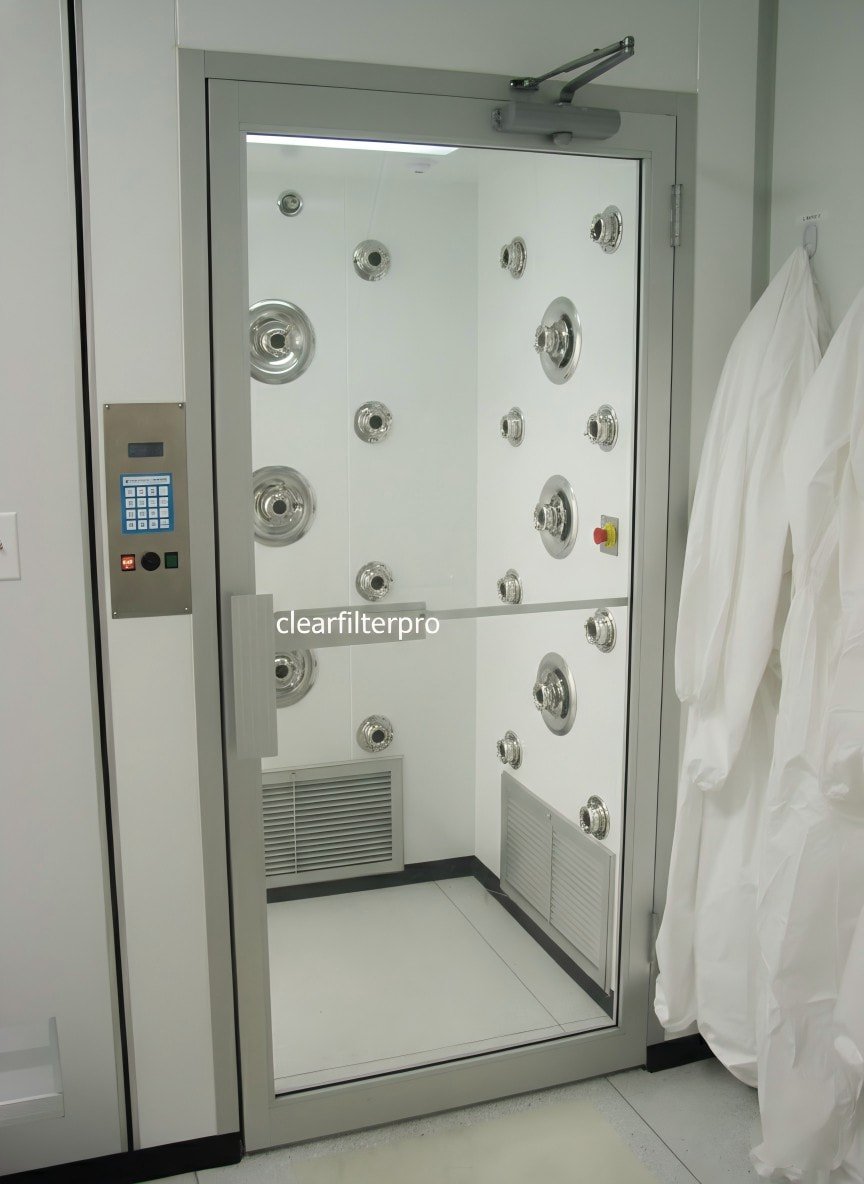
You use a modular air shower to keep your cleanroom safe from dust and dirt. The system blows fast air through HEPA filters. These filters catch tiny bits of dirt. Most air showers have a modular design. This means you can pick the size and materials you want. You can also connect these units to other cleanroom systems. This helps you control the cleanroom better. Studies show that a single-pass air shower can remove 85–95% of particles bigger than 0.3 microns in just 15–30 seconds:
Air Shower Performance | Efficiency | Particle Size | Duration |
|---|---|---|---|
Single-pass operation | 85–95% | >0.3 microns | 15–30 sec |
Key Takeaways
Modular air showers can remove most particles bigger than 0.3 microns. They do this in only 15 to 30 seconds. This helps keep cleanrooms safe and clean.
Pick modular air showers for more options. You can change the size, materials, and features. This helps your cleanroom now and later if you need changes.
It is very important to take care of air showers. Clean them every day. Change pre-filters every 3 to 6 months. Replace HEPA filters every 6 to 12 months. This keeps them working well.
Use special security features like magnetic interlocks and access controls. These help keep cleanrooms safe and stop contamination.
Buying air showers can cut down contamination risks by up to 70%. This makes your products safer and lowers cleaning costs.
What Are Modular Air Showers for Cleanrooms?
Modular air showers for cleanrooms are prefabricated, configurable entry/exit enclosures that use high-velocity HEPA-filtered air jets to remove particles from personnel and carts before they enter controlled environments. “Modular” means the unit is built from standardized panels and components, allowing faster installation, easier expansion, and layout customization compared to fixed-built vestibules.
Cleanroom Air Showers Overview
Cleanroom air showers help keep your workspace clean. They stop dust and dirt from getting inside. The air shower sits between the outside and your cleanroom. When you step in, strong air jets blow off dust and dirt from your clothes and gear. This helps keep fewer particles from entering the cleanroom.
Cleanroom air showers have many important parts. Each part has a job to help keep things clean and safe. Here is a table that lists the main parts and what they do:
Component | Function |
|---|---|
Air Handling Unit | Blows fast air into the air shower |
Pre-filters | Trap big pieces of dirt |
HEPA Filters | Catch tiny particles as small as 0.3 microns |
Air Nozzles | Aim air at you for better cleaning |
Control System | Runs the air shower and sets how it works |
Interlocking Doors | Stop both doors from opening at the same time |
Raised Floor/Grating | Helps catch dirt that falls off |
Using cleanroom air showers can make your workspace much cleaner. You can have up to 100 times fewer particles than without them. If you follow the right steps, you can also lower the chance of contamination by up to 70%. This makes air showers very important for keeping your cleanroom safe.
Modular Design and Materials
Modular air showers are easy to use and set up. You can pick the size, shape, and features you need. If your building changes, you can move or add to your air shower system. This is not possible with fixed air showers, which stay in one spot.
Here are some ways modular air showers help you keep your cleanroom ready:
You can move and change modular air showers if your space changes.
Portable air showers let you fit new room shapes or work steps.
Small modular air showers fit tight spaces and make it easy to grow later.
You can also pick different materials and features. The table below shows some choices you can make:
Customization Option | Description |
|---|---|
Door Configuration | More doors for different cleanroom setups |
ULPA Filter Modules | Strong filters for extra safety |
Model Types | Cart and tunnel models for different jobs |
Ionization | Special features for places with static |
Material Selection | Stainless steel or aluminum for strong and easy cleaning |
Control Panels | Touch screens for easy use and alerts |
You can change the air speed to clean better before you go in. Touchscreen controls help you run the system and fix problems fast.
Tip: Picking modular air showers makes it easy to upgrade your cleanroom later. You can add new parts or make it bigger when you need to.
By choosing the right design and materials, your air showers will work well for your space. This helps keep your cleanroom safe, clean, and ready for anything.
How Do Modular Air Shower Systems Work?
Modular air shower systems work by enclosing personnel or materials in a sealed, interlocked chamber and blasting them with high-velocity, HEPA-filtered air to dislodge surface particles; the contaminated air is then captured through low-level returns and re-filtered in a recirculating loop. Prefabricated panels and plug-in modules enable scalable, cleanroom-compatible installation.

HEPA Filtration and Airflow
When you use a modular air shower, you walk into a special room. This room helps keep your cleanroom safe from dirt. The system has strong fans that blow hepa filtered air through nozzles. These nozzles shoot fast air at your clothes and gear from many sides. The air jets make your clothes move and shake. This helps knock off dust and other tiny things. The shaking is important because it gets rid of stuff stuck to you.
The air shower gives out clean air at speeds between 20 and 25 meters per second. This speed is strong enough to clean you but still feels comfortable. As the air blows, it pushes dirt down through the floor grilles. The system then pulls the dirty air back into the walls. There, it goes through pre-filters and hepa filtered air units. These filters catch very small particles, even ones as tiny as 0.3 microns. They work with 99.97% efficiency. You can trust the air shower to get rid of almost all unwanted dirt before you go into the cleanroom.
Note: Using an air shower before you enter your cleanroom can help stop product problems and helps you follow strict cleaning rules.
Entry Security Features
You want your cleanroom to stay safe and protected. Modular air showers have features to help with this. Magnetic interlocks on the doors stop both doors from opening at once. This means you cannot go in or out while the air shower is working. This keeps outside air and dirt from getting inside. The magnetic locks also stop people who are not allowed from using the air shower during use.
LED lights inside the room make it bright and easy to see. Even if the rest of the area is dark, you can see where to go. Emergency stop buttons let you turn off the system right away if needed. Many air showers also have special access controls. These can be RFID, fingerprint scanners, or card readers. These features help you know who goes into the cleanroom and keep the area safe.
Here is a quick list of common entry security features you might find in a modular air shower:
Magnetic interlocks for safe and secure door operation
LED lighting for better visibility
Emergency stop buttons for quick shutdown
Advanced access controls like RFID, biometrics, or card readers
By using these features, you help keep your cleanroom clean and safe every time someone enters.
What Are the Benefits of Using Air Showers in Cleanrooms?
Air showers reduce particle and microbial contamination carried on personnel and carts by blasting high-velocity, HEPA-filtered air to dislodge and capture lint, dust, and skin flakes before cleanroom entry. Benefits include improved ISO 14644-class compliance, lower product defect risk, reduced cleaning burden, stabilized airflow/pressure cascades, and extended filter life in critical areas.

Contamination Control
You want your cleanroom to stay very clean. Air showers help by blowing fast air and using HEPA filters. These remove dust and dirt from people and equipment before they go in. This keeps your workspace free from things you do not want. When you use an air shower, you protect your products and keep your space safe.
Air showers are used in food, medicine, and chip factories. They help you follow strict cleaning rules and programs like HACCP. Using air showers shows you care about safety. The strong air and filters knock off and catch dirt, so your cleanroom stays clean.
You can pick air showers for one person or for more people. The table below shows how many people each type can fit:
Type of Air Shower | Dimensions (m) | Capacity per Use |
|---|---|---|
Single-Person Air Shower | 1.0 x 0.8 x 2.0 | 1 person |
Multi-Person Air Shower | 2.0 x 1.0 x 2.0 | 2-5 people |
If you need to move carts or tools, cart pass thru units help. They let you move things without bringing in extra dirt.
Component Type | Function |
|---|---|
Cart Pass Thru Units | Facilitate equipment and material transfer |
Compliance and Safety
You have to follow many rules to keep your cleanroom safe. Air showers help you meet ISO standards and other rules. The table below lists some rules for medicine and chip cleanrooms:
Regulatory Aspect | Requirement |
|---|---|
HEPA Filter Efficiency | ≥99.97% at 0.3 microns |
Air Velocity | 20-30 m/s (typical) |
Dwell Time | 15-30 seconds (minimum) |
Monitoring Frequency | Daily to quarterly |
Re-qualification | Annually (recommended) |
You also need to make sure everyone can use the air shower. Many air showers meet ADA rules, so all people can use them safely. Some features are:
Emergency stop buttons
Interlocked doors
Good lighting
Size and layout for easy access
Tip: Pick air showers that meet ADA rules to keep your cleanroom safe for everyone.
You can trust air showers to help you reach your safety and cleaning goals. They help you keep your workspace clean and follow important rules.
How Do You Select and Install a Cleanroom Air Shower System?
To select and install a cleanroom air shower system, define your required cleanliness class and personnel/material throughput, then size the chamber, blower/HEPA capacity, and nozzle layout to reliably remove surface particles without disrupting room pressure cascades. Install by validating site utilities, anchoring and sealing to the cleanroom envelope, integrating interlocks, and commissioning with airflow, leak, and particle tests.

Key Considerations
When you choose an air shower system for your cleanroom, you need to think about several important factors. Each cleanroom has its own needs. You want your system to fit your space and your work. Here are some things to consider:
Environmental factors: Check the type of cleanroom you have, such as iso-5 cleanrooms or iso-6 cleanrooms. Each type has different rules for cleanliness.
Production requirements: Think about how your air shower system will work with your production steps. Make sure it fits your workflow.
Operational convenience: Pick a system that is easy for cleanroom personnel to use. Look for simple controls and easy access.
Material selection: Choose strong materials that are easy to clean and last a long time.
Maintenance needs: Make sure you can reach all parts for cleaning and filter changes.
The size of your air shower matters. Small models work for one person. Larger units fit more people or carts. You need to match the size to your personnel flow and equipment. If you have many people entering at once, a bigger air shower system helps keep things moving.
Tip: Always plan for future growth. Pick a system that you can expand if your needs change.
Placement and Maintenance
You want your air shower system in the right spot. Place it at the main entrance to your cleanroom. This helps stop dirt before it gets inside. Make sure there is enough space for people to enter and exit safely. If you use carts or large equipment, check that the doors and space are big enough.
Installing your system can bring challenges. You must control contamination during setup. Use a self-contained air recirculation system to keep the area clean. Follow all rules for iso-5 cleanrooms and iso-6 cleanrooms. Work with experts to meet every standard.
Regular maintenance keeps your air shower working well. Clean the area every day. Change pre-filters every 3–6 months and HEPA filters every 6–12 months. Watch for signs like less airflow or dirty filters. The table below shows a simple maintenance schedule:
Task | Frequency |
|---|---|
Clean area | Daily |
Change pre-filter | 3–6 months |
Change HEPA filter | 6–12 months |
Deep cleaning | Monthly/Quarterly |
By following these steps, you keep your air shower system running smoothly and your cleanroom safe.
You use modular air showers to keep your cleanroom safe. These systems help remove dirt and dust. They also make your products better and help you follow rules. If you take care of your air shower, it can last 10 to 15 years. This can help you spend less money on fixing it.
Stops more dirt from getting in
Makes products safer and more reliable
Lowers how much you spend on cleaning
Easy to use and change
You can check things like how long each cycle takes and how fast the air moves. You should also look at how often you need to change the filters. If you need help, companies with lots of experience can help you pick the best system for your cleanroom.
FAQ
What is a modular air shower in a cleanroom?
You use a modular air shower to remove dust and dirt before you enter a cleanroom. The system uses strong air jets and filters. This keeps the cleanroom safe and helps you protect your products.
How often should you maintain your cleanroom air shower?
You should clean the area every day. Change pre-filters every 3–6 months. Replace HEPA filters every 6–12 months. Regular maintenance keeps your cleanroom air shower working well and helps you meet cleanroom standards.
Can you use a modular air shower in any cleanroom?
You can use a modular air shower in almost any cleanroom. You pick the size and features that fit your cleanroom. This helps you keep your cleanroom safe, no matter what type of cleanroom you have.
Why do you need HEPA filters in a cleanroom air shower?
You need HEPA filters to catch very small particles. These filters remove dust and dirt from the air. This helps you keep your cleanroom clean and protects your cleanroom from contamination.
How do you choose the right air shower for your cleanroom?
You look at your cleanroom size, how many people use the cleanroom, and what you need to keep your cleanroom safe. You can ask experts for help. The right air shower helps you keep your cleanroom clean and meets cleanroom rules.