

A HEPA filter helps clean the air in your building. It protects you from dust, pollen, mold spores, and some bacteria and viruses.
HEPA filters trap at least 99.97% of tiny particles. These particles can be as small as 0.3 microns. They can even catch viral particles like SARS-CoV-2.
These filters make indoor air better. They lower the amount of pollution and things that cause allergies.
Organization | Recommendation |
|---|---|
ASHRAE | HEPA filters catch at least 99.97% of particles that are 0.3 µm. This makes them good for stopping airborne viral particles. |
CDC | HEPA filters are used in hospitals and clinics. This shows they are strong at removing particles that are 0.3 μm or bigger. |
Key Takeaways
HEPA filters catch at least 99.97% of tiny particles. These particles can be as small as 0.3 microns. This makes HEPA filters very good for cleaning indoor air.
HEPA filters help lower allergens and germs in the air. This helps people with allergies and asthma breathe better. It also helps them stay healthy.
It is important to take care of HEPA filters often. Check them every 6 to 12 months. Change them when they look dirty. This keeps them working well.
Pick true HEPA filters instead of HEPA-type filters. True HEPA filters work better and are more reliable. They are best for places like hospitals and labs.
Think about how HEPA filters affect the environment. Some new HEPA filters use eco-friendly materials. These can be recycled and help cut down on waste.
What is a HEPA Filter?
A HEPA (High-Efficiency Particulate Air) filter is a type of air filter that captures at least 99.97% of particles as small as 0.3 microns, including dust, pollen, mold, bacteria, and other airborne particles.
HEPA Filter Definition
A HEPA filter is a special air filter. It stands for high-efficiency particulate air filter. The U.S. Department of Energy says it is a pleated mechanical filter. It removes at least 99.97% of tiny particles in the air. These particles are only 0.3 microns wide. This rule comes from a trusted government group, so you can rely on it.
Real HEPA filters must catch at least 99.97% of particles that are 0.3 microns wide. That is about 300 times thinner than a human hair. This size is used for testing because it is the hardest to trap.
You can find HEPA filters in many places. Hospitals, labs, and airplanes use them. These filters make indoor air cleaner by trapping bad particles before you breathe. Groups like the CDC, ASHRAE, and EPA say HEPA filters are the best for cleaning air.
How HEPA Filters Work
You might wonder how HEPA filters trap such small things. The secret is in how they are made. Makers use a thick mat of fibers. These fibers are usually fiberglass or synthetic. They fold the fibers into pleats. This gives the filter more area to catch particles. It also lets air move through easily.
Here is a table that shows how each part of a HEPA filter helps:
Material/Method | Contribution to Filtration Capabilities |
|---|---|
Filter Media | Fiberglass and synthetic fibers like polypropylene trap tiny particles but let air flow through. |
Manufacturing Process | Ultra-fine fibers are made by melt-blown or glass-drawing methods. This creates a mat that filters well. |
Pleating | Pleats give the filter more area. This helps it catch more particles and lets air pass easily. |
Assembly and Sealing | Good assembly keeps the filter strong and stops air from leaking. This keeps the filter working well. |
Quality Control | Careful testing makes sure filters work as promised and meet high standards. |
When air goes through a HEPA filter, the fibers trap many things. A HEPA filter can catch:
Viruses
Pollen
Dust
Bacteria
Air pollution particles
You also get protection from:
Pollen
Dirt
Dust
Moisture
Bacteria (0.2–2.0 μm)
Viruses (0.02–0.3 μm)
Tiny liquid drops (0.02–0.5 μm)
HEPA filters are great at removing things that can hurt your health. This makes them a smart choice for anyone who wants cleaner air in their building.
HEPA filters can remove at least 99.97% of tiny particles around 0.3 microns. This makes them better than many other air filters.
Some new HEPA filters have cool features. Some have smart sensors that check air quality all the time. Others use earth-friendly materials or connect to smart home systems. These new ideas help you keep your building’s air clean with less work.
What are the Benefits of HEPA filters?
HEPA filters provide superior air purification by capturing 99.97% of airborne particles as small as 0.3 microns, improving indoor air quality significantly. They are particularly effective in reducing allergens, pollutants, and pathogens.
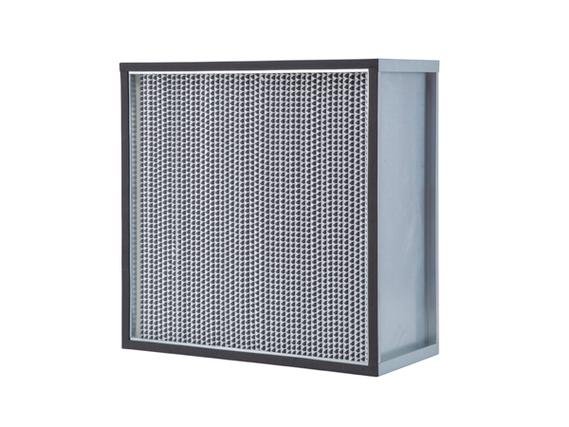
Filtration Efficiency
Clean air is important for your building. HEPA filters give you strong protection. They trap at least 99.97% of tiny particles. These particles can be as small as 0.3 microns. This helps keep out dust, pollen, mold spores, bacteria, and some viruses.
HEPA filters catch at least 99.97% of 0.3 micron particles.
They also grab 99.95% of the hardest-to-catch particles, which are between 0.1 and 0.2 microns.
Air cleaning rules say it is important to remove particles smaller than 1 micron, especially to stop germs in the air.
You can see how HEPA filters work with different particle sizes in this table:
Particle Size (nm) | Removal Efficiency (%) | Importance in Air Quality |
|---|---|---|
100–200 | 99.95 | Smallest and hardest to capture |
200–250 | Lowest efficiency | Significant in urban environments |
300 | 99.97 | Standard test size |
True HEPA filters meet tough rules. You can trust them to work well every time. If you want better air inside, pick a HEPA filter for your building.
Health and Safety
The air in your building affects everyone’s health. HEPA filters help make your space safer. They lower allergy triggers like pollen, pet hair, and dust mites. People with allergies feel better and need less medicine. Asthma sufferers breathe easier and have fewer attacks.
HEPA filters lower common allergy triggers.
Allergy sufferers have fewer problems and need less medicine.
Asthma patients breathe better and have fewer attacks.
HEPA filters help stop germs like flu, bacteria, and COVID-19 droplets from spreading.
They also lower PM2.5 levels, which can cause heart attacks and strokes.
You make the air inside better and help keep people safe. True HEPA filters are important in hospitals, schools, and offices. You help people feel safe and stay healthy.
Reliability
You want a filter that works well and lasts long. HEPA filters give you strong performance in many places. Hospitals and labs use HEPA filters to catch 99.97% of particles, including bacteria and viruses. This helps stop infections and keeps the air clean.
Aspect | Benefit for Your Facility |
|---|---|
Airborne Particle Capture | Removes 99.97% of 0.3 micron particles, including bacteria and viruses |
Infection Control | Reduces hospital-acquired infections |
Maintenance | Needs regular inspection and servicing every 6 to 12 months |
Service Life | Lasts several years with proper prefiltration |
Testing | On-site testing confirms real-world performance |
You need to check and service HEPA filters often. With good care, they last for years. True HEPA filters keep working even in tough places. You get clean air for your building.
Throwing away HEPA filters makes a lot of trash. These filters do not break down and can stay in landfills for hundreds of years. They release bad chemicals and gases as they break down, which makes pollution and climate change worse.
Changing HEPA filters often adds to pollution because of making, moving, and throwing away the filters.
Think about the environment when you pick HEPA filters. Some new filters use earth-friendly materials or let you recycle them. You can help cut down on waste and protect the planet while keeping your building safe.
HEPA Filter vs. Other Filters: What’s the Difference and Which One Is Better?
HEPA filters are more effective at capturing smaller particles than other filters, such as fiberglass or carbon filters. They remove at least 99.97% of particles as small as 0.3 microns, making them ideal for improving air quality.

True HEPA vs. HEPA-Type
You might see “True HEPA” or “HEPA-type” on air purifiers. These words mean different things. True HEPA filters follow strict rules from the Department of Energy. They trap at least 99.97% of tiny particles, even ones as small as 0.3 microns. HEPA-type filters do not follow these rules. They may only catch bigger particles and miss smaller ones. True HEPA filters get tested and certified. HEPA-type filters do not have this promise. If you want the cleanest air, pick true HEPA filters for your building.
Feature | True HEPA Filters | HEPA-type Filters |
|---|---|---|
Filtration Standard | May not meet the same rigorous standards | |
Particle Size | Effective for particles as small as 0.3 microns | Often less effective at capturing smaller particles |
Certification | Independently tested and certified | Not regulated, may lack performance guarantees |
Application | Suitable for critical environments (e.g., hospitals) | May introduce risks in sensitive areas |
Efficiency Rating | Consistently high efficiency | Claims may be misleading, often lower efficiency |
True HEPA filters trap 99.97% of tiny particles.
HEPA-type filters may only trap up to 99% of bigger particles.
True HEPA filters are tested and certified, but HEPA-type filters are not.
HEPA vs. MERV
You may wonder how HEPA filters compare to MERV filters. MERV means Minimum Efficiency Reporting Value. MERV filters work well in homes and offices. They catch many particles but do not reach HEPA’s high level. HEPA filters trap 99.97% of 0.3 micron particles. MERV 16 filters catch about 95% of particles that size. Use HEPA filters where air needs to be very clean, like hospitals or labs.
Filter Type | Particle Capture Efficiency | Recommended Applications |
|---|---|---|
HEPA | Critical environments (hospitals, cleanrooms) | |
MERV 16 | 95% for 0.3 microns | General HVAC applications (homes, commercial buildings) |
ULPA VS. HEPA
You may hear about ULPA filters too. ULPA stands for Ultra-Low Penetration Air. ULPA filters trap even smaller particles than HEPA. They reach 99.999% efficiency for particles as small as 0.12 microns. But ULPA filters slow down airflow and cost more money. They do not last as long as HEPA filters. Use ULPA filters in special places, like labs that need super clean air. For most buildings, HEPA filters work better and cost less.
Feature | ULPA Filters | HEPA Filters |
|---|---|---|
Filtration Efficiency | More efficient at capturing smaller particles | Effective in trapping larger particles, including viruses |
Airflow | More restrictive, reducing airflow by 20% to 50% | Less restrictive, optimal for most applications |
Cost | Approximately 35% more expensive | Generally lower cost |
Lifespan | Shorter lifespan (5-8 years) | Longer lifespan (about 10 years) |
Use Cases | Specialized applications requiring high efficiency | Widely used in healthcare and biological applications |
Laminar Air Flow vs HEPA Filter
Laminar airflow uses HEPA filters to move air in one direction. You see this in cleanrooms and labs. Laminar flow helps stop germs and dust from spreading. It pushes clean air over surfaces and pulls dirty air away. This gives you a clean space for important work. Some systems use pre-filters and HEPA or ULPA filters together for the best results.
Laminar airflow with HEPA filters keeps air clean and steady. This setup protects your building from germs and keeps surfaces safe.
Laminar airflow uses HEPA filters to clean the air.
In cleanrooms, laminar flow moves air in one direction at a steady speed.
This system stops germs from spreading and keeps surfaces clean.
How to Choose a HEPA Filter?
To choose a HEPA filter, ensure it meets the HEPA standard, which means it can capture at least 99.97% of particles that are 0.3 microns in diameter. Verify the filter’s certification and consider its size, efficiency, and compatibility with your device.

Efficiency Ratings
When you select a HEPA filter, you need to look at its efficiency rating. This rating tells you how well the filter removes tiny particles from the air. The most common ratings are H13 and H14, based on the EN 1822 standard. H13 filters remove at least 99.95% of particles as small as 0.3 microns. H14 filters go even further, capturing 99.995% of these particles. ULPA filters offer even higher efficiency, but most facilities do not need them.
Filter Type | Efficiency Rating | EN 1822 Classification |
|---|---|---|
HEPA | 99.95% | H13 |
HEPA | 99.995% | H14 |
ULPA | 99.9995% | U15 |
ULPA | 99.999995% | U17 |

You should match the filter’s efficiency to your facility’s needs. For example, HEPA filters work well in places that need ISO Class 5-8 cleanliness. ULPA filters are best for stricter ISO Class 1-4 environments.
HEPA Grades
You will find different grades of HEPA filters. These grades show how much protection each filter gives. The main grades are H10, H11, H12, H13, and H14. H13 and H14 are the most common for critical spaces. H13 filters remove 99.95% of particles down to 0.3 microns. H14 filters remove 99.995%. These grades follow standards from the US Department of Energy and EN1822.
Grade | Efficiency |
|---|---|
H10 | Less than H13 |
H11 | Less than H13 |
H12 | Less than H13 |
H13 | 99.95% of particles down to 0.3 microns |
H14 | 99.995% of particles down to 0.3 microns |

HEPA filters have played a key role in many industries since the 1950s. You will see them in hospitals, labs, and even car factories.
Facility Needs
You should always match your filter choice to your building’s needs. Start by thinking about what you want to remove from the air. Hospitals often need medical-grade HEPA filters with antimicrobial coatings. Cleanrooms and pharmaceutical plants require ISO-compliant filters. Offices need a balance between airflow and filtration.
Here are some tips to help you choose:
Identify the main contaminants and their size.
Pick H13 or H14 filters for high-risk areas.
Make sure the filter fits your HVAC system.
Plan regular maintenance and filter changes.
Focus on critical spaces like ICUs or labs.
Tip: Always check that your filter meets local and national standards. This helps you keep your air clean and your facility safe.
Why Choose HEPA in Facilities?
HEPA filters are essential in facilities because they effectively remove 99.97% of airborne particles, including dust, pollen, mold, bacteria, and other contaminants. This ensures cleaner air, promoting health and safety for occupants.

Healthcare
HEPA filters are used in hospitals, clinics, and labs. These places need very clean air for safety. HEPA filters take out 99.97% of tiny particles, like germs and viruses. Using real HEPA filters helps stop the spread of infections. Hospitals use them to clean air and control infections. The filter catches harmful things by impaction, interception, and diffusion. You also follow strict rules like BS EN 1822-1 and ISO 29463-1. Staff learn how to use and change filters safely. Filters get checked every year and replaced often to keep the system working.
Application | Effectiveness | Mechanism |
|---|---|---|
Air purification | Impaction, interception, diffusion | |
Infection control | High efficiency against airborne viruses | Electrostatic attraction, capillary action, Van der Waals forces |
Tip: Using HEPA filters in healthcare keeps patients and staff safe from diseases in the air.
Commercial Spaces
HEPA filters help clean the air in offices, schools, and factories. They catch dust, pollen, and other bad things in the air. Cleaner air means fewer allergies and less sickness for everyone. Workers feel better and miss fewer days at work. You also meet air quality rules for your business. HEPA filters cost less to run than UV filters and help your HVAC last longer. You get happier workers and more people stay at their jobs.
Benefit/Application | Description |
|---|---|
Improved Air Quality | HEPA filters capture 99.97% of airborne particles, leading to cleaner indoor environments. |
Health Risk Reduction | Effective in reducing respiratory issues and other health concerns associated with airborne contaminants. |
Employee Satisfaction | A clean working environment enhances employee satisfaction and retention rates. |
Compliance | Helps ensure compliance with air quality regulations in various industries. |
Hospitals
Clinics
Medical laboratories
Pharmaceutical manufacturing facilities
Automotive paint and coatings labs
Better air makes workers happier.
Fewer sick days means more work gets done.
More workers stay because they feel cared for.
Maintenance
You keep HEPA filters working by following a good plan. Make a log to track when you check or change filters. Look at filters often for dirt, damage, or clogs. Teach your staff how to handle filters the right way. Change filters every three years, but some last up to eight years with checks. In cleanrooms, you may need to change filters every year, especially in ISO 8 rooms. Good design makes changing filters safe and fast. Pick filters that fit your HVAC for the best results. Regular care keeps your air clean and stops problems.
Maintenance Practice | Description |
|---|---|
Create a Log of Maintenance | Documenting maintenance helps track performance and compliance with schedules. |
Inspection Checklist | Regular checks for dirt, clogging, and physical damage are essential. |
Training for Employees | Proper training on filter handling is crucial to avoid damage. |
Replacement Frequency | Filters may need replacement every three years, but can last up to eight years with regular checks. |
Cleanroom Contamination Level | Replacement frequency varies based on contamination; ISO 8 may require annual replacements. |
Note: Taking care of HEPA filters and changing them on time keeps your building safe and avoids big problems.
You can count on a HEPA filter to give you cleaner air and keep your building safe. Experts say these filters are best because they catch more tiny things and work well in important places. Certified HEPA filters with high Clean Air Delivery Rates help lower health problems and give steady results.
Test filters often and teach staff how to use them.
Watch air quality all the time to keep it safe.
Make air quality a top goal to help people stay healthy and keep your business working well.
FAQ
What does HEPA stand for?
HEPA stands for High-Efficiency Particulate Air. You see this term on filters that trap at least 99.97% of particles as small as 0.3 microns.
How often should you replace a HEPA filter?
You should check your HEPA filter every 6 to 12 months. Replace it when it looks dirty or when airflow drops. Some filters last up to three years with good care.
Can HEPA filters remove viruses from the air?
Yes, HEPA filters can trap many viruses. They catch particles as small as 0.3 microns, which includes most virus droplets. This helps keep your air safer.
Do HEPA filters work with all HVAC systems?
Not all HVAC systems fit HEPA filters. You need to check your system’s size and airflow. Some systems may need upgrades to use HEPA filters.