
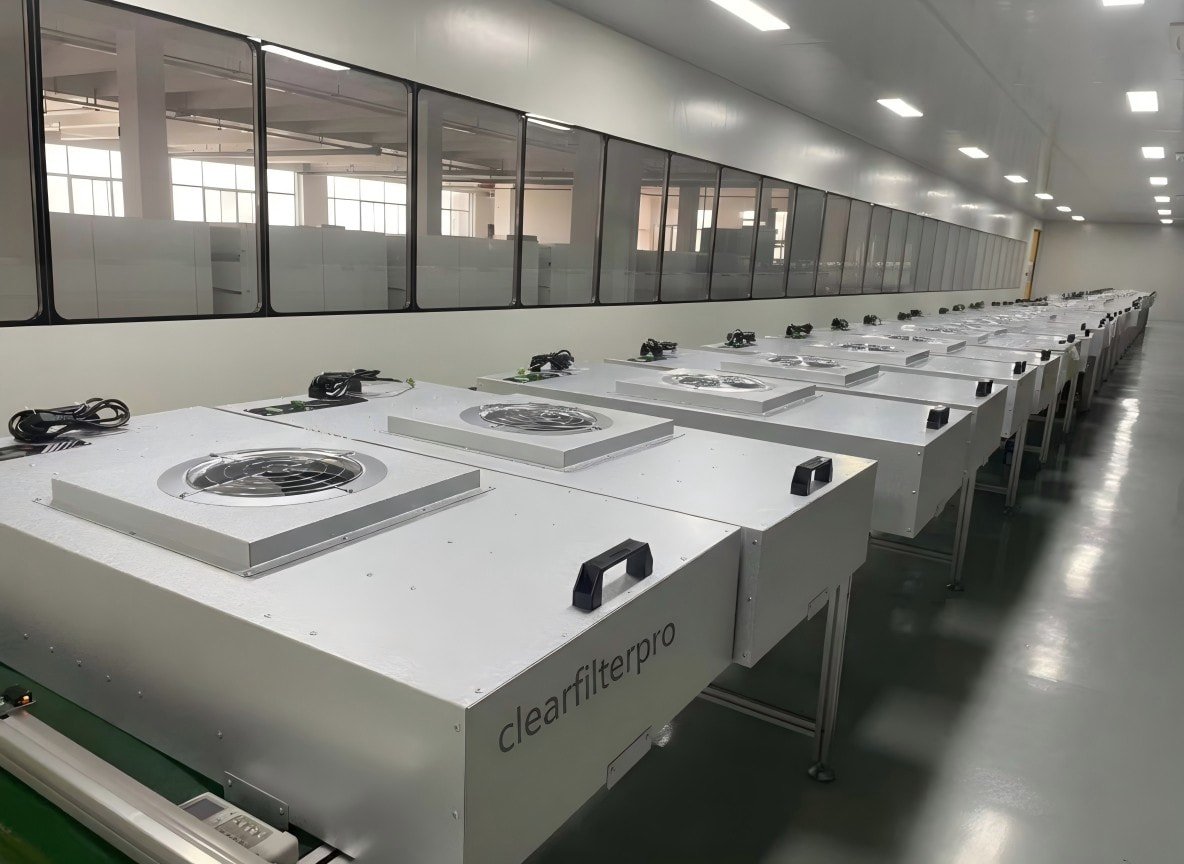
You must keep your air very clean in hospitals, electronics factories, or drug companies. Clean air is important because it keeps products and people safe. HEPA filters take out 99.97% of tiny bits at 0.3 microns. ULPA Fan Filter Units catch 99.9995% of tiny bits down to 0.12 microns.
HEPA filters: 99.97% at 0.3 microns
ULPA filters: 99.9995% at 0.12 microns
You pick the right filter based on how clean you need your air and how much money you want to spend.
Key Takeaways
HEPA filters take out 99.97% of particles at 0.3 microns. This makes them good for most clean places. – ULPA filters trap 99.9995% of particles as small as 0.12 microns. They are best for very clean places like making computer chips. – Think about how much air you need to move. HEPA filters let more air go through. ULPA filters block more air and need stronger fans. – HEPA filters usually cost less and are easier to take care of. ULPA filters cost more and need to be changed more often. – Pick the right filter for your air needs and money. This helps keep your air clean.
What Are the Key Differences Between ULPA and HEPA Filter Types?
ULPA and HEPA filters mainly differ in minimum tested particle capture efficiency, pressure drop (airflow resistance), cost, and typical use environments. HEPA is commonly rated to capture at least 99.97% of 0.3 µm particles, while ULPA is higher (often 99.9995% at ~0.12 µm), making ULPA better for stricter cleanroom control but harder to drive with fans.
What Is a HEPA Filter?
You often see HEPA filters in hospitals, labs, and even home air purifiers. These filters trap at least 99.97% of particles that are 0.3 microns in size. This means they catch dust, pollen, mold, and even some bacteria. Every HEPA filter must pass strict tests to make sure it works as promised. Most standards say a HEPA filter must remove at least 99.95% to 99.97% of the most penetrating particle size, which is usually between 0.1 and 0.3 microns.
Tip: HEPA stands for High-Efficiency Particulate Air. You can trust these filters to keep your air clean in most everyday settings.
Here is a quick look at how international standards define filter classes:
Filter Class | Efficiency Range |
|---|---|
E | 95% to 99.9% |
H | 99.95% to 99.9999% |
U | 99.99995% and above |
What Is a ULPA Filter?
ULPA filters take air cleaning to the next level. You use these when you need the highest purity, like in microchip factories or special labs. ULPA filters remove at least 99.999% of particles as small as 0.12 microns. They use a denser filter media, which means they have more fibers packed together. This design lets them catch even tinier particles than HEPA filters.
ULPA filters have higher resistance to airflow.
They allow 20-50% less air to pass through compared to HEPA filters.
The pressure drop is much higher, so you need a stronger fan.
ULPA filters usually cost 50-100% more than HEPA filters.
How Fan Filter Units Work
Fan filter units combine a filter and a fan in one device. You find them in cleanrooms and other places where you need very clean air. The fan pulls air through the filter, removing harmful particles. Modern units use energy-saving motors and keep airflow steady. You can change the filter easily, which saves time and money. A ULPA Fan Filter Unit gives you the highest level of air purity, but you must consider the extra cost and lower airflow.
How Do ULPA and HEPA Filters Compare in Filtration Efficiency?
ULPA filters deliver higher filtration efficiency than HEPA filters by capturing a greater percentage of very small particles. Standard HEPA is typically rated at 99.97% at 0.3 µm (MPPS-dependent), while ULPA is commonly rated around 99.9995% at ~0.12 µm, making ULPA preferable for ultra-clean environments.

HEPA Filter Performance
HEPA filters take out almost all bad particles from the air. They work best with particles that are 0.3 microns. This size is the hardest for filters to catch. Using a HEPA filter gives you many benefits:
HEPA filters remove at least 99.97% of aerosols that are 0.3 micrometers in diameter.
True HEPA filters are certified to remove 99.97% of particles as small as 0.3 microns.
To qualify as HEPA, a filter must remove at least 99.97% of particles that are 0.3 microns or larger.
HEPA filters also do well with particles smaller than 0.1 microns. Tiny particles move in random ways and hit air molecules. The filter catches them by a process called diffusion. This means you get strong protection from dust, pollen, mold, and some bacteria.
Note: HEPA filters keep air clean in hospitals, labs, and homes. They give you a high level of safety for daily needs.
ULPA Fan Filter Unit Performance
If you need even cleaner air, use a ULPA Fan Filter Unit. These units work in places where tiny particles matter, like microchip factories or special labs. ULPA filters catch up to 99.995% of particles that are 0.12 microns or bigger. Some ULPA filters reach 99.9995% efficiency at 0.12 microns. This means you get fewer particles in your air than with HEPA filters.
ULPA Fan Filter Units use a thicker filter media. This design lets them trap more and smaller particles. You can count on these units to remove almost every particle, even ones much smaller than what HEPA filters catch. For example, Type K and F ULPA filters remove 99.999% of particles between 0.1 and 0.3 microns. This level of filtration is important where even tiny dust can cause problems.
Tip: If you work in a cleanroom or make electronics, you may need a ULPA Fan Filter Unit for the highest air purity.
Particle Size Differences
It is important to know how HEPA and ULPA filters handle different particle sizes. HEPA filters focus on 0.3-micron particles, which are the hardest to catch. They still do well with smaller particles because of how tiny particles move and get trapped in the fibers. ULPA filters go further. They target particles as small as 0.12 microns and remove almost all of them.
Filter Type | Minimum Particle Size Targeted | Minimum Efficiency |
|---|---|---|
HEPA | 0.3 microns | 99.97% |
ULPA | 0.12 microns | 99.9995% |
You can see that ULPA filters trap more and smaller particles than HEPA filters. This makes ULPA Fan Filter Units the best for the most sensitive places. But for most daily uses, HEPA filters give you strong protection and better airflow.
Remember: The right filter depends on how clean you need your air and where you will use it.
How Do ULPA and HEPA Units Affect Airflow and Energy Consumption?
ULPA and HEPA units reduce airflow and increase energy consumption because their fine media creates higher pressure drop (resistance) that fans must overcome. ULPA filters typically impose greater resistance than HEPA at the same face velocity, often requiring higher fan speed, more horsepower, and tighter airflow control to maintain target air-change rates and cleanliness.

Resistance and Fan Requirements
You need to think about resistance when picking a filter. ULPA filters have more fibers packed together than HEPA filters. This makes it harder for air to move through. You will see some changes:
ULPA filters slow down airflow because they block more stuff.
The fan in a ULPA Fan Filter Unit must work harder to push air.
If you do not change your airflow plan, some spots may have bad air movement.
HEPA filters let more air pass with less resistance, so air moves better.
A ULPA Fan Filter Unit needs a stronger fan. ULPA filters usually have a pressure drop from 0.8 to 1.5 inches of water column. HEPA filters have a lower pressure drop, from 0.5 to 1.0 inches. More pressure drop means your fan needs more power.
Tip: Always check your fan’s power before using a ULPA filter. A weak fan may not keep your cleanroom safe.
Energy Efficiency Comparison
Energy use changes a lot based on the filter you pick. Pressure drop and energy use are linked. Even a small rise in pressure drop can make your fan use much more energy. You pay more for electricity if you use a ULPA Fan Filter Unit.
HEPA filters use less energy because air flows easier.
ULPA filters need more power, so costs go up.
Fan power goes up as pressure drop gets higher.
If you want to save energy and money, HEPA filters are a good choice for most places. Use ULPA filters only when you need the cleanest air and can pay for the extra energy.
Note: Picking the right filter helps you balance clean air and energy bills.
How Do ULPA and HEPA Units Differ in Cost and Maintenance Requirements?
ULPA units typically cost more to buy and operate than HEPA units because their tighter media and higher pressure drop require more robust fans and more frequent, careful filter change-outs. Maintenance is similar in steps (inspection, leak testing, replacement) but ULPA tolerances are stricter, consumables can be pricier, and downtime can be longer—especially in cleanroom and critical containment setups.

Installation and Operating Costs
When you choose a filter, you need to think about both the price to install it and the money you will spend to run it. HEPA filters usually cost less to buy and install. You can find them in many places, and most systems work well with them. ULPA Fan Filter Units cost more because they use special materials and need stronger fans. You may pay 50% to 100% more for a ULPA Fan Filter Unit than for a HEPA unit.
Operating costs also change based on the filter you pick. HEPA filters let air move more easily, so your fan does not work as hard. This means you spend less on electricity. ULPA filters block more particles, but they also make your fan use more power. Over time, you will see higher energy bills if you use ULPA filters. If you want the cleanest air, you must be ready to pay more for both the unit and the energy it uses.
💡 Tip: Always check your budget before choosing a filter. The best filter for your space is one you can afford to install and run.
Maintenance and Lifespan
You need to keep your filters clean and working well. HEPA filters usually need maintenance every 6 to 12 months. How often you change them depends on how much you use them and how dirty the air is. In places with less dust, HEPA filters can last longer. In tough environments, you may need to replace them more often.
ULPA filters need even more attention. Because they trap smaller particles, they can clog faster. You may need to check and change them more often than HEPA filters. This adds to your maintenance costs. Both types of filters need regular checks to make sure they work right. If you skip maintenance, you risk dirty air and higher costs later.
Filter Type | Typical Replacement Interval | Maintenance Level |
|---|---|---|
HEPA | 6–12 months | Moderate |
ULPA | 3–6 months | High |
🛠️ Note: Regular maintenance keeps your air clean and your system running smoothly.
Where Are ULPA and HEPA Units Used, and Which Applications Require Each?
ULPA and HEPA units are used wherever airborne particle control is critical: HEPA is standard for most cleanrooms, hospitals, laboratories, and high-grade HVAC/industrial filtration, while ULPA is reserved for ultra-clean environments needing tighter control of submicron particles—such as semiconductor fabrication, advanced nanotech, and critical aseptic/isolator applications where higher filtration efficiency is required.

HEPA Fan Filter Unit Uses
HEPA fan filter units are used in many places. These places need clean air but not the highest level. The filters keep people and products safe from dust and germs. Here are some common uses:
Pharmaceutical Manufacturing: HEPA filters are used in cleanrooms and labs. They keep particle numbers low and stop contamination. This helps meet strict cleanroom rules.
Food and Beverage Industry: HEPA filters control mold, dust, and germs in air systems. They keep food and drinks safe and clean.
Microelectronics and Semiconductor Industry: HEPA filters are put in cleanroom ceilings and fan filter units. They protect wafers and circuit boards from tiny bits.
Hospitals and Healthcare Facilities: HEPA filters are used in special rooms and operating rooms. They help stop germs from spreading and keep patients safe.
💡 Tip: HEPA fan filter units give strong protection in most clean places.
ULPA Fan Filter Unit Applications
You need a ULPA Fan Filter Unit when even tiny particles are a problem. These units are best for places where you cannot risk any dirt. The table below shows where ULPA filters are used and why:
Application Area | Reason for ULPA Requirement |
|---|---|
Semiconductor and nanotechnology manufacturing | Tiny defects can ruin important parts. |
Keeps things sterile and protects how products work. | |
Aerospace and defense assembly | Needs to be very clean with no mistakes. |
Advanced medical facilities | Used in special isolation rooms and risky surgeries. |
🛡️ Note: Pick a ULPA Fan Filter Unit if you need the cleanest air.
Choosing by Environment
Look at your room before you pick a filter. Humidity and dust can change how well your filter works. High humidity can make HEPA filter fibers get bigger. This can lower how well they work or make air move slower. ULPA filters use more energy, and sometimes the extra cost is not worth it.
Environmental Factor | Impact on HEPA Filters | Impact on ULPA Filters |
|---|---|---|
Humidity | Can make them work less well and grow germs | Needs more energy, may not always be better |
Particle Load | May need more than one filter for longer life | Works better but not always needed |
🌦️ Tip: Always check your room’s humidity and dust. Pick the filter that fits your needs and money.
How Do ULPA and HEPA Fan Filter Units Compare Side by Side?
ULPA and HEPA fan filter units (FFUs) are ceiling- or plenum-mounted modules that combine a blower and a final filter; side by side, the key differences are filtration efficiency (ULPA typically ≥99.9995% at ~0.12 µm vs HEPA commonly 99.97% at 0.3 µm), pressure drop, energy use, airflow capacity, and where each is specified (semiconductor/pharma vs general cleanrooms).

Quick Reference Table
It is important to pick the right filter for your space. Comparing HEPA and ULPA fan filter units helps you see what is different. You should look at how well they clean air, how much air they let through, their price, and how long they last. This will help you choose what works best for you.
Here are the main things to think about:
Filtration Efficiency: HEPA filters take out 99.999% of particles that are 0.3 microns or bigger. ULPA filters do the same for particles as small as 0.12 microns.
Airflow Capacity: HEPA filters let more air move through. ULPA filters are thicker, so less air gets by, about 20-50% less.
Price: HEPA filters cost less money. ULPA filters cost more because they catch smaller bits.
Lifespan: HEPA filters last longer, about 7-10 years. ULPA filters need to be changed sooner, about every 5-8 years.
💡 Tip: Pick a ULPA Fan Filter Unit if you want the cleanest air and can pay more. For most places, HEPA filters keep air clean and save you money.
Use this table to compare both types:
Metric | HEPA Filters | ULPA Filters |
|---|---|---|
Filtration Efficiency | 99.999% for particles 0.3μm or larger | 99.999% for particles 0.12μm or larger |
Airflow Capacity | 20-50% higher than ULPA | 20-50% lower than HEPA |
Price | More affordable | More expensive |
Lifespan | 7-10 years | 5-8 years |
Cost | Higher cost | |
Efficiency | More efficient air passage | Less efficient air passage |
Maintenance | Longer lifetime, less maintenance | Shorter lifetime, more maintenance |
HEPA filters are good for most jobs. ULPA filters give the cleanest air but cost more and need more care. Always think about what you need before you pick one.
Choosing the Right Unit

Key Factors to Consider
When you choose between HEPA and ULPA fan filter units, you need to look at several important points. Each factor helps you decide which filter fits your needs best.
Particle Size and Filtration Efficiency: Think about the size of the particles you want to remove. HEPA filters catch 99.97% of particles at 0.3 microns. ULPA filters trap 99.9995% of particles as small as 0.12 microns. If you work in a place where even the smallest particles matter, you may need a ULPA filter.
Airflow and Pressure Drop: Check how much air you need to move. ULPA filters have a higher pressure drop, so they slow down airflow and make your fan work harder. HEPA filters let more air pass through with less effort.
Filter Media and Construction: Look at what the filter is made of. Some filters use fiberglass, others use synthetic fibers. Good construction means the filter lasts longer and works better.
Compatibility with Your System: Make sure the filter fits your fan filter unit or HEPA box. Check the size, shape, and how it mounts.
Cost and Maintenance: Think about how much you can spend. ULPA filters cost more and need more care. HEPA filters are cheaper and last longer.
💡 Tip: Always match the filter to your room’s needs and your budget. The right choice keeps your air clean and your costs low.
You now understand how HEPA and ULPA fan filter units are different. HEPA filters are good for most cleanrooms and cost less money. ULPA filters make air the cleanest but use more energy and cost more. Look at this table to help you compare:
Criteria | HEPA Filters | ULPA Filters |
|---|---|---|
Filtration Efficiency | 99.97% at 0.3 µm | 99.999% at 0.12 µm |
Airflow Capacity | Higher | Lower |
Cost | More budget-friendly | More expensive |
Best Use Case | General cleanrooms | Ultra-clean environments |
Choose the filter that fits your needs and what you can spend. If you are not sure, ask an air quality expert for help.
FAQ
What is the main difference between HEPA and ULPA filters?
HEPA filters trap 99.97% of particles at 0.3 microns. ULPA filters catch 99.9995% of particles as small as 0.12 microns. You get higher air purity with ULPA, but you pay more and get less airflow.
Can you use a ULPA filter in place of a HEPA filter?
You can use a ULPA filter where a HEPA filter fits, but you may need a stronger fan. ULPA filters slow down airflow and cost more. Always check your system before switching.
How often should you replace HEPA and ULPA filters?
You should replace HEPA filters every 6–12 months. ULPA filters need changing every 3–6 months. Check your filter often. Replace it sooner if you see dust buildup or lower airflow.
Do HEPA and ULPA filters remove viruses?
Both filters can trap many viruses because viruses often attach to larger particles. ULPA filters catch even smaller particles than HEPA. For best results, use the filter that matches your air quality needs.
Which filter is better for home use?
HEPA filters work well for most homes. They remove dust, pollen, and many germs. ULPA filters are not needed for home use. You save money and energy with a HEPA filter.