
A HEPA filter catches very small bits from the air. This helps you breathe cleaner and safer air at home. Many homes in the United States use air cleaning systems. About 40% of homes have HEPA filters in their system. You should pick the right filter for your needs. Some types work better for allergies, smoke, or health reasons.
HEPA filters take out 99.97% of tiny bits like dust, bacteria, and PM2.5.
Research shows these filters can lower indoor air pollution by over half. They help people breathe better, especially kids and people with asthma.
Think about your home and the air you want to breathe as you learn more.
Key Takeaways
HEPA filters take out at least 99.97% of tiny particles. This makes the air much cleaner and safer to breathe. – Pick True HEPA filters if you have allergies or asthma. They give the best protection from allergens and pollutants. – Always look at the filter rating before you buy one. H13 works well for homes. H14 is better for hospitals or clinics. – You need to take care of your filter often. Change your HEPA filter every 6 to 12 months to keep your air clean. – Know the differences between filter types. Not all filters called ‘HEPA’ meet the same rules.
What Is a HEPA Filter?
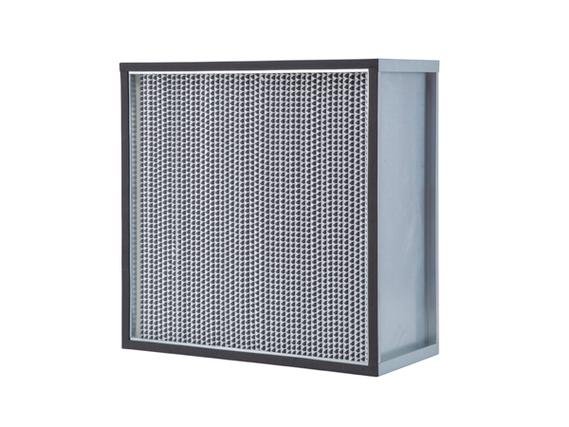
A HEPA filter, or High-Efficiency Particulate Air filter, is designed to trap 99.97% of airborne particles as small as 0.3 microns. These filters are essential in environments requiring stringent air purity, such as hospitals, laboratories, and cleanrooms.
Definition and Standards
You may wonder what makes a HEPA filter special. The U.S. Department of Energy says a HEPA filter must remove at least 99.97% of particles that are 0.3 micrometers in size. This means it can trap things much smaller than what you can see. In Europe, the EN 1822-1:2019 standard sorts filters by how well they catch the hardest-to-trap particles, called the most penetrating particle size (MPPS). You will find different classes like EPA, HEPA, and ULPA. Each class has its own level of efficiency.
Here is a quick look at how these filters are grouped:
Designation | Filter Groups according ISO 29463 |
|---|---|
EPA Filter (efficient particulate air filter) | ISO 15 E – ISO 30 E |
HEPA Filter (high efficiency particulate air filter) | ISO 35 H – ISO 45 H |
ULPA Filter (ultra low penetration air filter) | ISO 50 U – ISO 75 U |
You can also see how each class performs:
Efficiency | EN 1822 | ISO 29463 | Retention (averaged) | Retention (spot) |
|---|---|---|---|---|
EPA | E10 | — | ≥ 85% | — |
E11 | ISO 15 EISO 20 E | ≥ 95%≥ 99% | — | |
E12 | ISO 25 EISO 30 E | ≥ 99.5%≥ 99.9% | — | |
HEPA | H13 | ISO 35 HISO 40 H | ≥ 99.95%≥ 99.99% | ≥ 99.75%≥ 99.95% |
H14 | ISO 45 HISO 50 U | ≥ 99.995%≥ 99.999% | ≥ 99.975%≥ 99.995% |

Tip: Always check the filter class before you buy. This helps you know how much protection you get.
Core Function
A HEPA filter works hard to keep your air clean. It captures a wide range of airborne particles, even those as small as 0.3 microns. This makes it a strong choice for removing allergens and pollutants from your home. You will notice the difference if you have allergies or asthma.
HEPA filters capture at least 99.97% of airborne particles.
They remove common allergens like pollen, pet hair, and mold spores.
They also trap tiny smoke particles and bacteria.
You can trust a HEPA filter to make your indoor air much safer to breathe.
What Are the Different Types of HEPA Filters?
There are many kinds of HEPA filters you can buy. Each kind works best for certain jobs. Knowing the differences helps you choose the right one.

HEPA-Type
HEPA-Type filters look like real HEPA filters. They do not follow the strict rules from the U.S. Department of Energy. You will see these in cheaper air purifiers. They remove about 85% to 90% of tiny bits as small as 0.3 microns. The material is not as thick, so more particles get through.
Note: HEPA-Type filters are good for dust and big particles. They do not block tiny allergens or smoke as well as better filters.
True HEPA
True HEPA filters meet the rule of removing at least 99.97% of 0.3 micron particles. You can trust them to catch pollen, pet hair, mold spores, and some bacteria. Most home air purifiers use True HEPA filters for strong everyday protection.
True HEPA filters have folds to make more surface area.
They are tested to make sure they work well.
Absolute HEPA
Some products say they have “Absolute HEPA” filters. This means the filter meets or does better than the True HEPA rule. Both types catch at least 99.97% of 0.3 micron particles. Some companies use “Absolute HEPA” to show extra tests or higher quality, but the difference is small.
Tip: If you see “Absolute HEPA,” check if it meets the 99.97% rule.
Ultra-HEPA
Ultra-HEPA filters clean air even more. They remove over 99.999% of particles as small as 0.12 microns. These are used where air must be very clean, like in chip factories and labs. Ultra-HEPA filters use thick microfiber mats and special glue to trap tiny bits.
Ultra-HEPA filters block viruses, bacteria, and fine dust.
They are rare in homes because they cost more and need special tools.
Medical-Grade HEPA
Medical-Grade HEPA filters are made for hospitals and clinics. They use very fine glass fibers and tight spaces between fibers. These filters remove 99.95% to 99.995% of particles, even viruses and bacteria. You will see them in surgery rooms, isolation areas, and cleanrooms where safety is very important.
Requirement | Description |
|---|---|
Standards Compliance | Must meet BS EN 1822-1/ISO 29463-1 or similar standards |
Efficiency | At least 99% reduction in particle concentration for the hardest-to-catch particles |
Lifespan | Lasts about 12 months, but may need more frequent changes in tough settings |
Medical Settings | Used in clinical areas with vulnerable patients |
Alert: Most homes do not need Medical-Grade HEPA filters. They are best for places with high risk of infection.
ULPA
ULPA means Ultra Low Penetration Air filter. These filters remove at least 99.999% of particles as small as 0.1 microns. You will find ULPA filters in chip factories, medical labs, and clean rooms. They give the most protection, but they also slow down airflow more than other filters.
Filter Type | Particle Size | Efficiency | Typical Applications |
|---|---|---|---|
HEPA | 0.3µm | 99.95% | Clean rooms, general air purification |
ULPA | 0.1µm | 99.999% |

Comparing HEPA Filter Types
Here is a simple table to help you compare the main types:
Filter Type | Efficiency | Particle Size | Application Area |
|---|---|---|---|
HEPA-Type | 85-90% | 0.3 microns | General use, lower efficiency |
True HEPA | 99.97% | 0.3 microns | General air purification |
Absolute & Ultra HEPA | >99.999% | 0.3 microns | Semiconductor, aerospace, containment |
Medical-Grade HEPA | 99.95%-99.995% | Viruses, bacteria | Hospitals, cleanrooms |
ULPA | 99.999% | 0.1-0.3 microns | Medical, high-protection environments |
Summary: For basic dust, a HEPA-Type filter may be enough. For allergies or asthma, pick a True HEPA filter. For the most protection, choose Medical-Grade HEPA, Ultra-HEPA, or ULPA filters.
How HEPA Filters Work?
HEPA filters work by trapping airborne particles through a dense mat of fibers using three key mechanisms: interception, impaction, and diffusion. These filters are highly effective in capturing particles as small as 0.3 microns.

Filtration Mechanisms
You might wonder how a HEPA filter traps so many tiny particles. The answer lies in four main filtration mechanisms. Each one works best for different particle sizes. Here is a simple table to help you understand:
Mechanism | Description |
|---|---|
Inertial Impaction | Large particles cannot follow the air as it bends. They crash into the filter fibers and stick. |
Interception | Medium particles move with the air. When they touch a fiber, they get caught and stay there. |
Diffusion | Very small particles move in a zigzag path. This random motion makes them hit fibers and stick. |
Straining | Some particles are just too big to fit through the spaces between fibers, so they get trapped. |
Tip: These mechanisms work together to catch dust, pollen, smoke, and even some germs. You get cleaner air because each type of particle faces a different trap.
0.3 Micron Efficiency
You may have seen that 0.3 microns is a special number for HEPA filters. This size is important because it is the hardest for the filter to catch. Particles larger than 0.3 microns get trapped by impaction or interception. Smaller particles, like viruses, move in random paths and get caught by diffusion. The 0.3-micron size sits right in the middle, making it the most challenging to filter.
They actually work even better for particles smaller than 0.1 microns because diffusion helps trap them.
You can trust that a HEPA filter will protect you from most harmful particles in your air, even those you cannot see.
How Do You Choose the Right HEPA Filter?
Choosing the right HEPA filter can feel confusing, but you can follow a few simple steps to make the best choice for your space and needs. Let’s break down what you should look for.

Filter Ratings (H13, H14, MERV)
Filter ratings tell you how well a filter can trap tiny particles. The most common ratings for HEPA filters are H13 and H14. You may also see MERV ratings, which measure how well a filter removes particles from the air.
Here is a table to help you compare H13 and H14 filters:
Filter Type | Particle Removal Efficiency | Airflow | Electricity Consumption | Leakage Risk |
|---|---|---|---|---|
H13 | High | Higher | Lower | Lower |
H14 | Higher | Lower | Higher | Higher |
H14 filters trap more particles than H13, but they can slow down airflow and use more electricity. H13 filters work well for most homes and offices. H14 filters are better for hospitals or places that need very clean air.
You might also see MERV ratings. A higher MERV number means the filter can catch smaller particles. For most homes, a MERV rating between 13 and 16 is enough.
Tip: Always check the filter rating before you buy. H13 is great for homes, while H14 is best for medical or high-risk areas.
Application and Environment
Think about where you will use the filter. Different places have different needs.
Environment | Key Considerations |
|---|---|
Hospitals | Must meet strict air quality rules to stop germs from spreading. H13 or H14 filters are often required. |
Homes | Look for filters that remove allergens and have high efficiency. |
Offices | Make sure the filter fits your HVAC system and is easy to maintain. |
Make sure the filter is a real HEPA filter, not just “HEPA-type.”
Check the Clean Air Delivery Rate (CADR). This number shows how much air the purifier can clean.
If you use the filter in a hospital or clinic, pay attention to noise and comfort for patients.
Note: Humidity and temperature can affect how well your filter works. High humidity can lower the filter’s performance by about 10%.
Room Size and Airflow
You need to match the filter to your room size. A filter that is too small will not clean the air well.
To find the right size, measure your room and check the air purifier’s CFM (cubic feet per minute). Multiply the CFM by 60 to get the total air moved in an hour. Then, divide by your room’s volume to find the air changes per hour (ACH).
Experts recommend at least 2 air changes per hour for schools.
Hospitals need at least 4 air changes per hour in patient rooms.
Intensive care units need 6, and operating rooms need 25.
A higher ACH means cleaner air, especially in crowded or high-risk places.
Evidence Description | Key Insight |
|---|---|
Higher airflow rates can cause pressure drops and lower filter efficiency. | Lower airflow rates improve filter efficiency. |
Tip: Choose a filter that can handle your room size and gives enough air changes per hour.
Specific Needs (Allergies, Smoke, Pets)
You may have special reasons for wanting cleaner air. Here is how to choose for common needs:
Allergies: True HEPA filters (H13 or higher) work best. Studies show they help people with asthma and allergies, especially in homes with pets.
Smoke: HEPA filters remove 99.97% of tiny smoke particles. Look for filters that use interception, impaction, and diffusion to trap these bits.
Pets: HEPA filters catch pet dander and hair. Research shows they lower allergen levels and help with breathing problems.
Study | Findings |
|---|---|
Francis et al. | Asthma improved with HEPA air cleaners in homes with pets. |
Gore et al. | Cat allergen levels dropped with HEPA filters. |
Batterman et al. | PM levels fell by 30% to 70% with HEPA filters. |
Sulser et al. | Children with pet allergies had fewer symptoms at night. |
Alert: Always pick a filter that meets the 99.97% standard for the best results with allergies, smoke, or pets.
Maintenance and Replacement
Keeping your filter clean helps it last longer and work better. Here are some tips:
Check your filter every few months.
Replace it once a year in most homes. In dirtier places, you may need to change it more often.
Clean or replace pre-filters to help the main filter last longer.
In hospitals or cleanrooms, test filters every 6 to 12 months and replace them as needed.
Regular maintenance can make your filter last up to three years or more. Cleaning pre-filters and checking for clogs keeps your air clean and your filter working well.
Note: Good maintenance saves money and keeps your air safe.
Step-by-Step Guide to Choosing a HEPA Filter:
Decide where you will use the filter (home, office, hospital).
Check the filter rating (H13 for homes, H14 for medical use).
Measure your room and make sure the filter can handle the size.
Think about your needs (allergies, smoke, pets).
Plan for regular maintenance and filter changes.
By following these steps, you can pick the best HEPA filter for your space and breathe easier every day.
What Are the Most Common Misconceptions About HEPA Filters?
HEPA filters are often misunderstood; a common misconception is that all HEPA filters are the same. In reality, their efficiency can vary significantly based on their rating and construction quality.

True HEPA vs. HEPA-Type
You might think all HEPA filters work the same, but that is not true. Many people believe that “HEPA-type” or “HEPA-like” filters offer the same protection as True HEPA filters. In reality, only True HEPA filters meet strict standards and remove at least 99.97% of particles at 0.3 microns. HEPA-type filters often remove less, sometimes only 85% to 90%. Companies use terms like “HEPA-type” or “HEPA-style” as marketing tricks. These labels can make you think you are getting the best filter, but they do not guarantee high performance.
“HEPA-type” and “HEPA-like” filters may not meet certified standards.
Tip: Always check if the filter says “True HEPA” and look for official ratings.
Filter Ratings Confusion
Filter ratings can also cause confusion. You may see labels like H13, H14, or MERV, but not all filters with these labels are certified. Some air purifiers claim to be “HEPA” without real testing. If a filter does not mention standards like EN 1822 or ISO 29463, you should be careful. Some filters do not provide data on how well they trap the hardest-to-catch particles. This lack of information can mislead you into thinking a filter is better than it really is.
Many filters use “HEPA” in their name without proper certification.
“HEPA-type” filters may only reach MERV 13–16, not True HEPA levels.
Missing test reports or standards can be a warning sign.
Note: If you feel unsure, ask an expert to help you choose the right filter for your needs.
Maintenance Overlooked
Many people forget that HEPA filters need regular care. You might think a filter works forever, but that is not true. Over time, dust and particles clog the filter, and its performance drops. If you do not test or replace your filter, it may stop protecting you. In places like hospitals, this can even put people at risk. Untested or old filters can let dangerous particles back into the air.
Dirty filters lose their ability to clean the air.
Skipping maintenance can give a false sense of safety.
In healthcare, poor filter care can lead to legal or financial trouble.
Alert: Check and replace your HEPA filter as recommended to keep your air safe and clean.
You can pick from many HEPA filter types. Each one is best for a certain job. The table below helps you find the right filter for your needs:
Key Takeaway | Description |
|---|---|
Filter Efficiency | Use H13 or H14 if you have allergies or trouble breathing. |
Customization | Choose a filter that matches your air quality needs. |
Cost-Effectiveness | Regular HEPA filters are good for most houses. |
Before buying, do these things: 1. Make sure the filter is a true HEPA. 2. Check the warranty and read about the product. 3. See if the filter is clean and not broken.
Pick the right filter to help keep your air clean and safe.
FAQ
How often should you replace a HEPA filter?
You should change your HEPA filter every 6 to 12 months. If you have pets or allergies, check it more often. Always read the instructions from the maker for the best results.
Can HEPA filters remove viruses from the air?
HEPA filters can catch many viruses. They trap particles as small as 0.3 microns. Medical-grade filters give even better protection. No filter can remove every virus.
Do HEPA filters help with pet allergies?
Yes, HEPA filters catch pet hair and dander. Using a True HEPA filter at home can help lower allergy symptoms.
What is the difference between HEPA and ULPA filters?
Filter Type | Particle Size | Efficiency |
|---|---|---|
HEPA | 0.3 microns | 99.97% |
ULPA | 0.1 microns | 99.999% |
ULPA filters catch even smaller particles than HEPA filters. But they slow down the air more than HEPA filters.