
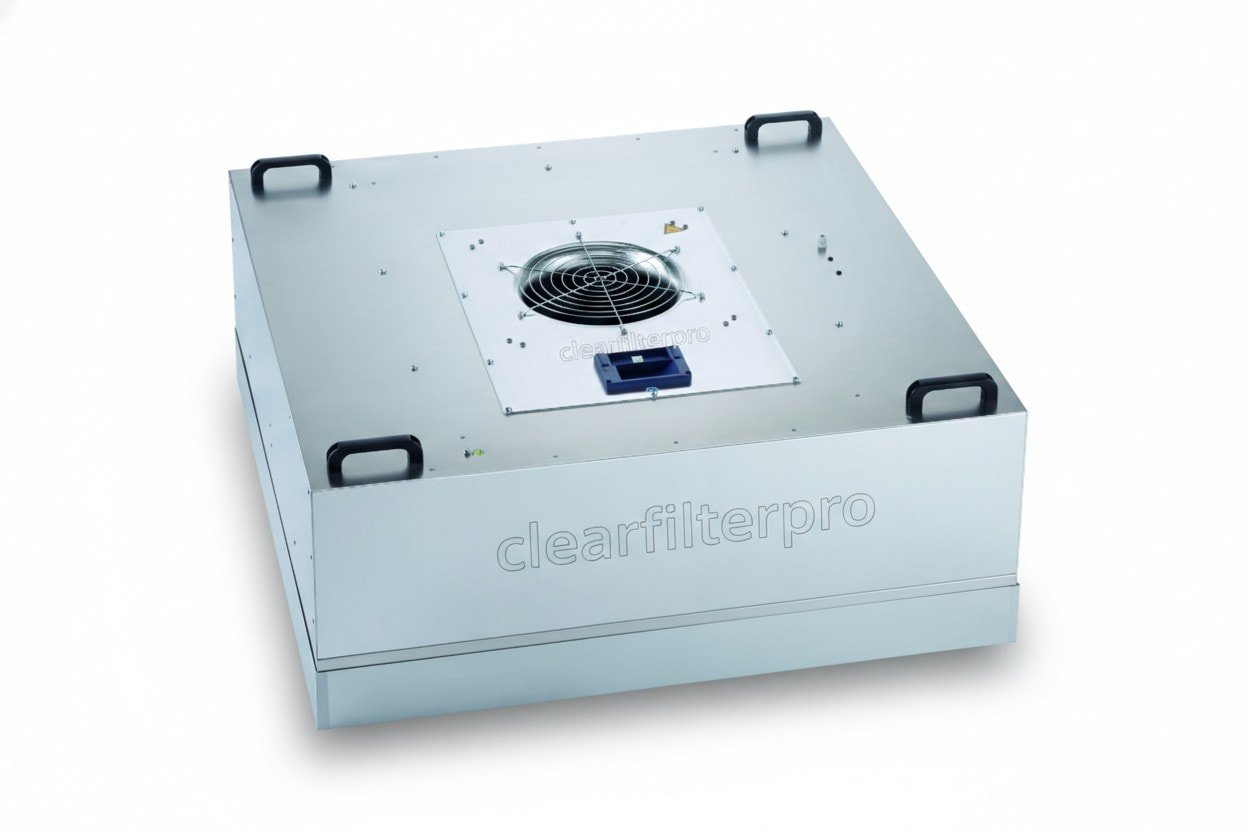
You need clean air in controlled environments to protect sensitive products and people. A Fan Filter Unit (FFU) pulls in air, pushes it through a strong filter, and sends out clean air. HEPA and ULPA filters catch very tiny particles. ISO cleanroom standards set the rules for how clean the air must be. Industries like biotechnology, electronics, and healthcare use FFUs to keep spaces free from dust and germs.
Key Takeaways
A Fan Filter Unit (FFU) cleans air. It pulls air in. It filters the air. It pushes out clean air. This process keeps air safe in special places.
FFUs use HEPA and ULPA filters. These filters catch very small particles. They remove at least 99.97% of bad stuff from the air.
Regular maintenance is important for FFUs. Changing filters on time helps them work well. This keeps the air clean.
FFUs save energy with adjustable fan speeds. This helps lower energy costs. It keeps air clean in big areas.
Many industries use FFUs. Healthcare, biotechnology, and electronics need clean air. FFUs help protect products and people in these places.
What Is a Fan Filter Unit (FFU)?
A Fan Filter Unit (FFU) is a self-contained air filtration system that combines a motorized fan with a HEPA or ULPA filter to deliver clean, filtered air into controlled environments. These modular units are installed in ceiling grids to create positive pressure zones, ensuring contaminant-free airflow in cleanrooms, laboratories, and semiconductor manufacturing facilities.
FFU Definition
You may wonder what a Fan Filter Unit (FFU) actually is. This device works as a self-contained air filtration system. You often see it in cleanrooms, laboratories, and other places where air quality matters. The FFU pulls in air, pushes it through special filters, and releases clean air back into the room.
Here is a table that shows the main features of a Fan Filter Unit (FFU):
Feature | Description |
|---|---|
Dimensions | You usually find FFUs in steel housings sized 4′ x 2′, 3′ x 2′, or 2′ x 2′. |
Filters | FFUs use pre-filters, HEPA, ULPA, or other MERV filters. |
Airflow | FFUs create laminar airflow, which means air moves in smooth, straight lines. |
Efficiency | HEPA filters remove 99.99% of particles 0.3 μm or larger. ULPA filters remove 99.999% of particles 0.12 μm or larger. |
You can see that FFUs use strong filters to catch tiny particles. The laminar airflow helps keep the air clean and steady. You get a device that fits into ceilings or walls and works quietly in the background.
FFU Role in Air Purity
You need clean air to protect sensitive equipment and people. The Fan Filter Unit (FFU) plays a big part in keeping air pure. It does more than just move air around. It traps dust, germs, and other tiny particles that can cause problems.
Tip: FFUs work better than basic air fresheners or portable air purifiers. Air fresheners only hide smells. Portable purifiers may not clean large spaces well.
Here are some reasons why FFUs stand out:
HEPA filters in FFUs capture at least 99.97% of 0.3-micron particles. You get strong protection against airborne pollutants.
FFUs provide high airflow rates. You can use them in big rooms and still get clean air everywhere.
You save energy because FFUs have variable speed controls. You can adjust the airflow to match your needs.
FFUs also help you meet strict ISO cleanroom standards. You can adjust each unit to fit your space. This flexibility lets you change your cleanroom design when your production process changes. You keep your cleanroom in line with ISO class requirements.
You need to keep the number of particles in the air low. FFUs help you do this by providing the right number of air changes per hour. They keep airflow smooth and even, which is important for ISO classes 4 and 5. You can reduce the total air volume by over 40% and still control particles well.
You get a reliable way to keep air pure. FFUs make sure your cleanroom stays safe and meets industry standards.
What Components Make Up a Fan Filter Unit?
A Fan Filter Unit (FFU) has several important parts. Each part helps the unit clean the air and keep your environment safe. You need to know how these parts work together to choose the right FFU for your needs.

Fan and Motor
The fan and motor are the heart of the FFU. The fan pulls in air from the room and pushes it through the filters. You get a steady flow of clean air. Modern FFUs use energy-saving motors. These motors can lower your energy use by up to 50% compared to older systems. They also make less noise, which is important in places like cleanrooms and labs. You can expect a well-made motor to last 5 to 10 years if you take care of it. Regular checks help you spot problems early. Listen for strange sounds or vibrations, and check that the airflow stays strong.
Specification | Description |
|---|---|
Airflow Capacity | High, with low sound levels |
Energy Efficiency | |
Noise Levels | Very low, ideal for quiet environments |
Maintenance | Needs regular checks, lasts 5–10 years |
Tip: A quiet and energy-efficient fan keeps your workspace comfortable and your energy bills lower.
HEPA/ULPA Filters
The filters are what make the air clean. HEPA filters catch 99.97% of particles that are 0.3 microns or bigger. ULPA filters do even better, catching 99.999% of particles as small as 0.12 microns. You need to replace these filters on a schedule to keep your FFU working well. In very clean spaces, you may need to change filters every 6 months. In less strict areas, you can wait up to a year or more.
Filter Type | Filtration Efficiency | Particle Size |
|---|---|---|
HEPA | 99.97% | ≥0.3 microns |
ULPA | 99.999% | ≥0.12 microns |
You should always pick the right filter for your space. The right choice helps you meet air quality standards and keeps people and products safe.
Housing and Controls
The housing holds all the parts together. You often see housings made from galvanized steel, aluminum, or stainless steel. Stainless steel works best if you need to clean the unit often or use strong cleaners. The controls let you set the fan speed and check how the unit is working. Good controls help you save energy and keep the air clean. You can adjust the settings to match your needs.
Galvanized steel: strong and good for most rooms
Aluminum: light but not as tough as steel
Stainless steel: best for harsh cleaning
Note: Choosing the right housing and controls makes your FFU last longer and work better.
When you select a Fan Filter Unit (FFU), look at each part closely. The right fan, filter, and housing help you keep your air clean, save energy, and meet industry rules.
How Does a Fan Filter Unit Operate?
A Fan Filter Unit (FFU) operates by drawing ambient air through a pre-filter using a motorized fan, then forcing it through a high-efficiency particulate air (HEPA) or ultra-low particulate air (ULPA) filter. This process removes airborne particles as small as 0.3 microns with 99.99% efficiency. The filtered air is then discharged into the controlled environment, creating positive pressure that prevents contamination from entering the clean space.

Air Intake and Filtration
You need to understand how a Fan Filter Unit (FFU) cleans the air. The process happens in three main steps:
Air Intake: The FFU uses a strong centrifugal fan. This fan pulls air from the room into the unit. You get a steady flow of air moving inside.
Filtration and Purification: The air passes through two filters. The first filter catches bigger dust and dirt. The second filter, called a high-efficiency filter, removes tiny particles like bacteria and viruses. You get air that is much cleaner and safer to breathe.
Clean Air Output: The FFU pushes the clean air out at a steady speed. This creates a clean zone in your workspace.
Tip: Regularly check and replace the filters. Clean filters help your FFU work better and keep your air pure.
You can see that each step works together to remove harmful particles. The science behind this process uses both mechanical and high-efficiency filtration. The FFU traps both large and tiny particles, so you get the best air quality possible.
Airflow Distribution
You also need to know how the FFU spreads clean air in your room. The unit does more than just filter air—it manages how air moves.
FFUs create positive pressure in your room. This means clean air pushes out, so dirty air cannot come in through cracks or gaps.
The unit uses special baffles inside. These baffles spread the air evenly across the filter. You get smooth airflow everywhere, not just in one spot.
You can control many FFUs from one place. This makes it easy to manage air quality in large rooms.
Most FFUs deliver airflow rates between 0.2 and 0.5 meters per second. You can adjust the speed to fit your needs. This helps you keep every part of your cleanroom safe and clean.
Note: Uniform airflow keeps dust and germs from building up in corners. You protect your products and your team.
A Fan Filter Unit (FFU) gives you control over both air purity and airflow. You get a system that keeps your environment safe, efficient, and easy to manage.
FFU Applications

Cleanrooms and Labs
You see Fan Filter Unit (FFU) systems in many cleanrooms and labs. These units help you meet strict ISO Class 1–8 standards. You need this level of control to keep your air free from dust and germs. FFUs work well in places where you handle sensitive products or do important research.
In cleanrooms, you use FFUs for making electronics, medicines, and aerospace parts.
In healthcare, you find FFUs in operating rooms and isolation wards. They help lower the risk of infection.
Food processing plants use FFUs to keep food safe from contamination.
Biotechnology and research labs rely on FFUs to protect experiments and keep results accurate.
High-tech factories, like those making computer chips, need FFUs for strict particle control.
You can change the number and placement of FFUs to fit your room size and needs. This flexibility helps you keep your space clean, even if your work changes.
Industry Use Cases
Many industries trust FFUs to keep their air clean and safe. Each industry has its own rules and needs. You must follow these to protect products and people.
Requirement Type | Details |
|---|---|
Air Quality Requirements | You must meet strict standards set by groups like the FDA and EFSA. |
Installation Requirements | Place FFUs where you can reach them for maintenance and good air flow. |
Maintenance Requirements | Change filters and clean units often for best results. |
Noise and Energy Efficiency | FFUs should run quietly and use less energy to save money. |
Regulatory Compliance | You need to follow rules for air quality, electrical safety, and fire safety. |
You get more than just clean air with FFUs. These units give you several benefits over other systems:
FFUs use a decentralized design. This means you lose less energy because air does not travel through long ducts.
You can control each FFU by itself. This lets you adjust air flow in different zones and save energy.
FFUs make it easy to add or remove units as your needs change.
Running costs stay low, often between $3 and $10 per month.
Tip: FFUs help you save money and energy while keeping your workspace safe and clean.
You can see why so many industries choose FFUs for their cleanrooms and labs. You get reliable performance, easy control, and lower costs.
You now understand that a Fan Filter Unit (FFU) helps keep air clean in special rooms. These units use HEPA filters and smart motors. They help make your space safe and save energy. Here is a simple summary:
Key Point | Description |
|---|---|
Definition | Gives HEPA-filtered air to cleanrooms and labs. |
Operation | Keeps positive pressure to stop dirty air from coming in. |
Importance | Keeps people and products safe in sensitive places. |
You get better safety, lower costs, and cleaner air. Knowing about FFUs helps you make good choices at work.
FAQ
What is the difference between HEPA and ULPA filters in FFUs?
HEPA filters catch 99.97% of particles at 0.3 microns. ULPA filters trap 99.999% of particles down to 0.12 microns. You choose ULPA for stricter air purity needs.
How often should you replace FFU filters?
You should replace filters every 6 to 12 months. Check your cleanroom standards and usage. Regular filter changes keep your air clean and your FFU working well.
Can you control the speed of an FFU?
Yes, you can adjust the fan speed on most FFUs. This lets you change airflow to match your room’s needs. Variable speed controls help you save energy.
Where do you install FFUs in a cleanroom?
You usually install FFUs in the ceiling grid. This setup spreads clean air evenly. You can add more units for larger rooms or higher cleanliness levels.
Do FFUs make a lot of noise?
Modern FFUs run quietly. You can expect low sound levels, which helps you work comfortably in labs and cleanrooms. Always check the noise rating before you buy.