
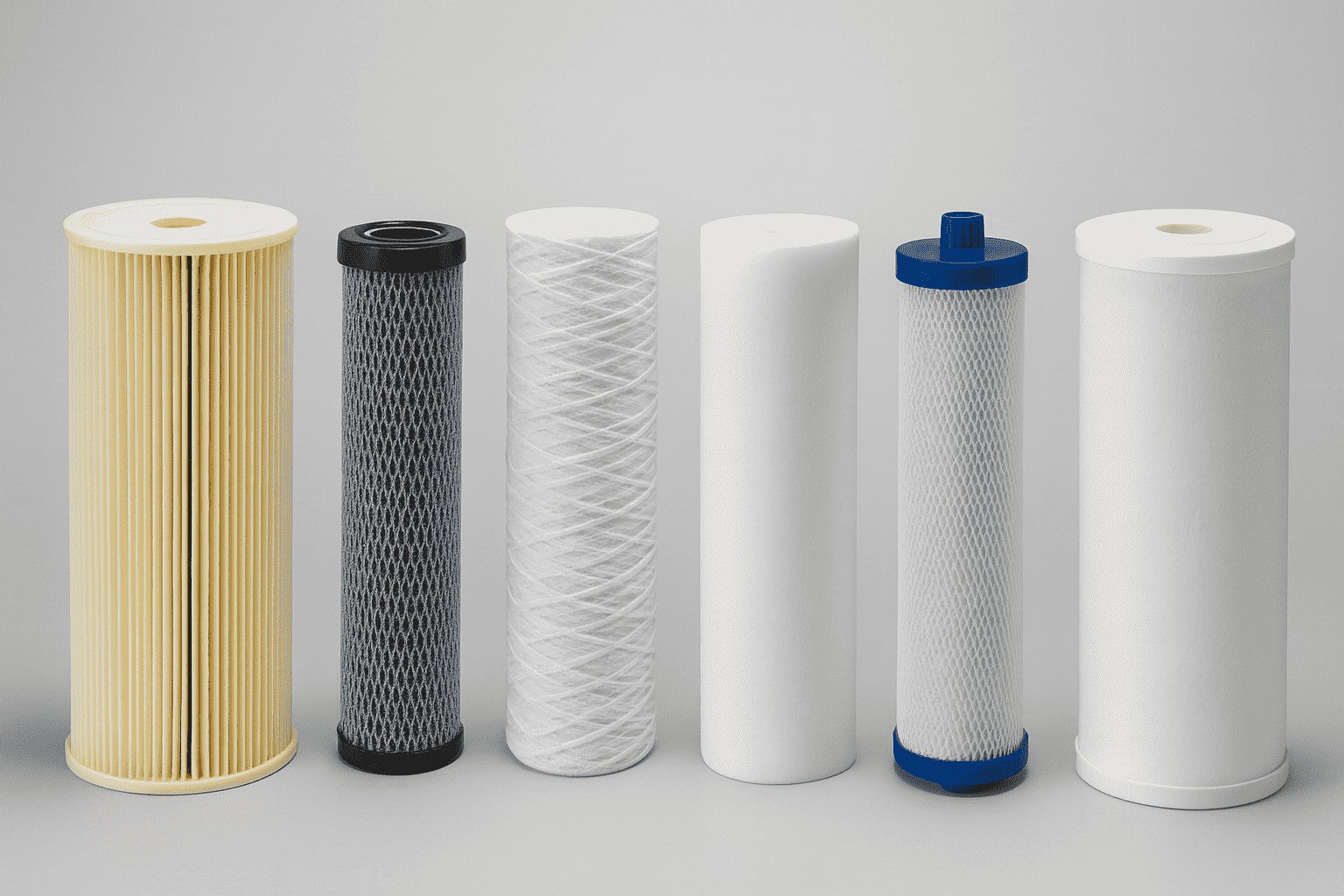
You can find dust collector cartridge filters made from a few main materials. These materials are cellulose, polyester, blends like 80/20, spunbond polyester, nanofiber layers, and coated media. The filter media you pick is important. Nanofiber filters catch tiny particles, help air move better, and use less energy. Many industries use nanofiber filters because they are easy to clean and last longer.
Nanofiber filters clean the surface well.
Smaller dust collectors work because airflow is better.
You save energy and do less maintenance with filters that last longer.
Choosing the right material for your dust collector cartridge filter helps it work better and last longer.
Key Takeaways
Pick the best filter media for your dust collector. This helps it work better and last longer.
Nanofiber filters are great at catching small dust pieces. They also need less cleaning.
Check your filters often and take care of them. This makes sure they work well and stay good for a long time.
Think about things like humidity and temperature before you pick a filter.
Use coated filters if the area is wet or oily. This helps them work better and last longer.
What Are the Basics of Dust Collector Cartridge Filters?
Dust collector cartridge filters are pleated cylinders that trap fine dust on engineered media, delivering high surface area in compact housings. Core basics: choose media for the dust (cellulose/polyester/nanofiber/PTFE), match efficiency (e.g., MERV 13–16), size by air‑to‑cloth ratio and airflow, and use pulse‑jet cleaning to control pressure drop. Monitor differential pressure and replace cartridges when pulse cleaning no longer restores normal flow or when damage, odor, or blinding appears.

What Is a Cartridge Filter
A cartridge filter is important in dust collection systems. It uses a pleated design. This means the filter folds back and forth. The pleats give more area to catch dust. Cartridge filters fit into small spaces. They still work well in tight spots. Look at the table below to see the main features:
Feature | Description | Distinction from Other Filters |
|---|---|---|
Pleated Structure | Gives more area to trap dust. | Works better than flat filters. |
Compact Design | Takes up less space for easy setup. | Fits better than bag filters. |
High Filtration Efficiency | Catches tiny dust particles well. | Does better than many other filters. |
Cleaning and changing is simple. | Saves time compared to other filters. |
Dust Collector Cartridge Filters work well and are easy to clean. Many industries use them because of these benefits.
How Cartridge Filters Work
Here are the steps for how cartridge filters work:
Dusty air goes into the collector through special openings. The air spins around, which helps separate big dust pieces.
The air moves through the pleated filter material. The filter catches dust on its surface. The micron rating shows what size dust it can trap.
Dust builds up and forms a dust cake. This layer helps catch even smaller dust.
When the filter is full, a blast of air cleans it. The blast knocks off the dust cake so the filter can work again.
The dust drops into a hopper and leaves through a valve.
The main parts of a cartridge dust collector are pleated filter cartridges, a cleaning system, a dust hopper, and a pressure gauge. These parts help keep the air clean and the system working well.
What Are the Main Filter Media Types Used in Cartridge Filters?
The main cartridge filter media include depth media (melt‑blown polypropylene, cellulose, polyester; string‑wound cotton/PP), pleated membranes (PTFE, PES, PVDF, nylon, polypropylene), microglass/fiberglass, activated carbon block, and specialty metal or ceramic. These differ in pore structure, micron range, chemical compatibility, temperature resistance, and typical applications—from municipal and industrial water treatment to sterile filtration in pharmaceuticals and electronics. Choosing the right cartridge filter media depends on contaminant type (particulate vs. dissolved), required efficiency, operating conditions, and regulatory or quality standards.
Cellulose Media
Cellulose media is common in Dust Collector Cartridge Filters. It comes from plant fibers. The fibers are thin and trap dust well. Cellulose filters catch almost all particles bigger than 2–5 microns. This helps protect machines from dust larger than 1 micron. If you add a nanofiber layer, it traps even smaller dust.
Cellulose filters are best for dry dust.
They let air flow well and are easy to clean.
How well they work depends on the cellulose type.
You will see cellulose media used in these places:
Industry | Applications |
|---|---|
Ceramic & Natural Stone | Blasting, Grinding |
Metalworking | Planing, Sanding |
Recycling | Shredding |
Woodworking | Sanding |
Tip: Use cellulose media for dry dust collection. Do not use it where there is lots of moisture or oil.
Polyester Media
Polyester media is strong and works well. It can handle moisture, oil, heat, and chemicals. Polyester filters do not break easily and keep their shape for a long time. Most polyester media in Dust Collector Cartridge Filters has an E12 Minimum Efficiency Rating.
Polyester filters let go of dust easily.
They are good for big or odd-shaped dust.
Polyester lasts longer than cellulose in tough places.
Media Type | Advantages | Disadvantages |
|---|---|---|
Polyester | Strong, stable, resists moisture, oil, heat, chemicals. | Not as efficient as some advanced options. |
Good for tough dust and easy cleaning. | Does not last as long as some advanced media. | |
Cellulose | Efficient, durable, versatile. | Does not last as long as polyester. |
Note: Pick polyester media if you need a filter for wet or oily dust.
80/20 Blends
Many Dust Collector Cartridge Filters use 80/20 blends. These blends mix 80% cellulose and 20% polyester. You get the good filtering of cellulose and the strength of polyester.
80/20 blends are good for general dust.
They resist moisture better than pure cellulose.
You can use them with light moisture or mixed dust.
80/20 blends are great if you want a balance of cost, efficiency, and durability.
Spunbond Polyester
Spunbond polyester media is strong and lasts a long time. The fibers stick together, making the filter tough. It does not wear out easily. You can use spunbond polyester in hot places, from 93°C to 135°C. It filters out 99.99% or more dust.
Property | Description |
|---|---|
Filtration Efficiency | 99.99+% |
Abrasion Resistance | Great against chemical damage |
Temperature Range | 93–135°C |
Spunbond polyester is used in many industries:
General dust collection
Surface blasting, grinding, polishing
Powder coating
Pharmaceutical and food processing
Application Type | Description |
|---|---|
Buffing | Removes dust from polishing surfaces |
Polishing | Catches fine dust during finishing |
Grinding | Collects dust from grinding |
Sandblasting | Handles rough dust from sandblasting |
Chemical Processing | Filters chemical dust |
Powder Coating | Removes dust from powder coating |
Pharmaceutical | Keeps things clean and controls dust |
Food | Controls dust in food processing |
Spunbond polyester is best for rough or hot dust.
Nanofiber Layers
Nanofiber layers make filters work even better. These filters use tiny fibers, only nanometers wide. Nanofiber layers sit on top of other filter media. They trap very small dust, even as tiny as 0.3 microns.
Particle Size (microns) | Filtration Efficiency |
|---|---|
0.3 – 0.5 | High (over 99% efficiency) |
Nanofiber filters need less air for cleaning.
You clean them less often and use less energy.
The filter lasts longer, saving money and time.
Nanofiber layers help catch the smallest dust and keep your Dust Collector Cartridge Filter working well.
Coated and Treated Media
Coated and treated media give extra protection. Makers add special coatings or treatments to the filter. These help the filter resist water, oil, chemicals, or static electricity. Some treatments also help dust come off easier.
Treatment Type | Description | Benefits |
|---|---|---|
Nanofiber | Fine fibers layered on media | Higher efficiency, blocks deep dust |
Static Electricity | Conductive carbon particles | Lowers static discharge risk |
Hydro-Oleophobic | Makes filter repel water and oil | Better moisture and oil resistance |
Singed | Surface fibers burned off | Easier dust cake release |
Calendered/Glazed | Surface pressed flat | Smoother, easier dust release |
Acrylic Coated | Acrylic resin coating | Higher chemical and heat resistance |
Flame Retardant | Chemical coating | Lowers fire risk |
Some coated media, like antistatic or Teflon-coated filters, work well in places with lots of chemicals or risk of explosions. Others, like hydro-oleophobic filters, help in wet or oily places.
Pick coated or treated media if you need extra protection from moisture, chemicals, or static charge.
How Do Different Cartridge Filter Materials Compare?
Different cartridge materials balance particle rating, chemical compatibility, temperature tolerance, flow rate, and cleanability. Choose by fluid and contaminant: Polypropylene suits general water and chemicals; Cellulose targets sediment in potable water; Nylon/Polyester handle solvents with durability; fluoropolymers (PVDF/PTFE) resist aggressive media and heat; Activated carbon blocks adsorb chlorine/VOCs; stainless steel meshes are reusable for coarse solids; ceramic captures microbes but flows slowly.

Performance and Efficiency
It is important to know how each filter works before you pick one. Some filters catch more dust. Others let air move through better. The table below shows how common materials compare:
Material | Efficiency Characteristics |
|---|---|
Cellulose | Costs less but does not clean as well as blends or coated filters. |
Cellulose-Polyester Blends | Cleans better and is easier to wash, especially with PTFE coating. |
Spunbond Polyester | Catches dust well but can clog faster with oily dust. |
PTFE Coated Blends | Loads dust on the surface and cleans easily. |
Nanofiber Filters | Traps tiny dust very well but can clog quickly. |
Nanofiber and PTFE coated blends clean the air best. These filters help keep your air safe. Good filters remove dust and pollution. This means workers stay healthy and the air is better at work.
Tip: Using the right filter media in your Dust Collector Cartridge Filter helps protect your health and keeps your equipment running longer.
Durability and Cost
You want a filter that lasts and does not cost too much. Some filters cost more but last longer. Others are cheaper but need to be changed more often. Here is a quick look:
Filter Type | Unit Cost | Typical Life | Annual Cost (200 filters) |
|---|---|---|---|
Standard Polyester | $85-120 | 12-18 months | $11,000-$24,000 |
PTFE Membrane | $180-280 | 18-36 months | $12,000-$37,000 |
Specialty Applications | $300-500 | 6-24 months | $25,000-$100,000 |
Polyester filters are a good choice for price and how long they last. PTFE and specialty filters cost more but last longer and work better for hard jobs.
Typical Applications
You should use the right filter for your work. Each type works best in certain places:
Filter Media Type | Recommended Application |
|---|---|
Spunbond Filters | Woodworking, Cement Production, Sandblasting |
Nanofiber Filters | Metalworking, Welding, Pharmaceuticals, Food Processing |
Spunbond filters are good for woodworking and sandblasting.
Nanofiber filters work best for metalworking and medicine jobs.
Cellulose blends are used for general dust in many places.
Note: Picking the right filter helps you follow safety rules from groups like OSHA and the EPA. This keeps your workplace safe and your air clean.
Choosing the Right Dust Collector Cartridge Filter

Matching Material to Dust Type
You should pick a filter that matches your dust. The size and kind of dust helps you decide. Here are some things to think about:
Fine dust, like powder or smoke, needs a filter that catches tiny pieces. Nanofiber or HEPA filters are best for this.
Big dust, like wood chips or metal shavings, can use cellulose or polyester filters.
If the dust is rough, pick a strong filter like spunbond polyester.
For dust that can burn or react with chemicals, choose a filter that resists fire or rust.
Tip: Always check the dust’s size and what it is made of before picking a Dust Collector Cartridge Filter. This helps you get the best results and stay safe.
Environmental Considerations
Where you use your filter can change how well it works. Humidity, heat, and wet air all matter. Look at the table below for more details:
Environmental Factor | Impact on Filtration Performance |
|---|---|
Relative Humidity | High humidity (over 80%) can make filters work worse, especially underground. |
Temperature | Not as important as humidity, but very hot places can still affect filters. |
Dust Moisture Content | Wet dust can make filters clog or not work right. |
Humid Environments | Filters may need special coatings or materials to work well in damp places. |
If you work in a wet or humid place, use filters with coatings that keep out water. For hot areas, spunbond polyester works better than cellulose.
Maintenance and Longevity
Taking care of your filter helps it last longer and work better. Here are some good tips:
Keep water out of the filter. Use moisture separators and pick media that resists water.
Check and change gaskets and seals often. This stops dust from leaking out.
Teach your team how to clean and change filters the right way.
Watch for signs you need a new filter, like high pressure or damage you can see.
How long your filter lasts depends on the media:
Filter Media Type | Lifespan Comparison | Notes |
|---|---|---|
Cellulose/Polyester Blend | Needs to be replaced more often. | |
Spunbond Polyester | Strong and easy to clean | Lasts longer and is simple to take care of. |
Nanofiber | Lasts the longest | Best for hard jobs and tiny dust. |
Doing regular care and picking the right filter for your dust and space will help your Dust Collector Cartridge Filter last longer and keep your air clean.
You need to pick the right filter media for your dust collector cartridge filter. This choice affects how well your system works and how long it lasts. Think about these key factors:
Media type: Use cellulosic blends for dry dust or synthetic polyester for high heat.
Construction: Make sure the filter is strong and has good pleat spacing.
Treatments: Look for nanofiber, flame-retardant, or anti-static options.
Dust type: Test your dust and ask an expert.
Aspect | Description |
|---|---|
The right media improves efficiency and lowers costs. | |
Variety of Media Grades | You can find many grades for different jobs. |
Benefits | Good choices mean longer filter life and better dust control. |
Case Studies | Real examples show how the right media solves industry problems. |
If you are unsure, talk to a filter specialist. The right choice keeps your air clean and your workplace safe.
FAQ
What is the best filter media for fine dust?
You should choose nanofiber or HEPA filters for fine dust. These filters trap very small particles. They help keep your air clean and safe.
Can you wash and reuse cartridge filters?
Some cartridge filters allow you to wash and reuse them. Always check the manufacturer’s instructions. Not all filters can handle water or cleaning.
How often should you replace a dust collector cartridge filter?
You should check your filter every few months. Replace it when you see damage, high pressure, or poor airflow. Regular checks help your system work better.
Do coated filters work better in wet environments?
Yes! Coated filters resist water and oil. They last longer in damp or oily places. You should use them if your dust is wet or sticky.