
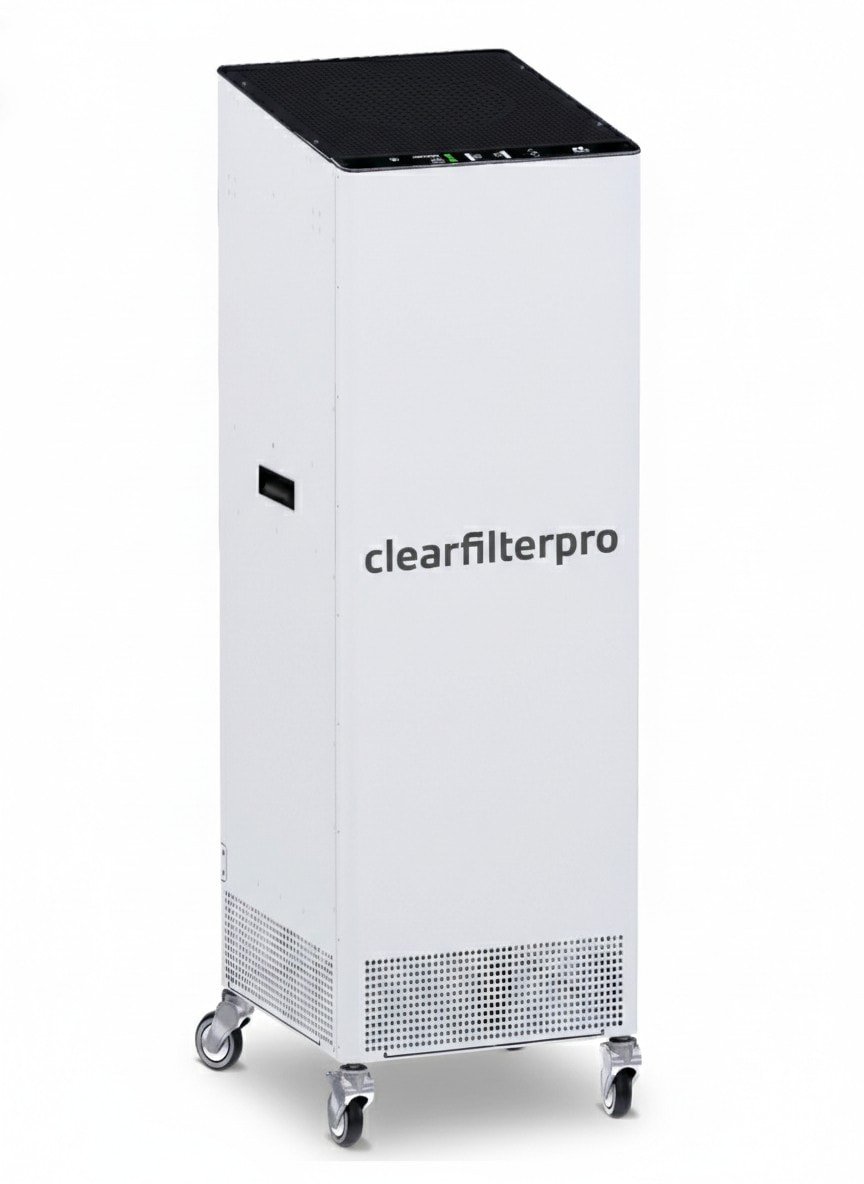
When you pick a commercial air purifier in 2026, look at three main things: new technology, rules, and saving money. Groups like the EPA and OSHA now have tough indoor air quality rules, so you need to pick systems that have filters that really work. Many companies buy advanced features, like HEPA and IoT-enabled systems, because these choices save energy and help with health and safety.
The global air purifier market was worth USD 18.28 billion in 2025.
It is expected to reach USD 19.5 billion in 2026, which means many businesses want them.
Key Takeaways
Measure your room to pick the right purifier. Make sure the Clean Air Delivery Rate (CADR) is at least two-thirds of your room size. This helps clean the air well.
Check how loud the purifier is. Pick quieter ones for work areas so people can focus. Put louder purifiers in places people do not use much.
Choose good filters for the pollutants in your room. Medical-grade HEPA filters catch tiny particles and make air better.
Find purifiers with indoor air quality (IAQ) displays. These show real-time air data and help you use your HVAC system well.
Think about how much the purifier will cost over time. Pick trusted brands and filters that last longer. This saves money on new parts and fixing.
What Key Factors Matter When Choosing a Commercial Air Purifier in 2026?
When choosing a commercial air purifier in 2026, key factors include filtration efficiency, airflow capacity, energy consumption, maintenance requirements, and smart technology integration. Ensuring compliance with updated air quality standards and selecting a unit with proven effectiveness against airborne pollutants are crucial considerations.

Space Size and Purifier Capacity
You need to pick a purifier that fits your space. First, measure how big your room is. The purifier should clean all of that area. Look at the Clean Air Delivery Rate (CADR). The CADR should be about two-thirds of your room size. For example, if your room is 150 square feet, you want a CADR of at least 100.
Check how many air changes per hour (ACH) the purifier can do. Experts say you need 3 to 5 ACH. Use 3 ACH for normal rooms. Use 5 ACH for places like gyms or doctor offices. This helps keep the air clean and safe.
Measure your room before you buy.
Make sure the CADR matches your space.
Try to get 3 to 5 air changes each hour.
Noise Level and Placement
Noise can bother people in indoor spaces. Check the decibel (dB) rating before you buy. Some purifiers let you change the speed to lower noise. In quiet places, pick a low-noise or silent model.
Tip: Put quiet purifiers where people work or meet. Put louder ones in storage rooms or hallways.
Always check how loud the purifier is.
Use settings to control the noise.
Place purifiers so they do not disturb people.
Filter Quality and Pollutant Types
The filter decides what the purifier can remove. In 2026, medical-grade filters are common. These filters catch tiny particles and many pollutants. Here is a table to show which filter works best for each pollutant:
Filter Type | Effectiveness in Removing Pollutants |
|---|---|
Captures very small things like smoke, mold, dust mites, bacteria, and some viruses. | |
Removes gases like VOCs, cooking smells, smoke smells, formaldehyde, and chemical fumes. | |
Austin Air HealthMate Plus | Removes VOCs, nitrogen dioxide, and formaldehyde with its special filter. |
You might see other filters, like bag filters, compact filters, and panel filters. These can help your main filter last longer. Always pick the filter that matches the main pollutants in your space, like dust, allergens, smells, or chemical fumes.
CADR and IAQ Display Features
CADR shows how fast the purifier cleans the air. A higher CADR means quicker cleaning. Always check this number before you buy. Many purifiers in 2026 have indoor air quality (IAQ) displays. These sensors measure pollution and show live data.
IAQ displays help you know when the air is clean.
Real-time alerts tell you if pollution goes up.
IAQ sensor data helps you change your HVAC and save energy.
Note: IAQ displays help with green building goals and keep your indoor air healthy.
Cost-Effectiveness and Reliability
You want a purifier that saves money over time. Look at the price and how much it costs to run. Some filters, like HEPA, last about 140 days if used 8 hours a day. After that, they still work pretty well. You do not need to change them often, so you save money.
Pick brands that people trust. Some top brands in 2026 are Honeywell, LG Electronics, Austin Air, and IQAir. These brands make purifiers that last and work well.
Check how long filters last and their cost.
Choose trusted brands for long use.
Balance the price with savings over time.
If you focus on these things, you can find the best commercial air purifier for your space. This helps you follow new air rules, protect health, and save money.
Why Does Indoor Air Quality Matter in Commercial Spaces?
Indoor air quality in commercial spaces affects health, productivity, energy efficiency, and regulatory compliance. Clean, well-ventilated air reduces illness, absenteeism, and liability, while controlling pollutants, humidity, and CO2 optimizes cognitive performance and comfort. Poor IAQ increases HVAC costs, complaints, and risks from pathogens, allergens, chemicals, and particulates.
Health and Productivity Benefits
People spend a lot of time at work indoors. The air inside can change how you feel each day. Breathing clean air helps you stay healthy and do your best. Bad air can make you feel sick or tired. You might get headaches or not feel well. When the air is clean, you can focus better. You also have more energy and feel happier.
Here are some ways good indoor air helps you at work:
Bad air can make you do less work by 6-9%.
Less pollution means people miss fewer days from being sick.
Better air can help you think better by 61%.
You feel happier and want to keep your job when you feel healthy.
Indoor air quality is not just about feeling good. It keeps you healthy and helps your work do well.
Regulatory Compliance and Standards
Buildings must follow rules for indoor air quality. These rules keep everyone safe and healthy. Many groups make these rules for indoor air. Some states have even tougher rules than others.
Organization | Role in IAQ Standards |
|---|---|
OSHA | Makes sure workers are safe from bad air. |
ASHRAE | Sets rules for how much fresh air buildings need. |
EPA | Gives advice and tips about indoor air problems. |
State/Local | Some have rules that are stricter than the country’s. |
You can follow these rules by using commercial air purifiers. Air filters help catch dust and fumes in the air. You should check the air often and teach workers about air risks. You also need to follow rules like ANSI/ASHRAE 62.1 and 62.2 for air flow and UL 867 for safety. Doing these things keeps your air clean and people healthy.
Note: Following air quality rules helps you avoid trouble and keeps your workplace safe for everyone.
What Contaminants Do Commercial Air Purifiers Need to Handle?
When you pick air purifiers for your business, you should know what contaminants are in your space. Many pollutants can hurt people and make work harder. There are three main types to think about: particulate matter, volatile organic compounds, and biological pollutants.

Particulate Matter (PM2.5, PM10)
Particulate matter is a common contaminant in places like offices and schools. These tiny bits float in the air and can get into your lungs. There are two main kinds:
Health Risks | |
|---|---|
PM10 | Can make eyes, nose, and throat feel sore. Breathing may be hard. |
PM2.5 | Can make heart and lung problems worse. May cause lung cancer or low birth weight. |
To get rid of particulate matter, use these solutions:
Get HEPA filters for your purifier.
Pick filters with high MERV ratings.
Change filters often and keep them clean.
VOCs and Odors
Volatile organic compounds, called VOCs, are chemicals that turn into gases. Some VOCs smell, but some do not. They come from things like paint, cleaning sprays, and machine exhaust. VOCs and smells can give you headaches or make you dizzy. They can also make breathing hard and your space less nice.
To clean VOCs and odors, try these:
Use portable air cleaners with activated carbon filters.
Use strong HVAC filters.
Change filters on a regular schedule.
Device Type | CADR (m³/hour) | VOC Reduction Rate | Comparison to OH Radical Generator |
|---|---|---|---|
72.10 | Much higher | 11 times better |
Activated carbon filters are good for removing VOCs and smells. They do not use chemicals, so they are safe and work well.
Biological Pollutants
Biological pollutants are things like mold, bacteria, and viruses. Bad airflow can make these build up inside. Mold can make mycotoxins that are very harmful.
“Recent studies show mold in buildings can float in the air and make mycotoxins that are easy to breathe in or swallow,” said Kevin Wood, Camfil USA Vice President Sales & Marketing. “These mycotoxins can go deep into your lungs and cause serious health problems.”
You can use these solutions to remove biological pollutants:
Mechanism of Action | Particle Size Capability | |
|---|---|---|
HEPA Filters | Traps particles in a mesh filter and catches bigger bits. | Down to 0.3 µm |
UV Irradiation | Breaks the DNA of germs so they cannot grow. | Works on many germs |
HyperHEPA Filters | Catches very tiny particles with great accuracy. | Down to 0.003 µm |
Pick air purifiers that match the main contaminants in your space. This helps keep your air clean and your people healthy.
How Do Air Purification Metrics and Technologies in 2026 Influence Selection?
Air purification metrics and technologies in 2026 guide selection by quantifying “clean air” delivery for specific pollutants, room sizes, and risks. Buyers match CADR/eCADR, ACH targets, filtration classes (ISO 16890 ePM1, H13/H14 HEPA), gas-phase capacity, byproduct certifications (CARB, UL 2998), noise/energy, and lifecycle cost to choose the safest, most effective, and compliant option.

Air Changes per Hour (ACH) and CADR
When picking a purifier, look at ACH and CADR. ACH tells you how often the air gets cleaned each hour. Experts say five air changes per hour is best for health. Most buildings only get three air changes from their HVAC. Adding two more air changes makes the air cleaner. CADR shows how fast a purifier removes bad stuff from the air. You can use a formula to find the right system: ACH equals sixty times CFM divided by V. Hospitals and clinics have the cleanest air because they follow strict rules.
Five ACH keeps indoor air healthy.
Three ACH is normal, but five is better.
CADR helps you see which purifier works best.
Filter Types and Medical-Grade Options
You need to choose the right filter for your space. True HEPA filters catch almost all tiny particles. New filters like electrostatic and nanofiber types save energy and need less care. Ultraviolet germicidal irradiation and photocatalytic oxidation help remove germs and VOCs. Activated carbon filters last longer and work better for smells. Biological air filters use safe materials for the planet. Smart filters let you check how well they work right now.
Filter Type | Efficiency Rating | Particle Size |
|---|---|---|
HEPA | 99.97% | 0.3 microns |
ULPA | 99.999% | 0.1 microns |
H13 | 99.95% | N/A |
H14 | 99.995% | N/A |

Tip: True HEPA and ULPA filters help you meet tough air cleaning rules.
Smart Features and System Integration
Many purifiers in 2026 connect to building systems and IoT. You can check air quality on your phone. Smart features show you when to change filters and how much power you use. These systems help businesses save money and work better. Over half of new purifiers have smart connections. Central air quality control helps keep the air healthy and meet new rules.
Smart purifiers give you live air data.
System connections help clean air better.
IoT features help you save energy and manage filters.
To pick the best air purifier, look at ACH, CADR, filters, and smart features. This helps make your space safer and cleaner for everyone.
You can pick a good commercial air purifier by using easy steps. Start by measuring your room and see if the purifier can clean it. Then, look at how loud it is and how good the filter works. Put the purifier where most people spend time. Use smart features to check the air right away. Try using a checklist or a tool to compare different purifiers. Keep learning about new technology and rules. Ask experts or sellers for help that matches what you need.
FAQ
What is the best way to size a commercial air purifier for my space?
You should measure your room’s square footage. Check the purifier’s CADR rating. Make sure the CADR matches at least two-thirds of your room size. This helps you get the right fit for clean air.
How often should I change the filters?
Most HEPA filters last about 140 days with daily use. You should check the manufacturer’s guide. Some smart purifiers send alerts when it is time to change filters.
Can one purifier handle multiple rooms?
One purifier works best in a single open space. If you have walls or doors, you need a separate unit for each room. This ensures every area gets clean air.
Do smart features really help with air quality?
Smart features let you track air quality in real time. You get alerts for filter changes and pollution spikes. These tools help you keep your air clean and save energy.