
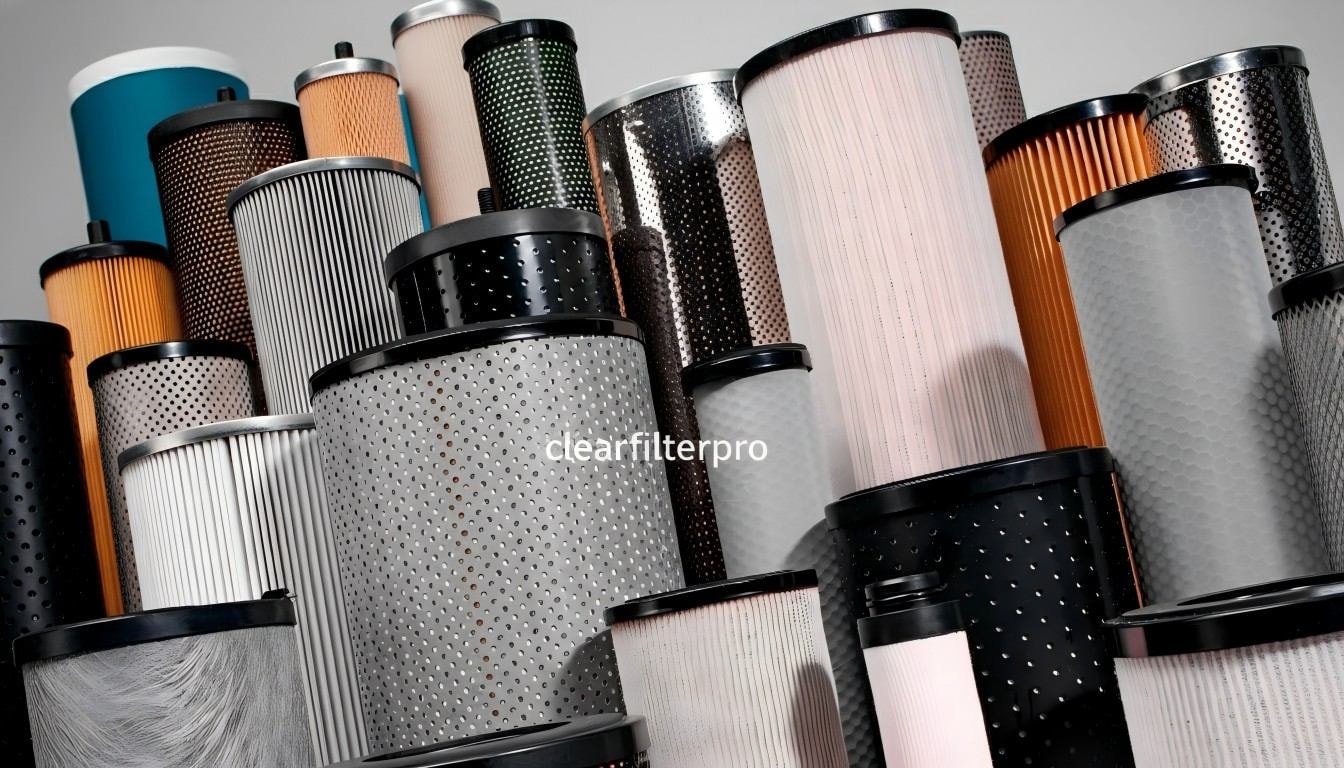
A dust collector cartridge filter catches tiny bits from the air. People use it in factories and workshops. It helps keep your workspace safe and clean. In 2026, these filters are very important. They help meet tough air quality rules. They also help lower energy bills. New designs help you save energy. They catch more dust and last longer. You do not need to change filters as often. The table below shows how new features help save energy:
Innovation Type | Contribution to Energy Savings |
|---|---|
Enhanced Filtration Media | Catches more dust, makes filters last longer, and lowers how often you need to fix them, which saves money. |
Automation and IoT Integration | Lets you check filters all the time and fix problems before they happen, so you use less energy and stop work less often. |
Energy Efficiency Innovations | Uses special drives and systems to save power and use less electricity. |
You get the best results when you pick the right size and material. You also need to do regular maintenance.
Key Takeaways
Dust collector cartridge filters help keep air clean in factories and workshops. They make sure the air meets tough rules in 2026.
Picking the right filter size and material is very important. It helps the filter catch more dust and last longer.
Doing regular maintenance is also important. Using pulse-jet cleaning systems helps lower downtime and saves money on repairs. This makes work run better.
Buying new filters can save a lot of energy. You might pay up to 20% less on energy bills.
Knowing what kind of dust you have and how air moves in your workspace is helpful. This helps you pick the best filter. It keeps everyone safe and follows the rules for your industry.
What Exactly Is a Dust Collector Cartridge Filter?
A dust collector cartridge filter is a vital component in dust collection systems, designed to capture and contain airborne pollutants efficiently. These filters use pleated media which maximizes the filtration surface area within a compact design, enhancing dust capture efficiency while maintaining airflow.
Core Function and Design
A dust collector cartridge filter helps keep air clean. It traps dust and tiny bits before they get out. You see these filters in many factories and workshops. They protect machines and people from dust.
This filter has a smart design. It uses pleated material to catch more dust. The pleats look like folds in a fan. This gives the filter more space to trap dust. It does not need to be very big. There is also a cleaning system called a reverse pulse jet. This system blows short bursts of air to clean the filter. This helps the filter last longer and work better.
You can check the main parts and what they do in the table below:
Definition | Primary Components |
|---|---|
A cartridge dust collector lets air out but keeps dust from getting into the air. | 1. Pleated cartridge filter for more filtering space. |
Modern dust collector cartridge filters use strong materials. Some use PTFE laminated spunbonded polyester. Some use nanofiber material that catches very tiny particles. These can catch things as small as 0.3 microns. You also find cellulose and PTFE cartridges for tough jobs. Nano cartridges use fibers that are half the size of other brands. These features give you cleaner air and longer filter life.
New designs in 2026 make these filters even better. Convex side walls in the cabinet help air move smoothly. This shape keeps the filter from wearing out too fast. Advanced pulse cleaning technology helps you clean the filter more often and better. Computer modeling helps engineers make the filter last longer and work better.
Why They Matter in 2026
You need a dust collector cartridge filter in 2026 because air quality rules are stricter. These filters help you follow the rules by catching very fine dust. They work well in places with little space. The small design means you can fit them almost anywhere.
These filters also save you time and money. You can change them quickly from outside the machine. You do not have to stop work for long. Less downtime means you get more done and spend less on labor.
Cleaner air helps you and your team stay healthy. Studies show clean air helps you think and work better. You see fewer health problems and people feel happier at work. People want to stay at their jobs longer.
Here are some key benefits you get from using a dust collector cartridge filter in 2026:
Workers think better and focus more
Your workspace is more productive
Fewer health problems from dust
People feel happier at work
Maintenance is easier and costs less
Now you can see why these filters are important for any factory or workshop. They help keep your air clean, your team healthy, and your business running well.
How Do Cartridge Filters Work?
Cartridge filters clean fluids by forcing them through pleated, porous media under a pressure differential. Particles larger than the media’s pore size are trapped on the surface and within the media’s depth, while clean fluid exits the core. Efficiency depends on micron rating, media type, and pleat area. As pores load with solids, pressure rises; cartridges are then rinsed or backwashed (e.g., pool) or replaced (industrial).

Filtration Process
You use a cartridge filter to clean the air in your workspace. When you turn on your dust collection system, dirty air enters the filter housing. The air moves through the pleated filter material. The pleats give the filter more surface area. This design helps the filter catch more dust and tiny particles.
The filter traps dust on its surface. Clean air passes through and goes back into your workspace or outside. Over time, dust builds up on the filter. Many systems use a pulse jet cleaning method. This method sends a quick burst of air through the filter. The burst knocks dust off the filter and into a collection bin. You do not need to stop the machine to clean the filter. This process keeps the filter working well and helps it last longer.
Tip: Regular cleaning helps your filter work better and last longer.
Airflow and Particle Capture
Airflow plays a big role in how well your filter works. If the airflow is too high, dust can clog the filter quickly. If the airflow is too low, the filter may not catch all the dust. You need to pick a filter that matches the airflow needs of your workspace.
A Dust Collector Cartridge Filter uses special materials to catch very small particles. Some filters can trap dust as small as 0.3 microns. This means you get cleaner air and a safer workspace. You should check your airflow rates often. Good airflow helps your filter capture more dust and keeps your system running smoothly.
You can use this table to see how airflow affects filter performance:
Airflow Rate | What Happens to the Filter |
|---|---|
Too High | Filter clogs quickly |
Too Low | Dust escapes capture |
Just Right | Best dust capture and filter life |
When you understand how your filter works, you can keep your air clean and your team healthy.
What Types and Formats Are Available?
Available cartridge types include cellulose, polyester/spunbond, cellulose–polyester blends, nanofiber, PTFE‑membrane, aramid for high temperature, and conductive anti‑static media. Formats span round or oval cartridges, top‑load or bottom‑load mounting, open/open or open/closed end caps, multiple lengths/diameters, varied pleat densities, and optional flame‑retardant, oil/water‑repellent finishes with different cores and gaskets.

Vertical vs. Horizontal Cartridges
You can pick vertical or horizontal cartridge dust collectors. Each one has its own good points. Vertical cartridges hang straight down. Gravity helps dust fall into the hopper. Pulse jet cleaning knocks dust off the filter. The dust drops right into the collection area. This design helps the filter last longer. It also removes dust well. You might have to stop your system to change the cartridges. This can make your costs go up.
Horizontal cartridges sit sideways inside the collector. Airflow pushes dust along the same way as the cartridges. You can change one cartridge at a time. You do not need to stop the whole system. This makes maintenance easier and cheaper. Horizontal designs often have explosion vents on top. This adds more safety. You do not need extra isolation features.
Here is a table to help you compare the two types:
Feature | Vertical Cartridge Dust Collector | Horizontal Cartridge Dust Collector |
|---|---|---|
Structural Design | Cartridges hang down; dust falls into the hopper by gravity. | Cartridges go in sideways; dust falls with the airflow. |
Dust Cleaning Mechanism | Pulse jet cleaning lets dust fall into the hopper. | Single-valve jetting can make upper dust cover lower cartridges. |
Higher because you must stop to change cartridges. | Lower; you can do easy single-cartridge maintenance. | |
Safety Features | Explosion vents are on the side; layout matters. | Top explosion vents; no extra isolation needed. |
Performance | Lasts longer and settles dust better. | Saves energy and is easier to maintain. |
Tip: Pick vertical cartridges for longer filter life and better dust settling. Choose horizontal cartridges for easy care and saving energy.
Standard and Custom Options
You can get standard or custom Dust Collector Cartridge Filters. Standard models work for most jobs. Custom designs are best for special needs or spaces. Many companies now make modular and compact cartridge filters. These designs save space and are easy to put in. You can add or take away modules if your needs change.
Here is a table showing the main advantages of modular and compact designs:
Advantage | Description |
|---|---|
High filtration efficiency | Keeps air and fluids cleaner in many places. |
Easy maintenance | Makes care simple and cuts downtime. |
Versatility | Works well in many factories and workshops. |
Fits in small spaces but still works great. |
You can choose a design that fits your workspace and dust control needs. Modular and compact systems give you high performance without using much space.
What Filter Media and Materials Are Used?
Filter media include fibrous mats, granular adsorbents, membranes, and rigid porous bodies. Common materials: cellulose and synthetic fibers (polyester, polypropylene, fiberglass) for air and dust; activated carbon for VOC and taste; melt-blown PP for cartridges; PTFE and nylon for fine particles; ceramic and sintered stainless steel for high-temperature or corrosive duties; sand, anthracite, and diatomaceous earth for bed filtration.

Common Media Types
You can pick from a few common filter media for cartridge filters. Each one works best for different dust and air needs. The most popular choices are cellulose, spunbond polyester, and blended filters. Many factories and workshops use these because they are not too expensive. They also last a long time and work well.
Cellulose/Paper: This media costs less and is good for normal dust. It usually has a MERV rating of 10 to 12. You can use it for wood dust or light powders.
Spunbond Polyester: This material lasts longer and handles sticky or wet dust. It can get a MERV rating up to 15. You use it in places with tough dust or lots of water in the air.
Blended Filters: These mix cellulose and polyester. They work well when the air is a little wet. Their MERV ratings are between 10 and 13.
You can look at the table below to compare the main types and how well they filter:
Cartridge Filter Type | Filtration Media | Filtration Efficiency |
|---|---|---|
Polypropylene fiber (Flotrex PN) | Nominally rated | |
Pleated cartridge | Polypropylene fiber (Flotrex AP) | Absolute rated |
Pleated cartridge | Glass fiber (Flotrex GF) | Nominally rated |
Pleated cartridge | Polyethersulfone membrane (Memtrex MP) | Varies by application |
Pleated cartridge | Nylon membrane (Memtrex NY) | Varies by application |
Pleated cartridge | Expanded PTFE membrane (Memtrex FE) | Varies by application |
Depth cartridge | Polypropylene fiber (Purtrex) | Nominally rated |
Depth cartridge | Polypropylene fiber (AbsoluteZ) | Absolute rated |
Tip: You should pick the filter media that matches your dust and workspace for the best results.
Specialty Media Choices
Sometimes you need special filter media for unique dust or safety needs. These advanced materials give you extra safety and fix special problems. For example, some media can block bacteria or stop limescale from building up in pipes.
Here is a table that shows some specialty media and what makes them special:
Filter Media Type | Unique Benefits |
|---|---|
KDF (Kinetic Degradation Fluxion) | Stops chlorine, lead, and mercury; blocks bacteria and algae growth |
Phosphate / Scale Inhibitor | Stops limescale in pipes and heaters by trapping minerals |
Ultrafiltration (UF) | Blocks bacteria, cysts, and viruses; keeps good minerals in the air or water |
You can use KDF media if you need to get rid of heavy metals or control bacteria. Phosphate media helps if you want to stop scale from building up. Ultrafiltration is best when you need to block germs and keep your air or water safe.
Note: Specialty media usually cost more, but they give you extra safety and make filters last longer.
Picking the right filter media helps keep your air clean and your team safe. You get better results and follow all air quality rules for 2026.
What Are the Benefits of Cartridge Filters?
Cartridge filters deliver high-efficiency particle removal (down to submicron levels), protect pumps and membranes, improve product clarity, and reduce total operating costs. They enable fast change-outs, compact installations, reduced waste versus bag filters, and stable performance across broad flow ranges. With media options such as PP, PES, and PTFE, they offer strong chemical and temperature resistance, extend service life, and minimize downtime across water treatment, food, pharmaceutical, and industrial processes.

Efficiency and Energy Savings
You want your dust collection system to work well. You also want it to use less energy. Cartridge filters help with both things. The pleated design gives the filter more surface area. This lets it catch more tiny dust than other filters. Your air gets cleaner in your workspace.
Cartridge filters also help you save energy. They make it easier for air to move through the system. Your machine does not have to work as hard. This means you use less power, especially in small shops. You can save up to 20% on energy bills. If you use smart controls, you can save even more.
The pleated design catches more tiny dust.
Lower pressure drop means you use less energy.
You can save up to 20% on energy bills.
Smart controls help you save even more.
Tip: Using a Dust Collector Cartridge Filter is good for your business and the planet.
Maintenance Advantages
Cartridge filters make taking care of your system easier and cheaper. You do not need to change them as much as other filters. The pulse-jet cleaning system blows dust off the filter. You do not have to stop your machine to clean it. This means you can work more and stop less.
You also spend less money on fixing things. Maintenance costs can go down by up to 30% with cartridge filters. The small size saves space and makes putting them in easy. You can put in or take out filters fast.
Here is a table that shows the main maintenance advantages:
Maintenance Advantage | Description |
|---|---|
Pulse-jet cleaning removes dust without stopping work. | |
Lower Maintenance Costs | Fewer replacements mean you save money over time. |
Energy Savings | Automated cleaning keeps your system running efficiently. |
Superior Handling of Fine Particulates | Filters catch fine dust better, so your air stays clean. |
Note: Easier maintenance means you spend less time and money keeping your system working.
How Do Cartridge Filters Compare to Other Dust Collection Systems?
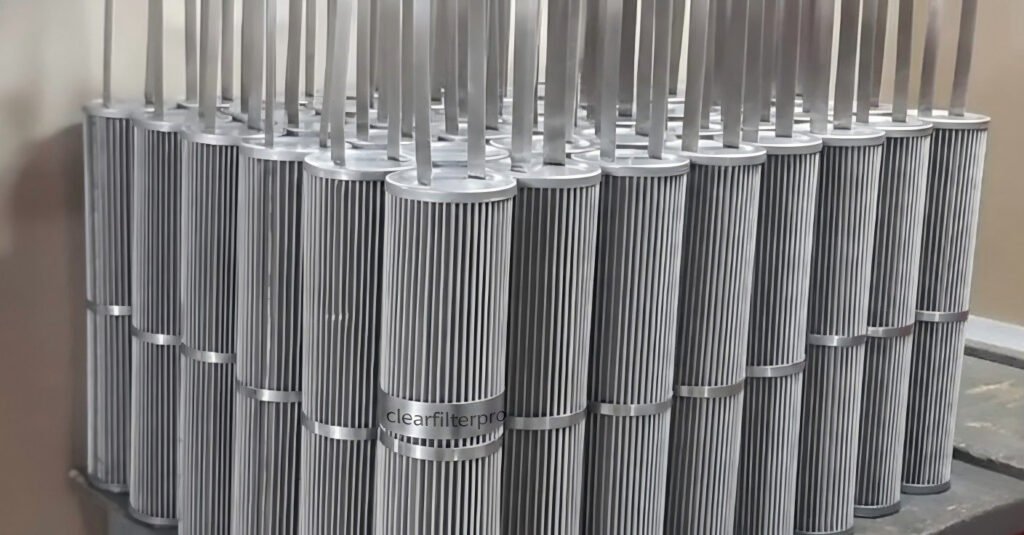
Cartridge filters provide high efficiency for fine particulate in a compact footprint, often reaching 99.97% at 0.3 µm with nanofiber or HEPA media. They enable faster changeouts than baghouses and outperform cyclones and many wet scrubbers on submicron dust, without generating wastewater. Limits include sensitivity to moisture and temperatures above roughly 70–80°C, and potential plugging with sticky or heavy-loading dust unless pre-separation is used.
Cartridge vs. Baghouse
You might wonder how cartridge filters and baghouse systems are different. Both clean the air, but they do it in their own ways. Cartridge filters use pleated media. This gives more space to catch dust in a small area. Baghouse systems use long fabric bags inside a big chamber.
Here is a table that shows the main differences:
Aspect | Cartridge Filters | Baghouse Systems |
|---|---|---|
Filtration Efficiency | Higher efficiency for fine dust due to pleated design | Better for depth filtration and larger particle sizes |
Maintenance & Lifespan | Easier to replace but may require frequent changes | Built for longevity, lasting years with proper care |
Cartridge filters are good for catching tiny dust. You can change them fast. This helps if you do not have many workers. Baghouse systems last longer if you take care of them. They are better for bigger dust and do not clog as quickly.
Cartridge filters are best if you need to change filters a lot.
Baghouse systems are good for places with lots of dust and big particles.
Baghouse systems can save money if your factory is large.
Tip: Pick cartridge filters for quick changes and fine dust. Choose baghouse systems for heavy dust and long life.
Cartridge vs. Cyclone
You can also use cyclone dust collectors. These spin the air to pull dust out. Cyclones do not use filter media. You do not need to change filters as much.
Here is a table to compare cartridge filters and cyclone collectors:
Feature | Cartridge Filters | Cyclone Dust Collectors |
|---|---|---|
Maintenance | Higher maintenance due to filter replacement | Low maintenance, no filter media to replace |
Particle Size Handling | Effective for fine dust and particulates | Best for larger, coarse particles |
Application Suitability | Used in grinding, welding fumes, and fine powders | Suitable for woodworking, agriculture, pre-cleaners |
Temperature Limits | Lower temperature limits, can plug easily | Durable for heavy-duty jobs |
Efficiency | Higher efficiency for fine dust control | Less effective for fine dust, better for coarse dust |
Cartridge filters give you clean air when you have fine dust. You see them in welding shops and places with tiny dust. Cyclone collectors are better for big dust, like in woodworking or farming. You can use cyclones before other systems to catch big dust first.
Cartridge filters are good for tiny dust and strict air rules.
Cyclone collectors are best for big dust and less need for fine filters.
Note: Think about your dust type and how much maintenance you want before you pick your system.
How Should You Size and Select a Cartridge Filter?
Choosing the right cartridge filter is one of the most important steps for clean air and safe work. You need to look at your dust, your workspace, and your rules. If you size and select your filter the right way, you get better air, save money, and keep your team safe.

Assessing Dust Type and Airflow
Start by looking at the dust in your workspace. Dust comes in many types. Some dust is fine, some is sticky, and some can even catch fire. Each type needs a different filter. You also need to know how much air moves through your system. This is called airflow.
Here is a table to help you see what matters:
Factor | Description |
|---|---|
Dust Particle Size | Fine dust needs special filters like nanofiber. Large dust can use standard filters. |
Type of Dust | Sticky, flammable, or wet dust needs special filter media. |
Airflow Requirements | You must know how much air your system moves to pick the right filter. |
You should check the airflow in cubic feet per minute (CFM). List all machines that make dust. Add up their airflow needs. For example, if you have a 10 ft x 10 ft workspace, you multiply 100 sq ft by 80 ft/minute. You get 8,000 CFM for non-hazardous dust. If you have hazardous dust, use 100 ft/minute instead.
Tip: Always check your dust type and airflow before you buy a filter. This helps you pick the best one for your needs.
Sizing Filter Media
The size of your filter media is key for good performance and safety. If your filter is too small, it will clog fast. If it is too big, you waste money and space. You need to match the filter size to your workspace and machines.
Follow these steps to size your filter media:
List all machines that connect to your dust collector.
Find out how much air each machine needs to move.
Add up the total airflow (CFM) for all machines.
Multiply your workspace area by the air speed you need (80 ft/min for normal dust, 100 ft/min for hazardous dust).
Pick a filter that matches or is a little bigger than your total airflow.
You also need to think about pressure drop. This means how much the filter slows down the air. If the pressure drop is too high, your system works harder and uses more energy. Look for a filter with a low pressure drop for your airflow.
Other things to check:
Make sure the filter can handle the highest pressure your system uses.
Check that the filter works at the temperatures in your workspace.
Choose a micron rating that matches your dust. Fine dust needs a lower micron rating.
Note: The right filter size keeps your air clean and your system safe.
Matching Filter to Application
You must match your filter to your job for the best results. Think about what you are filtering. Is it air, smoke, or something else? Check the temperature and pressure in your workspace. Make sure the filter material will not react with your dust or air.
Here are some things to look at:
What type of fluid or gas do you need to filter?
What is the highest and lowest temperature in your system?
What is the highest and lowest pressure?
How clean does your air need to be?
Does your dust have chemicals that could hurt the filter?
You also need to follow all rules for your industry. Some places have strict air quality laws. Make sure your filter meets these rules. If you have special needs, like blocking germs or heavy metals, pick a filter with special media.
Tip: Always match your filter to your workspace, dust, and rules for the best safety and performance.
If you follow these steps, you will pick the right Dust Collector Cartridge Filter for your workspace. You get clean air, safe workers, and a system that lasts longer.
What Safety and Compliance Requirements Matter in 2026?
By 2026, industrial dust collection systems must comply with OSHA, NFPA, EPA, and (in the EU) ATEX requirements. Core needs include a documented Dust Hazard Analysis (DHA), explosion protection (venting or suppression with isolation), spark detection/abort gates, proper bonding/grounding, rigorous housekeeping, and verified emissions permitting. Design and maintenance must align with NEC electrical classifications and proven filter performance, supported by continuous monitoring and training.

Regulatory Standards
You have to follow strict rules when using a Dust Collector Cartridge Filter in 2026. These rules keep workers safe and help the environment. Groups like OSHA and the EPA set dust limits for the air. You need to check your dust collection system often to make sure you follow these limits.
You also need to know about NFPA standards. These rules help you control dangers from dust that can burn or explode. The NFPA 660 standard makes it easier to follow safety steps for explosive dust. You must test your dust to see if it can explode. You can use ASTM tests for this. If your dust is explosive, you need to find out its Kst value. This number shows how dangerous your dust is.
Here are some steps you should follow to stay safe and follow the rules:
Do a Dust Hazard Analysis (DHA) to find dust dangers.
Update your dust collection system to meet NFPA 660.
Clean your workspace on a regular schedule.
Check machines for things that could start a fire.
Teach your team about dust dangers.
Make an emergency plan.
Check and fix your system often.
Tip: Learn about new rules and teach your team often to keep everyone safe.
Explosion Protection
You need to protect your workplace from dust explosions. Start by testing your dust to see if it can explode. If your dust can explode, you need special safety tools.
Important explosion protection steps include:
Explosion pressure detectors that sense fast pressure changes.
Flame detectors that spot fires right away.
Chemical agents that put out flames quickly.
Explosion suppression systems that stop explosions before they get worse.
Isolation devices that keep explosions from spreading to other machines.
Venting systems that let pressure and flames out safely.
You should also use antistatic bag materials and make sure all equipment is grounded. Automated ground checks help stop static sparks. Put in OSHA-approved safety platforms and caged ladders to stop falls. Use Lockout/Tagout systems when fixing machines. For very toxic dust, use bag-in/bag-out systems.
Note: Test and check your safety tools often to stop accidents and keep your team safe.
How Are Cartridge Filters Installed and Maintained?
Cartridge filters are installed by shutting down and depressurizing the system, preparing the housing, seating a lubricated O-ring, inserting the oriented cartridge, and evenly applying torque, then leak testing. They’re maintained by monitoring differential pressure, replacing or cleaning at a defined delta P or time interval, sanitizing the housing, and recording lot numbers and dates for traceability.

Installation Steps
You need to follow clear steps when you install a Dust Collector Cartridge Filter. This keeps your system safe and working well. Here is a simple guide:
Lock out and tag out the dust collector and any connected equipment. Make sure the area has good airflow. Wear the right safety gear.
Turn off the collector. Wait until all moving parts stop.
Open the filter access doors or remove panels. Check your system’s design for the right way.
Take out each filter cartridge. Try not to shake them. This stops dust from spreading.
Look at the tube sheet and mounting surfaces. Clean away any dust or dirt. Check for damage.
Put in new filters. Follow the manufacturer’s instructions. Make sure each filter sits tight and seals well.
Throw away old filters the right way. Some dust needs special disposal.
Remove lockout and tagout devices. Close all doors. Start the system again.
Tip: Always read your manual before you start. This helps you avoid mistakes.
Maintenance Checklist
You should check your cartridge filter system often. Regular care keeps your air clean and your system safe. Use this checklist:
Look for cracks, leaks, dirt, or worn-out parts.
Test how well the system works. Check airflow, pressure, and air quality.
Clean filter housings, spigots, and outlets. This stops bacteria from growing.
Fix leaks and change filters if needed. Lubricate seals and repair any broken parts.
Write down what you do. Make sure everything works right.
Note: A good log helps you spot problems early.
Troubleshooting Tips
Sometimes problems happen. You can solve many issues with simple checks:
If you see low airflow, check for clogged filters or blocked ducts.
If dust escapes, look for leaks or loose seals.
If you hear strange noises, inspect for loose parts or worn bearings.
If the system shuts down often, check the power supply and control panel.
If filters clog too fast, check if you need a different filter media.
Call a professional if you cannot fix the problem. Safety comes first.
You help keep your workspace safe and working well. If you pick, size, and take care of dust collector cartridge filters the right way, you make the air cleaner and your system lasts longer. These steps also cut energy bills and help you follow safety rules. You keep your team safe from health problems too. If you want to learn more, check out these helpful links:
FAQ
How often should you replace a cartridge filter?
You should check your filter every month. Replace it when you see damage or a big drop in airflow. Most filters last 6 to 12 months, but your dust type and system use can change this.
What signs show a filter needs changing?
Look for these signs:
Lower airflow
More dust in the air
Higher pressure drop on gauges
Visible damage or holes
Tip: Change your filter before you see dust escaping.
Can you clean and reuse cartridge filters?
You can clean some filters with compressed air or a pulse-jet system. Do not wash them with water unless the maker says it is safe. Always follow the instructions from your filter supplier.
What is the difference between MERV and HEPA ratings?
Rating Type | What It Means |
|---|---|
MERV | Shows how well a filter traps dust. |
HEPA | Catches 99.97% of tiny particles. |
You should pick the rating that matches your air quality needs.