
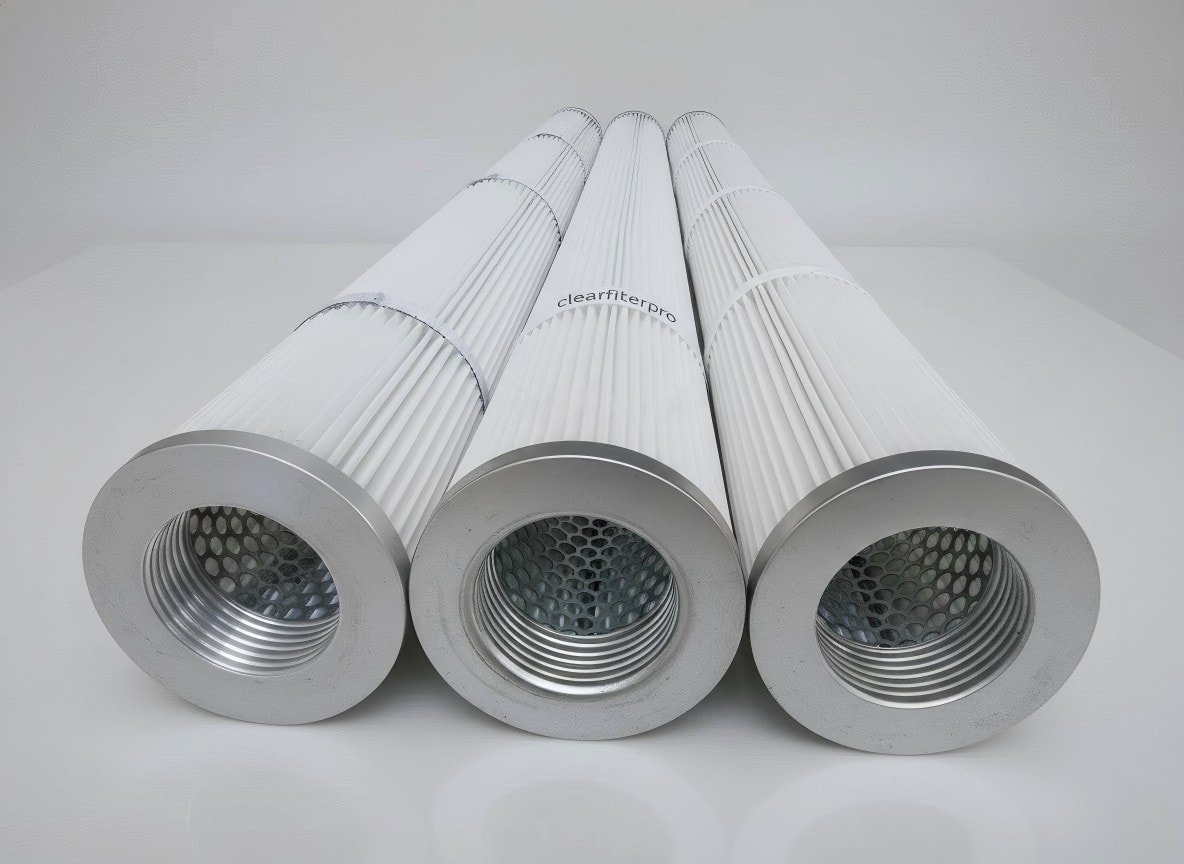
You use an Industrial Cartridge Filter to clean air and liquids in factories. This filter catches bad particles and keeps your workplace safe. You save money when you pick high-quality cartridges. Good filters last longer and cost less to fix. Clean air keeps workers healthy and helps them work better. Good dust collectors use less energy and help you finish more work.
Key Takeaways
Industrial cartridge filters help clean air and liquids in factories. They make the workplace safe and work better. Picking good filters saves money over time. This is because you do not need to fix things as often. Good filters also last longer. There are different kinds of filters for air and liquid. Each type has its own job. It is important to pick the right filter for the best results. You should check and change filters often. This keeps machines working well and stops big problems. Good filters make things safer and follow rules. They also help the environment by making less waste and using less energy.
What Are Industrial Cartridge Filters?
Industrial cartridge filters are replaceable, modular elements housed in pressure-rated vessels that remove suspended solids and contaminants from liquids or gases. Using depth or surface media with defined micron ratings (nominal or absolute), they deliver precise, scalable, low-footprint filtration for process protection, product quality, and regulatory compliance across water, chemical, food, pharmaceutical, and industrial applications.
What Is An Industrial Cartridge Filter
Factories and plants use industrial cartridge filters to clean air, water, and other fluids. These filters are made to catch solid particles. This helps machines work well and not break down. There are different types of these filters. Type 222 has two gaskets to stop leaks. Type 226 has locking fins so you can put it in easily. Plat End has a flat cover that seals the filter. Spear has a pointed cap that keeps it from moving. The filter media inside can be depth or surface type. Depth filters trap particles inside their layers. Surface filters block particles on the outside. This design lets the filter work very well, sometimes over 99.9%.
Type | Description |
|---|---|
Type 222 | Open at one end with dual gaskets for better bypass protection. |
Type 226 | Sanitary filter with locking fins for proper installation. |
Plat End | SOE type with a flat plastic cover for sealing. |
Spear | SOE type with a pointed cap to maintain a seal and prevent swaying. |
Key Functions In Filtration
Industrial cartridge filters use different ways to clean. They block big particles by catching them inside the filter. Diffusion helps catch small particles that move around a lot. Attractive forces, like static electricity, hold onto some dirty things. These ways help keep your air and fluids clean.
Mechanism Type | Description |
|---|---|
Physical Blocking | Larger particles are trapped within the filter structure. |
Diffusion | Smaller particles stick to filter fibers due to random motion. |
Attractive Forces | Electrostatic or chemical forces retain charged or polar contaminants. |
Common Applications
Many industries use industrial cartridge filters. Water treatment plants use them to take out dirt and sand from water. Food and drink factories use them to clean ingredients and finished products. This keeps out germs and unwanted bits. Medicine companies use them to keep liquids and gases clean. Chemical and petrochemical plants use these filters to protect machines and make better products.
Water treatment: Removes sediment and impurities from water.
Food and beverage: Filters ingredients and products to eliminate particles and microorganisms.
Pharmaceuticals: Keeps liquid and gas products clean and safe.
Petrochemical and chemical processing: Protects equipment and ensures product quality.
Industrial cartridge filters work very well, are easy to change, and do not need much fixing. You can use them in many places. They help save money and are good for the environment.
What Types of Industrial Cartridge Filters Exist?
Factories and plants use many kinds of cartridge filters. Each type is best for a certain job. You need to know how they are different. This helps you pick the right one.

Air Filtration Cartridge Filters
Air filtration cartridge filters clean the air in work areas. They trap dust, pollen, and other tiny things. These filters help keep workers and machines safe. They use impaction, interception, and diffusion to catch particles. These methods can trap things as small as 0.3 microns. HEPA filters are a common example. They are used in clean rooms and places needing very pure air.
Here is a table that compares air and liquid cartridge filters:
Aspect | Air Filtration | Liquid Filtration |
|---|---|---|
Mechanism of Filtration | Impaction, interception, diffusion | Viscous forces, electrostatic repulsion |
Efficiency | High efficiency against small particles | Lower efficiency for same media |
Example Media | HEPA filters | Microglass media |
Particle Size | Effective for 0.3 µm particles | 0% efficiency for 0.3 µm particles |
Pore Size | Typically around 5 µm | Too large for effective filtration |
Use air cartridge filters to remove fine dust and keep air clean. These filters are important in dust collection systems. They help you follow safety rules and protect workers.
Liquid Filtration Cartridge Filters
Liquid filtration cartridge filters clean water, oil, and chemicals. They remove dirt, sand, and other solids from liquids. These filters use viscous forces and electrostatic repulsion. Microglass media is often used in these filters. They work best for bigger particles. You must pick the right pore size for your liquid. If the pore size is too big, small particles will get through.
You find these filters in water treatment, food factories, and chemical plants. They help keep products clean and safe. They also protect machines from damage. You need to match the filter to your liquid and the size of the particles.
Dust Collection Cartridge Filters
Dust collection cartridge filters are used in dust collection systems. They trap dust and other particles from the air. These filters are needed in places where dust can hurt workers or machines. The MERV rating shows how well a filter works. A higher MERV rating means better filtration. MERV ratings show how a filter works at first. They do not always show how it works over time. You should check the filter’s rating and match it to the dust you want to catch.
Many dust collection cartridge filters can remove 99.9% of particles at 5 microns. You must choose the right filter for your dust collection system. This keeps your workplace safe and machines working well.
Tip: Always check the MERV rating and micron size when you pick cartridge filters for dust collection systems.
Vertical Vs. Horizontal Cartridge Filters
You can pick vertical or horizontal cartridge filters. Each type has good points and bad points. Think about your space, budget, and how easy it is to clean the filters.
Here is a table to compare these two types:
Feature | Vertical Cartridge Filters | Horizontal Cartridge Filters |
|---|---|---|
Space Requirements | Compact design, needs extra headroom | May use more floor space |
Installation Costs | Higher initial costs, more complex | Lower costs, simpler installation |
Maintenance | Less clogging, effective cleaning | Easier access, but may clog more often |
Vertical cartridge filters save space but need more room above. They cost more to install but stay cleaner longer. Horizontal cartridge filters are easier to reach and cost less to set up. They may clog faster, so you need to check them often.
There are also two main types of cartridge filters based on their ends:
Filter Type | Description | Advantages | Disadvantages |
|---|---|---|---|
DOE | Double Open Ended cartridges have no built-in seals on either end. | Commonly used, simpler design. | Potential for bypass of contaminants. |
SOE | Single Open Ended cartridges have one end sealed with a cap. | Prevents filter bypass, ideal for high purity needs. | Higher cost, less common in general applications. |
You must pick the right cartridge filter for your job. Think about what you need to filter, your space, and your budget. This helps you get the best results and keep your workplace safe.
What Materials and Construction Methods Are Used in Cartridge Filters?
Cartridge filters use polymer, cellulose, glass, metal, or ceramic media—e.g., melt‑blown polypropylene, pleated PES/PTFE/PVDF/nylon, cellulose or glass fiber—supported by PP or stainless cores, cages, and end caps with elastomer O‑rings. Construction methods include melt‑blowing, pleating, sintering, and thermal/ultrasonic welding or adhesive potting to seal end‑caps and interfaces.

Filter Media Options
You must pick the right filter media for your system. The filter media decides how well the cartridge filter works. Different materials catch different kinds of particles. Here are some common filter media used in industrial cartridge filters:
Cellulose
Synthetic-blend
Nanofiber
Spunbond polyester
Each filter media type has its own good points. Cellulose is good for simple jobs. Synthetic-blend is stronger and lasts longer. Nanofiber catches very tiny particles, so it cleans better. Spunbond polyester can handle water and chemicals. PTFE with Nomex technology works with high heat and strong chemicals.
End Cap And Core Materials
End caps and cores help your cartridge filter last longer. Polypropylene is often used for end caps. Polypropylene does not get damaged by many chemicals. This makes it good for tough places. Stainless steel is a common core material. Stainless steel gives strong support to the filter. It can handle high heat and pressure. Picking the right end cap and core materials makes your system safer and more dependable.
Tip: Always choose end cap and core materials that match the chemicals and heat in your process.
Material Advantages
Using the right materials in cartridge filters gives you many benefits. Good filter media traps more particles and cleans better. Strong end caps and cores stop the filter from breaking. This saves you time and money on repairs. Your equipment is also safer from damage. The best materials help your system last longer and work better. You keep your workplace safe and your products clean.
Material Type | Main Benefit | Best Use Case |
|---|---|---|
Cellulose | Basic particle removal | General filtration |
Nanofiber | Fine particle capture | Clean rooms, sensitive areas |
Stainless Steel | High strength, heat resistance | Harsh or hot environments |
PTFE/Nomex | Chemical and heat resistance | Chemical plants, high heat |
Always check what your filtration process needs before picking materials. The right choice helps you follow safety rules and keeps your system working well.
How Do You Select the Right Industrial Cartridge Filter?
Picking the right filter cartridge helps your system work well and stay safe. You need to think about a few important things before you choose. This section will help you know what to look for.

Application Needs
First, you need to know what you want to filter. Each industrial liquid filter cartridge works best for a certain job. You should find out what kind of liquid you have. You also need to know if it is thick or thin. Check what chemicals are in the liquid. Temperature and pH are important too. Some liquids need special liquid filter cartridges for strong chemicals or high heat. You should see how much solid stuff is in your liquid. This helps you pick the best way to filter.
Here are the main things to check:
What kind of liquid do you have?
Is the liquid thick or thin?
What chemicals and pH does it have?
How much and what size are the particles?
How fast does the liquid need to move?
Tip: Always pick a filter cartridge for your application that matches your liquid. This gives you better filtration and keeps your equipment safe.
Filtration Fineness And Particle Size
Filtration fineness means how small the filter can catch particles. Micron ratings tell you what size particles the filter removes. A smaller micron rating means the filter catches smaller things. This helps you get rid of tiny dirt. You need to know how big the particles are in your liquid. If you pick a filter that is too fine, it can clog fast. This makes the filter work less well and you have to clean it more.
Depth filtration uses thick layers to trap particles. Big particles stay on top and small ones go inside. This way, you get better filtration. The absolute rating tells you the biggest particle that can get through. This helps you know how well the filter cartridge for your application will work.
Finer filters catch more dirt.
Finer filters can clog faster and need more cleaning.
Depth filtration traps both big and small particles.
Note: Always check the micron rating and absolute rating before you buy an industrial liquid filter cartridge. This helps you pick the right filter cartridge for your application.
Compatibility And Compliance
You need to make sure your filter cartridge for your application fits your system. The materials must work with your liquid and handle the heat and pressure. You also need to follow safety and environmental rules. Many industries have strict rules for how well filters must work.
Here is a table that shows who makes these rules:
Regulatory Body | Role in Compliance |
|---|---|
Environmental Protection Agency (EPA) | Sets rules for air and water pollution. |
Occupational Safety and Health Administration (OSHA) | Makes rules for safe workplaces. |
National Fire Protection Association (NFPA) | Makes fire safety rules for dust. |
Local and state regulations | Adds extra safety and environment rules. |
You must check these rules before you pick a filter cartridge for your application. This keeps your workplace safe and helps you not get fined.
Cost And Lifecycle
You need to think about how much the filter costs and how long it lasts. Some industrial liquid filter cartridges are cheap but need to be changed a lot. Others cost more but last longer and need less fixing. You should look at the total cost, including changing and fixing the filter.
Here is a table to help you compare costs:
Filter Type | Basic Range | Mid-Range | Premium |
|---|---|---|---|
Cartridge Systems | $3,000-$15,000 | $15,000-$50,000 | $50,000+ |
Changing cartridges can cost $10,000 to $50,000 each year for big systems. Changing membranes may cost $25,000 to $100,000 every few years. You save money when you pick a filter cartridge for your application that fits your needs and lasts longer.
Tip: Always check how much the filter costs over time, not just the price. A good liquid filter cartridge works better and saves you money in the long run.
Practical Tips for Matching Filter to Application
Find out what liquid you have and its details.
Check how fine the filter is and its micron rating.
Make sure the filter fits your system and follows safety rules.
Compare prices and how often you need to change the filter.
Pick a filter cartridge for your application that works well and does not need much fixing.
You get the best results when you match your filter cartridge for your application to your process. This helps your system run well and saves you money.
How Are Cartridge Filters Installed and Maintained?
Cartridge filters are installed by isolating flow, confirming housing orientation and seals, inserting cartridges, evenly torquing the closure, and leak-testing. They’re maintained by tracking differential pressure (ΔP), cleaning or replacing elements at set thresholds, sanitizing housings, lubricating O‑rings, and documenting service intervals to ensure reliable, consistent filtration.

Installation Steps
You must follow the right steps to put in cartridge filters. This helps your system work well and keeps everyone safe. Here is an easy guide:
Pick the correct filter. Make sure it fits your machine and does what you need.
Check the filter housing. Clean out any dust or dirt before you start. This stops clogs and helps the filter work better.
Line up the filter the right way. Put it in just like the maker says. This keeps leaks from happening and makes sure only clean air or liquid goes through.
Make sure the seal is tight. Fasten the filter well. Locking parts or gaskets must fit snugly.
Test the system. Turn it on and listen for odd sounds. Watch for leaks or slow flow.
Tip: Always clean out dust or dirt before you put in a new filter. This easy step helps stop clogs early.
Cleaning And Preparation
You should clean and get cartridge filters ready before you put them in. This helps the filter work better and last longer.
Disinfect or sanitize filters with the rest of your system.
Rinse filters with clean water to wash away loose dirt.
For filters that catch solid bits, rinse first with cold water, then use warm water (about 50°C) to clear out dirt that can dissolve.
Do not use high heat before rinsing. This keeps sticky stuff from staying on the filter.
Rinse with clean, germ-free water before using again to wash off any leftover cleaner.
Clean filters outside the system with safe cleaners like Tergazyme or Triton X-100.
Maintenance Schedule
You need to check your system often to keep it working well. Doing regular checks helps keep the air clean and lets you find problems early.
Watch airflow and system pressure. If something changes fast, check the filters.
Look for dust or smoke you can see. These signs mean the filter may need help.
If your workplace gets very dusty or dirty, check the filters more often.
Task | How Often | What to Look For |
|---|---|---|
Airflow check | Every week | Slow flow, strange sounds |
Pressure check | Every week | Fast pressure changes |
Visual check | Every month | Dust, leaks, or damage |
Replacement Guidelines
You need to change cartridge filters at the right time to keep things clean and safe. Here are signs you need a new filter:
If flow slows down, the filter may be full or blocked.
If pressure goes up, the filter is stopping flow.
If you see more dust or dirt coming out, the filter is not working well.
If water looks or smells different, the filter may not be cleaning it.
If you see holes, thin spots, or worn fabric, the filter is old.
If you reach the time the maker says, change the filter even if it looks okay.
Note: Changing filters on time keeps your system working well and your workplace safe. Do not wait for problems before you change filters.
Benefits Of Industrial Cartridge Filters

Efficiency And Performance
You get better results when you pick the best industrial filter cartridge for your system. High filtration efficiency means you take out more dirt and harmful stuff from air and liquids. These filters work well in places like food plants and chemical factories. Machines break down less and stop working less often. High filtration efficiency also keeps the flow steady, so machines run smoothly.
Here is a table that shows how things got better after using high-efficiency filters:
Metric | Before Upgrade | After Upgrade | Improvement |
|---|---|---|---|
$28,500/month | $24,100/month | -15.4% | |
Filter Replacements | 6/year | 3/year | -50% |
HVAC Service Calls | 17/year | 9/year | -47% |
These filters can catch very tiny particles, sometimes only a few microns. This makes the air cleaner and keeps products safer.
Cost Savings
You save money when you use high-efficiency filtration systems. You do not need to change filters as much or fix things as often. A frozen food plant saved $33,000 on energy by switching to the best industrial filter cartridge. Automatic filtration systems can cut costs by more than 70% compared to old ways.
You pay less for workers because automatic filters clean themselves.
Filters last longer, so you use fewer supplies.
You throw away less and spend less on new filters.
Safety And Compliance
You follow safety rules and laws when you use industrial cartridge filters. These filters take out sediment, chlorine, bacteria, and viruses. This keeps water and air safe for workers and products.
Aspect | Description |
|---|---|
Filters get rid of many bad things, keeping water and air safe. | |
Regulatory Standards | You meet rules made by agencies for bottled water and other products. |
Certification | Filters have NSF/ANSI and FDA certifications, showing they follow the rules. |
You protect your business and do not get fined when you follow these rules.
Environmental Impact
You help the environment when you use high-efficiency filters. These filters clean lots of air and water with less waste. You meet tough rules for clean air and water.
Cartridge filters make air better by taking out dust and pollution.
You do not need as much fixing, so you make less waste and use fewer resources.
You help the environment by keeping air and liquids clean.
Using the best industrial filter cartridge helps you follow rules, save money, and protect the environment.
You can make your workplace safer and save money by picking the right industrial cartridge filters. Many factories, like GPSC Thailand and Union Gas, got better results and spent less money after they changed their filters:
Facility | Key Benefit |
|---|---|
GPSC Thailand | |
Union Gas | Cleaner engines, saved fuel |
Here are some tips: make a plan to clean your filters, watch for pressure changes, and choose the best filter material. Check your system often and talk to experts if you need help. Good filter choices keep your workers safe and help you spend less.
FAQ
What is the difference between DOE and SOE cartridge filters?
You see DOE filters with both ends open. These filters fit into housings without special caps. SOE filters have one end sealed. You use SOE filters for high purity jobs. DOE filters work well for general filtration.
How often should you replace your filter?
You should check your filter every month. If you see slow flow or dirt, change it. Most filters last three to six months. DOE and SOE filters may last longer if you clean them often.
Can you use DOE and SOE filters in the same system?
You should not mix DOE and SOE filters in one system. DOE filters need open-ended housings. SOE filters need a sealed end for a tight fit. Mixing filters can cause leaks and poor filtration.
What happens if you use the wrong filter size?
If you use the wrong filter size, you may see leaks or poor cleaning. Filters that do not fit can let dirt pass through. Always check your filter size before you install DOE or SOE filters.
How do you clean cartridge filters before installation?
You rinse your filter with clean water. For DOE filters, wash both ends. For SOE filters, clean the sealed end gently. Remove dust and dirt before you install filters. This step helps your filter work better.