
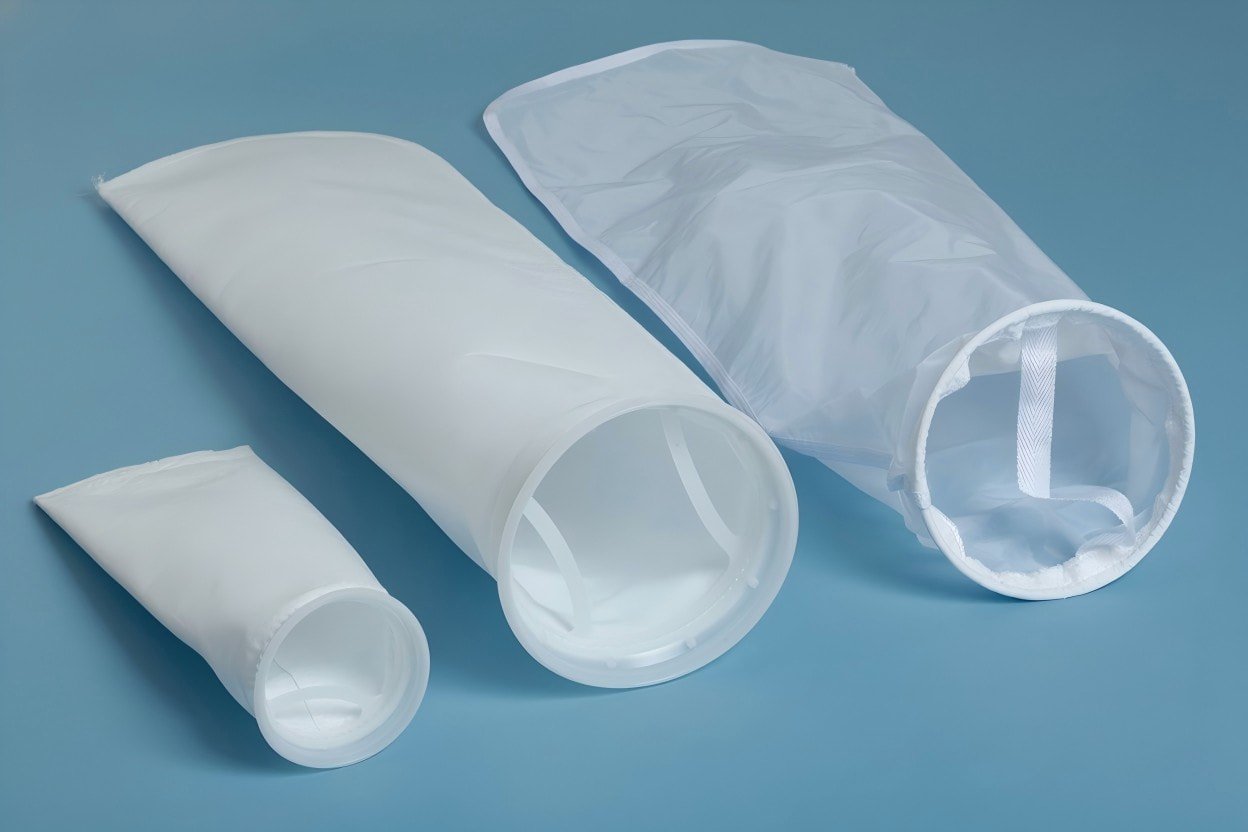
You use a liquid filter bag to clean water by trapping small particles as liquid flows through the bag. When you pour water into the filter, the bag holds back dirt and solids. The clean water moves out while the bag keeps unwanted particles inside. Many liquid filter bag types can remove over 95% of particles at 5 microns, over 90% at 10 microns, and over 85% at 25 microns, as shown below:
Micron Rating | Particle Removal Efficiency |
|---|---|
5 µm | >95% |
10 µm | >90% |
25 µm | >85% |
50 µm | >80% |
A liquid filter bag gives you a simple way to keep liquids clean and clear.
Key Takeaways
Liquid filter bags catch dirt and small bits. Clean water comes out after filtering. They can remove more than 95% of tiny particles at 5 microns.
Pick the right filter media for your job. Woven bags let water move fast but catch less dirt. Felt bags hold more dirt and particles.
Check your filter bags often. Clean or change them to keep your system working well. This helps your water stay clean.
Choose the right bag filter housing for your liquid. Make sure the materials match for safety and good results.
Liquid bag filters are useful and save money. They work in many places, like farms and water cleaning plants.
What Are the Key Components of a Liquid Filter Bag?
If you want to know how bag filtration works, you should learn about its main parts. Each part helps your filtration system do its job.

Filter Media Types
There are different filter media types for bag filtration. The filter media decides how well the bag catches particles. It also affects how quickly liquid moves through. Here is a table with the most common types:
Type | Material | Flow Rate | Filtration Efficiency |
|---|---|---|---|
Woven Bags | Polypropylene, polyethylene, nylon | High | Low to medium |
Felt Bags | Synthetic fibers | Medium to high | High |
Cartridge Filters | Pleated filter media | Low to medium | High |
Woven bags let liquid move fast, but they may miss tiny particles. Felt bags catch more particles and work for most bag filtration needs. Cartridge filters trap lots of particles but slow down the flow.
Bag Structure and Seams
The bag’s structure and seams make it strong and reliable. You can find bags with stitched, welded, or molded seams.
Stitched seams use tough thread and work for high-pressure jobs.
Welded seams have smooth edges and help with precise filtration or harsh chemicals.
Molded seams seal best and stop leaks.
Pick the seam type that fits your liquid and how clean you want it.
Bag Filter Housing and Basket
The housing and basket hold the filter bag in place. They help the bag filtration process work well. You can pick from different housing materials like stainless steel, carbon steel, or polypropylene.
Material | |
|---|---|
Stainless Steel | Ideal for high-temperature and corrosive applications. |
Carbon Steel | Suitable for general industrial use. |
Polypropylene/PVC | Best for low-pressure, non-corrosive filtration. |
Stainless steel is good for tough jobs and hot liquids. Polypropylene is light and resists many chemicals, so it works for less harsh liquids. The basket inside the housing keeps the bag open and helps with even bag filtration.
Tip: Always choose the housing material that matches your liquid. This helps your bag filtration system work its best.
How Does the Filtration Process Work in Liquid Bag Filters?
Liquid bag filters work by forcing liquid through a porous bag, capturing particles within the bag material while allowing clean liquid to pass through. This process typically involves the liquid entering the filter housing, where it flows through a bag made of fine mesh or fabric, effectively removing suspended solids.
Flow Direction and Particle Capture
You can understand how liquid bag filters work by following the path of the liquid. The filtration process happens in a few clear steps:
You pour or pump the liquid into the filter system through the inlet port. Pressure helps the liquid move faster.
The liquid flows inside the filter bag. The bag acts as a barrier with tiny holes called pores.
As the liquid passes through, the bag traps solid particles that are larger than the pores. These particles stay inside the bag.
Clean liquid leaves the system through the outlet port. You get filtered water or fluid ready for use.
Tip: Always check the filter bag for buildup. Too many trapped particles can slow down the flow.
Surface and Depth Filtration
You can choose between surface filtration and depth filtration. Each type works in a different way and gives you different results.
Filtration Type | How It Removes Contaminants | Efficiency and Use Case |
|---|---|---|
Surface Filtration | The bag holds particles on its surface. A layer of particles can build up, making the filter even better at catching more dirt. | This type can boost efficiency by 30-40% as the layer grows. It works well for larger particles. |
Depth Filtration | The bag traps particles throughout its thickness. The liquid moves through a maze of fibers, catching both big and small particles. | This type often starts at 99% efficiency. It works for a wide range of particle sizes and does not need a surface layer to improve. |
Surface filtration works best when you want to catch larger particles quickly. Depth filtration gives you better results for liquids with many different particle sizes.
Microfiltration and Pore Size
You need to know about pore size when you pick a filter bag. Microfiltration uses very small pores to catch tiny particles.
Pore size tells you what size particles the filter can remove.
A filter with a lower micron rating, like 5 microns, removes smaller particles than a filter with a higher rating.
Each filter bag targets particles larger than its pore size. For example, a 10-micron bag will catch anything bigger than 10 microns.
If you want to remove fine dirt or tiny bits from your liquid, choose a bag with a small pore size. This helps you get cleaner water or fluid.
What Are the Benefits and Limitations of Liquid Bag Filters?
Liquid bag filters offer several benefits, including cost-effectiveness, ease of installation, and versatility across various applications. However, they also present limitations such as limited dirt-holding capacity and the need for frequent replacements in high-contaminant environments.

Advantages for Water Treatment
Liquid bag filters help make water cleaner. They work fast and catch lots of dirt. You can use them to clean big amounts of water. The bag holds many contaminants inside. This makes water safer to use.
Benefit | Description |
|---|---|
You can filter lots of water quickly. | |
High dirt holding capacity | The bag holds a lot of dirt and dust. |
Versatility | You can use them in many places. |
Cost-effectiveness | They save money and work well. |
Easy installation and replacement | You can change them easily and quickly. |
Bag filters are simple to clean. You can take them out and put in new ones. You do not need special tools. This makes your system easy to use. Bag filters cost less than cartridge filters. You do not have to replace them as often. They make less trash, so you save money and help the planet.
Filter Type | Cost of Replacement | Frequency of Replacement |
|---|---|---|
Filter Bags | Not replaced often | |
Filter Cartridges | Higher | Replaced more often |
Liquid bag filters work in many places. You can use them in food factories. They also work in drink and chemical plants. They give you good filtration and are easy to clean.
Common Limitations
Liquid bag filters have some problems. Sometimes, dust or sticky stuff blocks the filter. If you pick the wrong filter media, it can clog faster. Wet dust or oily dirt can also block the bag. When this happens, the system slows down. You need to clean or fix it more often.
Dust or sticky stuff can clog the bag.
The filter does not work well if you do not clean it.
It cannot hold very tiny or huge amounts of dirt.
How often you change the bag depends on your water.
Check your filter bags often to keep them working. Pick the right filter media for your water. Bag filters are easy to clean and cost less. But they may not last long in tough jobs. Always choose the best filter for your water to get good results.
Tip: Clean or change your filter bags often. This helps your system work well and keeps your water clean.
How Do You Choose the Right Bag Filter Housing?
Picking the right bag filter housing helps your system work well. You need to match the housing to your liquid and how you use it. This section shows you what to look for.

Application and Compatibility
First, think about your process. Know what liquid you want to filter. Some housings work best for water. Others are better for chemicals or food. Nylon bags can handle heat but not every chemical. Polypropylene bags resist wetness and strong liquids. Check if the housing and bag material work with your liquid. The right material stops damage and helps your system last longer.
Criteria | Description |
|---|---|
Check temperature and pressure for your job. | |
Material Choices | Pick steel or plastic for chemical safety. |
Filter Media Types | Choose regular or special filters for your needs. |
Ergonomic Considerations | Make sure the housing is easy to use and clean. |
Tip: Always match your housing to your liquid and workplace. This helps your filter work better.
Particle Size and Flow Rate
You need to know what size particles you want to catch. Bag filter housings come in many sizes and setups. Smaller micron ratings catch tiny particles. You can pick nominal or absolute ratings. Nominal ratings block most particles of one size. Absolute ratings block all particles of that size. Flow rate depends on bag size, material, and how thick the liquid is. Thicker bags or small bags slow the flow. Check the highest pressure for each housing. If you go over, you might break the filter.
Smaller micron ratings catch tinier particles.
Flow rate changes with bag size, material, and liquid thickness.
Every housing has a pressure limit.
Chemical and Temperature Resistance
Bag filter housing must handle your chemicals and heat. Acrylic bags work up to 265°F. Aramid bags resist wear and reach 400°F. Fiberglass bags work up to 500°F. Polypropylene bags resist chemicals and wet dust. Pick a housing and bag that match your needs. This keeps your system safe and helps you get clean liquid.
Acrylic, aramid, and fiberglass bags work for hot jobs.
Polypropylene bags resist chemicals and wet dirt.
The right housing protects your tools and keeps your product good.
Note: Matching your housing and filter setup to your water job gives you better results and helps your system last longer.
Applications of Bag Water Filter Treatment

Industrial and Commercial Uses
Bag water filter treatment is used in many industries. These filters help keep systems clean. They make sure machines work well. You use them where clean water is important for safety. They also help with water quality. Here are some ways bag filter systems are used:
Agricultural water management uses filters for irrigation water. This stops sprinklers and drip systems from getting blocked.
Pre-filtration in multi-stage systems uses bag water filter treatment first. It helps in complex water cleaning setups.
Brewing and beverage production uses these filters. They make sure water is clean for drinks.
Non-critical cleaning of final products needs clean water for rinsing.
Equipment protection removes big particles. This keeps machines safe from damage.
Pollutant removal helps get rid of tough pollutants in liquids.
Groundwater and cooling water treatment makes water better for factories.
Industrial process water filtration checks that water meets product standards.
Wastewater management uses bag water filter treatment. It helps treat and reuse dirty water.
Bag water filter treatment is used in chemical manufacturing too. Companies use these filters to follow rules. They help protect the environment. Filters also save money and help work go faster. Smart technology helps you check filters. It tells you when to change them.
Note: Bag water filter treatment helps the planet. It also helps you follow strict environmental rules.
Water Treatment Systems
Bag water filter treatment is used in water plants. It helps make water safe. The process has clear steps:
Influent water goes into the vessel. Untreated water enters the bag filter system.
Filtration process starts. Water moves through the filter bag. The bag traps dirt and other bad stuff.
Contaminants build up. The filter bag holds the particles until it is full.
Effluent water leaves the vessel. Clean water comes out, ready for more cleaning or use.
Bag water filter treatment is important for clean water. It removes dirt, dust, and solids from water. This makes water safe for homes, factories, and farms. Bag water filter treatment also protects other equipment in water plants.
Bag filter systems are used in many places. They help keep water clean. They protect machines. Bag water filter treatment is a simple way to make water better.
You keep your filtration system working well by choosing the right filter bag and housing. You pour liquid into the system, and the bag traps dirt while clean water flows out. Regular maintenance helps your filter last longer and work better. Follow these steps for best results:
Maintenance Step | What You Should Do |
|---|---|
Check bags and housing for damage or wear. | |
Watch for pressure changes that signal clogging. | |
Clean and Replace | Clean housing and change bags when needed. |
Smart choices and care help you get clean water and protect your equipment.
FAQ
How often should you change a replaceable filter bag?
You should check your filter bag every week. If you see dirt building up or water flow slowing down, change the replaceable filter bag. This keeps your system working well and your water clean.
What is a filter vessel in bag filtration systems?
A filter vessel holds the filter bag in place. You pour liquid into the vessel. The vessel helps guide the liquid through the bag so particles get trapped. You get clean water out of the system.
Why do bag filtration systems offer easy access for maintenance?
You can open bag filtration systems quickly. This gives you easy access to the filter bag. You can remove, clean, or replace the bag without special tools. This saves you time and effort.
Can you use bag filtration systems for different liquids?
Yes, you can use bag filtration systems for water, chemicals, or food products. You need to pick the right bag material for your liquid. This helps you get the best results and keeps your system safe.