
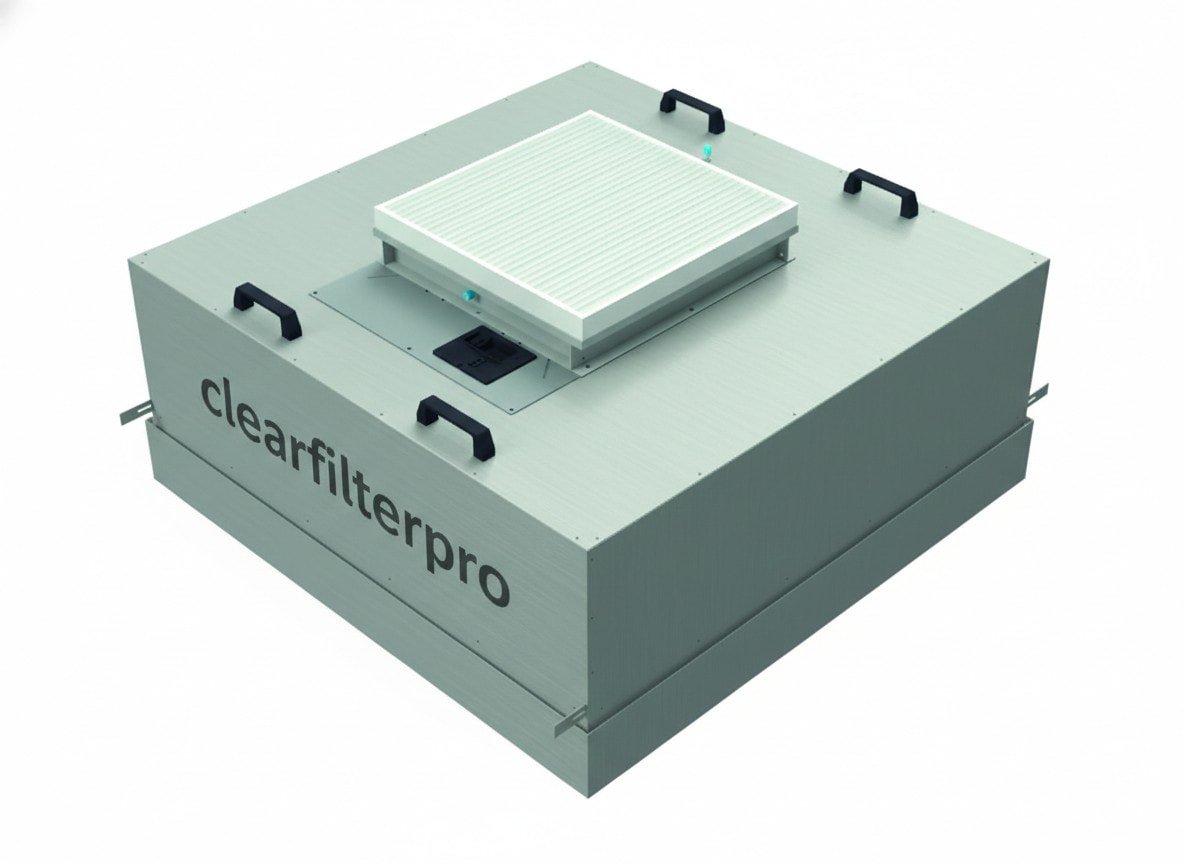
A Fan Filter Unit (FFU) pulls air through special filters. These filters take out particles and keep your cleanroom safe. Many people pick these units for new cleanrooms. More than 46% now use FFUs for air cleaning. FFUs help you follow strict ISO rules by lowering dust and other bad things. In places like drug and chip factories, FFUs also use smart tech. This tech helps watch and fix the units in real time.
Key Takeaways
Fan Filter Units clean air in cleanrooms very well. They use many filters to take out bad particles. This helps meet strict air quality rules.
It is important to do regular maintenance. Check pre-filters every three months. Change HEPA or ULPA filters every six to twelve months. This keeps the air clean and safe.
FFUs are flexible and can be changed easily. You can add or remove units as needed. This helps when cleanroom needs change. You do not need big changes to the room.
New FFUs have motors that save energy. They can use up to 70% less energy. This saves a lot of money over time.
FFUs must be installed and set up the right way. Put the units in smart places for good airflow. This helps stop contamination.
What Exactly Is a Fan Filter Unit (FFU)?
A Fan Filter Unit (FFU) is a self-contained module that integrates a variable-speed fan with a HEPA or ULPA filter to deliver laminar, particle-free airflow to a defined area. Commonly ceiling-mounted in cleanrooms and mini-environments, it provides localized ISO-class air without central ducting, enabling scalable contamination control and rapid deployment.

FFU Definition and Main Parts
A fan filter unit (ffu) helps keep cleanroom air safe. It is a machine with a motor and a filter. The unit pulls air in and cleans it. It takes out bad particles and sends out clean air. You see fan filter units in labs and chip factories. They help meet tough air rules.
A fan filter unit (ffu) has many key parts. Each part does something important:
Outer shell: This part shapes air and keeps pressure steady.
Metal protective net: It stops static and keeps you safe.
Primary filter: It catches big debris before the main filter.
Motor: EC or AC motors control speed and save power.
Impeller: It moves air and helps get rid of dust.
Air flow balancing device: This part spreads air across the room.
Air duct connecting parts: These link the unit to air ducts.
Mini pleat HEPA filter: It traps tiny bits and helps filter better.
Control unit: You use this to set options and check alarms.
A fan filter unit (ffu) lasts about 5 to 7 years. It is a good choice for long-term use.
Tip: Check the control unit often. This helps you find problems early and keeps your cleanroom safe.
FFU vs. Other Cleanroom Filtration
You might wonder how a fan filter unit (ffu) is different from other systems. The main difference is how you set them up and use them. Fan filter units work alone. You can add or take away units when you need. Central systems, like air handling units, need more planning and expert help.
Here is a table that shows the differences:
Feature | Fan Filter Units (FFUs) | Air Handling Units (AHUs) |
|---|---|---|
Connection | Independent units | Centralized system |
Efficiency | 99.99% (HEPA), 99.9995% (ULPA) | Varies |
Modularity | Easy to customize | Less modular |
Maintenance | Simple replacement | Needs certified contractor |
Application flexibility | Easy to scale | Needs reconfiguration |
You get more choices with a fan filter unit (ffu). You can add more units to grow. Maintenance is also easier and faster.
How Do Fan Filter Units Work in a Cleanroom Environment?
Fan Filter Units (FFUs) work in a cleanroom environment by using an integrated fan to draw return air (or make-up air) into a ceiling-mounted module and push it through a high-efficiency HEPA/ULPA filter, delivering uniform, low-turbulence “clean” airflow into the controlled space. This constant, filtered supply helps dilute and sweep airborne particles away from critical zones while maintaining pressure differentials.
Air Intake and Pre-Filter
The air intake is where everything starts. The fan filter unit pulls air from the room or outside. The first filter is called the pre-filter. It catches big things like dust, pet hair, dander, fungus, and mold. This step keeps the main filter safe. It also helps stop bad stuff from getting into the cleanroom. You will see better air right away because the pre-filter blocks most large debris.
Tip: Always look at the pre-filter when you check the unit. A clean pre-filter helps the fan filter unit work better. It also keeps the air free from particles.
Main Filtration (HEPA/ULPA)
After the pre-filter, the air goes to the main filter. This is where hepa or ulpa filters work. These filters catch very tiny particles that can cause problems. HEPA filters trap 99.97% of particles at 0.3 microns. ULPA filters trap 99.999% of particles at 0.12 microns. Using the right filter makes the air cleaner and the unit work better.
Filter Type | Particle Size | |
|---|---|---|
HEPA | 99.97% | ≥0.3 microns |
ULPA | 99.9995% | ≥0.12 microns |
You should change hepa filters every 6 to 12 months. Change ulpa filters every 3 to 6 months. This keeps the filters strong and stops bad particles from getting in. Your cleanroom stays safe from even the smallest things in the air.
Fan and Airflow Distribution
The fan inside the unit pushes clean air back into the room. The air spreads out evenly everywhere. This is important for keeping the whole cleanroom safe. You do not want spots where dust can build up. The fan helps keep the air clean all the time.
Mechanism | Purpose |
|---|---|
Clean, filtered air is evenly distributed back into the cleanroom. | Ensures uniform airflow distribution throughout the cleanroom, minimizing turbulence and particle movement. |
Good airflow helps the cleanroom meet strict rules. The fan filter unit is also quiet. Most units make noise between 40 and 63 dBA. This means you can work in a comfortable place.
Integration with Ceiling Grid
You put the fan filter unit in the ceiling grid. Most cleanrooms use T-grid or walkable ceilings. T-grid ceilings are light and easy to change. You can move or add units if you need more. Walkable ceilings let workers fix things above the ceiling. Every unit must fit tight in the grid. This stops gaps that could let in dirty air.
You connect the unit to the power for the fan and controls. Many units work with building systems. You can check fan speed, filter pressure, and when to do maintenance from one spot. Some units can change speed to save energy and give the right airflow.
A modular setup lets you add more units as your cleanroom grows. This keeps the air clean and the unit working well. Fixed units give better sealing and last longer.
Note: Always work with HVAC and electrical teams when you install units. Good teamwork makes sure the cleanroom works well and stays safe.
Step-by-Step Operation of FFU Installation
Here are the steps to put in and take care of a fan filter unit:
Look at the cleanroom and pick the best spots for each unit.
Get tools like screwdrivers, drills, sealant, and safety gear.
Clean the room before you start.
Unpack and check each unit for damage.
Mark the ceiling where you will put the unit.
Cut the ceiling to the right size.
Put the unit in the ceiling and make it secure.
Seal the edges and put on the filters.
Check the unit and look for leaks.
Change filters on time to keep the air clean.
Doing these steps keeps your cleanroom safe and working well.
Airflow Rates in ISO Class 5 Cleanrooms
You need to know how much air moves in your cleanroom. In ISO Class 5 cleanrooms, units give 240 to 480 air changes every hour. The air moves at 40 to 80 feet per minute. You cover 35 to 70% of the ceiling with units to keep the air clean.
ISO Class | Air Changes Per Hour | Ceiling Coverage | |
|---|---|---|---|
ISO 5 | 240-480 | 40-80 | 35-70% |
Following these rules helps you get even airflow and very clean air.
What Benefits Do Fan Filter Units Provide in Cleanrooms?
Fan filter units (FFUs) benefit cleanrooms by delivering localized, ceiling-mounted HEPA/ULPA filtration with consistent airflow, improving particle control and ISO-class stability. They offer modular scalability, faster installation than centralized HVAC, lower cross-contamination risk via zoning, and easier maintenance—often with better energy optimization through variable-speed fan control.

Air Quality and Contamination Control
You want your cleanroom to stay very clean. Fan filter units help by taking out particles from the air. These units use pre-filters and HEPA or ULPA filters. The filters catch dust, bacteria, and other bad things. You can trust them to keep your space safe and meet tough rules.
Air moves better in your cleanroom.
There are fewer particles in the important areas.
You get fewer problems with your products.
Smart fan filter units reach set airflow in 5 seconds. This gives you steady airflow.
Smart units keep airflow even, less than 5% difference. This is much better than old systems.
Fan filter units clean and move all the air in your room. This helps stop heat from escaping and keeps your cleanroom working well.
Modularity and Scalability
You can change your cleanroom setup easily with fan filter units. These units let you add, remove, or move them when you need. You do not have to rebuild everything if you want to make your space bigger or different.
You can move benches or equipment and change ceiling grids.
You can put units over important spots to make them cleaner.
You can set up and use your cleanroom faster.
Fan filter units help you plan for changes in the future.
This flexibility is a big reason people use ffus. You can make your cleanroom bigger or smaller fast. This saves you time and money.
Energy Efficiency and Maintenance
Fan filter units help you use less energy every day. New units use special motors called ECM. These motors use less power than old ones. You can use up to 40% less energy than old ducted systems. Some places save $180,000 each year by using better HEPA filters.
New EC motor fan filter units use only 0.15-0.25 watts per CFM. Old units use 0.35-0.55 watts per CFM.
You can cut power use by 50-70% over time.
Good airflow and speed control can save 35-40% energy.
You do not need to do maintenance as often with smart checks. This saves money.
Check your fan filter units every three months. Keep extra parts ready and test the airflow often. Change filters when needed and make sure everything is sealed. This keeps your cleanroom safe and your machines working well.
Choosing the Right FFU for Your Cleanroom

Types of Fan Filter Units
There are different types of fan filter units you can pick for your cleanroom. Most units come with a HEPA filter, a fan, and a control system all together. Some models, like the Pharmaseal Fan/Filter Ceiling Module, have better airflow control and are easy to fix from inside the room. You can pick standard units if you just need basic cleaning. HEPA units are good for high-level filtration. ULPA units are best for the strictest rules. Each type works for different jobs, like life sciences or making microchips.
Type of FFU | Typical Price Range | Key Features |
|---|---|---|
Standard FFU | Basic filtration, cost-effective | |
HEPA FFU | $1,000 – $3,000 | High efficiency, certified |
ULPA FFU | $2,000 – $5,000 | Ultra-high filtration |
Selection Criteria (Size, Airflow, Filter Type)
You need to make sure your fan filter unit matches your cleanroom. First, think about what you will use the room for and what ISO class you need. Figure out how much air needs to move each hour. Choose HEPA filters for most labs or medical rooms. Use ULPA filters for very clean places, like nanofabs or virus labs. Make sure the unit fits in your ceiling and is not too loud. Look for units that let you change the speed and use less energy. Always check test results before you buy a unit.
Material: Pick what works for your space and budget.
Airflow: Most units give over 700 CFM; some go up to 1,000 CFM.
Filter: Pick the right one for how clean you need the air.
Motor: Check how strong it is and how long it lasts.
Noise: Choose a unit that keeps things quiet.
Tip: Do not buy units without test results. This keeps your cleanroom safe.
Installation and Integration Tips
Plan where you put your units so air moves everywhere and there are no dead spots. Use ceiling grids that are easy to change. Make sure the ceiling can hold the weight of each unit. Use clip-on filters so you can change them fast. Press gaskets tight so air does not leak. Test the airflow and follow ISO 14644-3 rules. Put units less than one meter apart so air speed stays strong. Watch out for heat from machines and use air curtains if you need them. Check the filters often to keep airflow good.
Put units over all important spots.
Make sure supply and return air do not mix.
Use monitors to check how well things work over time.
Note: Good planning and checking often help your fan filter units work their best.
You can keep your cleanroom safe with the right fan filter unit. FFUs give strong filtration and steady airflow. They are easy to upgrade when needed. Think about these things before you choose:
Factor | Why It Matters |
|---|---|
Filtration Efficiency | HEPA or ULPA filters match your air quality needs. |
Airflow Capacity | Enough airflow keeps your space within standards. |
Energy Use | EC motors lower costs and noise. |
Installation | Simple setup saves time and money. |
Test FFUs with trusted steps.
Ask experts for help with upgrades.
Pick units that fit your space and needs.
FAQ
How often should you change the filters in your fan filter unit?
You should check the filters every three months. Replace the pre-filter when you see dust or dirt. Change the HEPA or ULPA filter every six to twelve months. Clean filters help keep the air safe.
What is the best way to test the air quality in your cleanroom?
You can use a particle counter to check the air. Place the device near the fan filter unit. Count the particles in the air. If you see too many, change the filter. Good air means fewer problems.
Can you use fan filter units in any cleanroom size?
You can use fan filter units in small or large cleanrooms. Add more units for bigger spaces. Each unit cleans the air in its area. You get better air control by placing units where you need clean air.
Why does the air need to move in one direction in a cleanroom?
Air moves in one direction to stop dust from settling. Laminar airflow pushes clean air down. You keep the air clean by stopping particles from mixing. This helps you meet ISO standards and keeps your products safe.
What happens if the air in your cleanroom is not clean?
Dirty air can cause problems with your products. You may see defects or contamination. You need clean air to protect your work. Fan filter units help you keep the air safe and meet strict rules.