
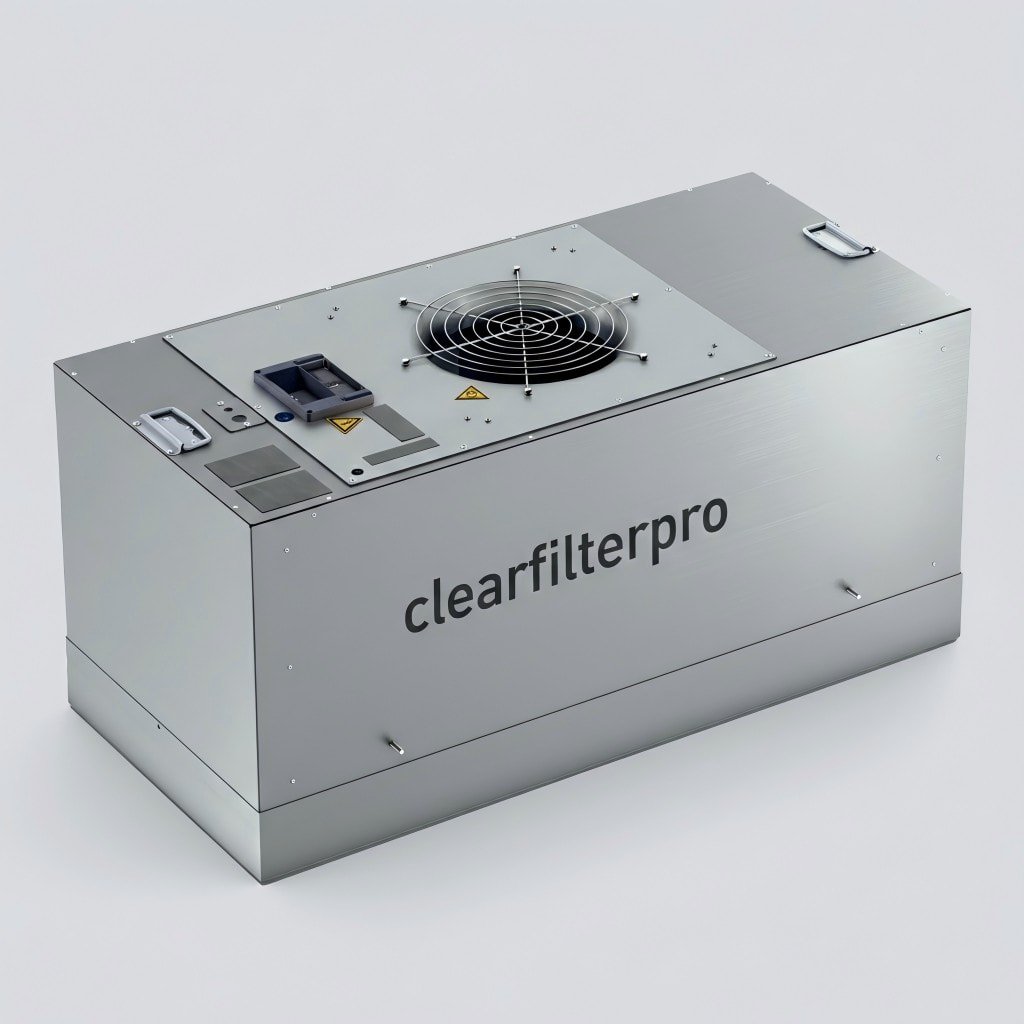
You will notice a big difference between a Fan Filter Unit (FFU) and a HEPA Box. The FFU uses a built-in fan to push clean air into your room, while the HEPA Box needs an outside air supply to work. This choice changes how your cleanroom operates. FFUs fit best in cleaner environments like class 100, while HEPA Boxes work better for class 1,000 or higher. FFUs create their own airflow, but HEPA Boxes only distribute air that is already filtered.
Key Takeaways
FFUs have fans inside them that blow clean air into a room. HEPA Boxes need another air system to work.
Pick FFUs if your cleanroom needs very clean air. They are good for places like labs.
HEPA Boxes work well in cleanrooms that do not need super clean air. They are best when used with a main air system.
FFUs let you control how much air moves in certain spots. HEPA Boxes are easier to set up.
Think about the price and how much care each one needs. This helps you pick the best one for your cleanroom.
What Is the Core Difference Between an FFU and a HEPA Box?
The core difference between an FFU (Fan Filter Unit) and a HEPA box is integration and airflow control: an FFU combines a powered fan, controls, and a HEPA/ULPA filter to deliver consistent, uniform airflow (often for cleanrooms), while a HEPA box is typically a passive filter housing/plenum that relies on an external fan or HVAC system to move air through the filter.
What Is a Fan Filter Unit (FFU)?
A Fan Filter Unit (FFU) is a device you use to clean the air in a controlled space. It has a built-in fan and a HEPA filter. The fan pulls air from above the unit, pushes it through the HEPA filter, and then sends clean air into your room. You can find FFUs in many cleanrooms because they work as self-contained systems. You do not need extra fans or ducts to make them work.
The FFU includes:
A motor fan assembly
A HEPA filter
A housing that holds everything together
You can install FFUs in the ceiling grid of your cleanroom. They help you control airflow and keep the environment clean.
What Is a HEPA Box?
A HEPA Box is a housing that holds a HEPA filter. It does not have a fan or motor inside. You connect the HEPA Box to an outside air supply, such as a central air handling system. The air flows through the HEPA filter and enters your room. The HEPA Box only works if you have another system to push or pull air through it.
The HEPA Box includes:
A HEPA filter
A metal or plastic box to hold the filter
An inlet for air from your main system
You often use HEPA Boxes in places where you do not need strong airflow or where you already have a central fan system.
Main Distinction
The main difference between a Fan Filter Unit (FFU) and a HEPA Box is how they move air. The FFU has its own fan, so it can push air through the filter and into your cleanroom by itself. The HEPA Box does not have a fan. It depends on another system to move air through the filter.
When you choose between these two, you must think about how much control you need over your cleanroom. FFUs give you more control because each unit can run on its own. You can use them in high-risk areas where you need very clean air. HEPA Boxes work best in lower-risk areas or where you already have a strong air system.
Cleanroom professionals care about this difference because it affects how clean the room stays and how much it costs to build and run. If you pick an FFU, you get active airflow and better control, which is important for sensitive work. If you pick a HEPA Box, you save money and use a simpler system, but you may not get the same level of cleanliness.
Why this matters:
FFUs actively keep the air clean, which is important for high-risk work.
HEPA Boxes rely on other systems and work best for lower-risk jobs.
Picking the right one helps you avoid spending too much or risking contamination.
How Are FFUs Built Differently from HEPA Boxes?
FFUs (fan filter units) integrate a powered fan/motor, speed control, and a sealed filter plenum into a ceiling-mountable module that delivers metered, uniform airflow through a HEPA/ULPA filter. HEPA boxes are passive housings (often terminal filter modules) that rely on an external air handler (AHU) or duct static pressure, focusing on filtration and distribution rather than on-board airflow generation.

Fan Filter Unit (FFU) Design
A Fan Filter Unit (FFU) is made to clean air and send it into your room. It has many important parts that work together:
The outer shell keeps the inside safe.
A metal net protects the filter.
The pre-filter catches big dust before the main filter.
The motor makes the fan work.
The impeller moves air through the filter.
The airflow device controls how much air goes in.
Duct parts let you connect the unit to other systems.
The high-efficiency filter takes out tiny particles.
The control unit lets you change the settings.
All these parts help give you clean air and steady airflow. You can put FFUs in ceiling grids. You do not need extra fans or ducts for them.
HEPA Box Construction
A HEPA Box is easier than an FFU. It holds a HEPA filter and connects to your air system. The design uses strong materials and good seals. Here is a table that shows how the parts are different:
Component | Fan Filter Unit (FFU) | HEPA Box |
|---|---|---|
Frame | Aluminum or plastic, light and tough | Aluminum or plastic, strong and can be changed |
Sealing Materials | Not needed | Silicone gaskets or foam, seals very well |
Filter Media | HEPA filters made of glass fibers | Like FFUs, often folded for better work |
Enclosure | Not needed | Steel or plastic, strong and easy to clean |
HEPA Boxes use special seals to stop leaks. The box is strong and simple to clean. This helps keep your cleanroom safe.
Installation Differences
You put in FFUs and HEPA Boxes in different ways. For FFUs, you fix the bracket, put in the unit, connect power, add filters, and test everything. You need to check safety and sealing. You should plan for regular care.
For HEPA Boxes, you connect the box to your air system and make sure the seals are tight. You may have problems with your ceiling type. T-grid ceilings might not hold the box, so you add supports. Gypsum ceilings need careful cutting. Concrete ceilings need special anchors.
Tip: Always check your ceiling before you start. This helps you avoid trouble and keeps your cleanroom safe.
If you put in many HEPA Boxes, you may need to balance the airflow. Sometimes, air pressure drops in ducts far from the air handler. You can fix this by adding dampers and changing the system.
How Do FFUs and HEPA Boxes Operate and Control Airflow?
FFUs (fan filter units) and HEPA boxes operate by pulling room air through a prefilter and forcing it through a HEPA/ULPA filter to deliver uniform, clean, directional airflow. Airflow is controlled by fan speed (AC/EC motors), pressure drop across filters, and diffuser design, maintaining specified face velocity, air changes, and positive/negative pressure.

How FFUs Work
You use a Fan Filter Unit (FFU) to clean and move air in your cleanroom. This device has a built-in fan and a HEPA or ULPA filter. The fan pulls air from above, pushes it through the filter, and sends clean air into your space. You can install FFUs in a grid pattern to cover large areas. Each unit works on its own, so you can control airflow in different parts of your room.
FFUs let you:
Adjust airflow speed and direction.
Create a steady stream of clean air.
Target specific zones that need extra protection.
FFUs use special fans that help keep airflow even across the room. This setup helps stop dirty air from getting in and keeps your cleanroom safe.
How HEPA Boxes Work
HEPA Boxes work in a different way. They do not have a fan inside. You connect them to your building’s air system. The main air handler pushes air through the HEPA filter in the box. Clean air then enters your room. You cannot control each box by itself. The whole system works together, so you get the same airflow everywhere.
Note: HEPA Boxes depend on your central air system. If the system slows down, the airflow in your room drops too.
Airflow and Performance
You can see the main differences in this table:
Feature | HEPA Box | FFU |
|---|---|---|
Airflow Control | Passive, set by central system | Active, adjustable per unit |
Uniformity | May have uneven airflow | Very even, thanks to built-in fans |
Cleanroom Class | Class 10,000–300,000 | Class 10–1,000 |
Filtration | HEPA filter, 99.99% @ 0.3 μm | HEPA/ULPA filter, 99.99% @ 0.3 μm |
FFUs give you more control and better airflow balance. You can change the speed or direction for each unit. This helps you keep your cleanroom at the right level. HEPA Boxes work well if you already have a strong air system and do not need to change settings often.
Where Are FFUs and HEPA Boxes Used, and Which Is More Suitable for Each Application?
FFUs (fan filter units) are typically used where localized, scalable ISO-class clean airflow is needed—such as cleanroom ceilings, mini-environments, and tool enclosures—while HEPA boxes (terminal HEPA filter housings) are used in centralized HVAC/ducted cleanrooms as final “point-of-use” filtration. FFUs suit flexible, modular, high-turndown zones; HEPA boxes suit stable, ducted, validated rooms.

Cleanroom Classifications
You will find that cleanrooms have different classes based on how clean the air must be. These classes follow ISO 14644 standards. Lower class numbers, like ISO Class 5 or Class 100, mean the air is very clean. Higher class numbers, such as ISO Class 8 or Class 100,000, allow more particles in the air. You must match your air filtration system to the class of your cleanroom.
When to Use FFUs
You should choose a Fan Filter Unit (FFU) when you need strict control over air quality. FFUs work best in cleanrooms with low class numbers, where you want very few particles. You can adjust airflow for each unit, which helps you keep the air clean in special zones. When you select FFUs, you need to think about several factors:
Factor | Description |
|---|---|
Filter Efficiency | FFUs must meet ISO standards, using HEPA or ULPA filters as needed. |
Airflow Requirements | High-grade cleanrooms need 300 to 600 air changes per hour. |
Noise Levels | FFUs should run quietly for comfort and safety. |
Energy Consumption | Efficient motors and controls help save energy and extend filter life. |
You may pay more to install FFUs, but you get better performance and control.
When to Use HEPA Boxes
You should use HEPA Boxes in cleanrooms with higher class numbers, like ISO Class 7 or above. These boxes work well in places where you already have a central air system. HEPA Boxes are ideal for food processing, where you must remove 99.97% of tiny particles to keep food safe. They also fit well in controlled environments that need steady air quality.
HEPA Boxes connect to central air systems.
They create a barrier against airborne contaminants.
You can use them in industries that need high filtration but not the highest cleanroom class.
Industry Examples
You can see real-world examples of both systems. A large wafer factory used FFUs with special filters and lowered defect rates by 40%. In another case, a pharmaceutical company upgraded its facility with HEPA box diffusers to handle strong chemicals safely. Food processing plants often use HEPA Boxes to keep air clean and protect products.
Tip: Always match your air system to your cleanroom class and industry needs. This helps you keep your space safe and efficient.
How Do FFUs and HEPA Boxes Compare in Cost and Maintenance Requirements?
FFUs (fan filter units) typically cost more upfront but can be cheaper to run and easier to standardize at scale, because each unit includes its own fan, controls, and monitoring. HEPA boxes (terminal filter housings) are usually lower-cost per outlet, but rely on central HVAC/blowers, making maintenance more system-dependent and potentially costlier when balancing, ductwork, and downtime are included.

Pricing Comparison
When you look at the price of Fan Filter Units (FFUs) and HEPA Boxes, you will see some clear differences. FFUs usually cost more at the start because they have a built-in fan and control system. HEPA Boxes cost less to buy, but you need a central air system to make them work. Over time, new rules may push up the price of HEPA filters by 10-15% by 2025. These higher costs will likely show up in your long-term budget.
Here is a quick comparison:
Feature | FFU (Fan Filter Unit) | HEPA Box |
|---|---|---|
Initial Cost | Higher | Lower |
Ongoing Filter Cost | Stable, but rising | Rising due to regulations |
Energy Savings | High with EC fans | Depends on central system |
Tip: If you use EC fan FFUs, you could save over $340,000 in energy costs over five years.
Installation Complexity
You will find that installing FFUs takes more time and planning. You must connect each unit to power and sometimes to a control system. You can place FFUs in a ceiling grid, which gives you flexibility. HEPA Boxes are easier to install if you already have a central air system. You only need to connect the box and seal it well. If your ceiling is not strong, you may need extra supports for either system.
Maintenance Needs
You need to think about filter changes and upkeep. Both FFUs and HEPA Boxes use HEPA filters that last about 3-5 years, but this depends on how much dust is in your air. FFUs with membrane media filters need fewer replacements than those with glass media. This saves you money and time. You also do not need to keep as many spare filters in stock, which can lower your inventory by up to 10%.
FFUs often come with a 12-month warranty after you install them. You can pay to extend this warranty.
HEPA Boxes usually have fewer moving parts, so they need less mechanical care.
Both systems need regular filter checks to keep your cleanroom safe.
Note: Choosing the right system can help you save on energy, filter costs, and maintenance over the years.
Choosing the Right Solution

Key Factors to Consider
When you pick between a Fan Filter Unit (FFU) and a HEPA Box, you should think about what your cleanroom needs. Look at these important things:
Cost: FFUs cost more at first. They can save money later because they use less energy and are easy to take care of. HEPA Boxes are cheaper to buy, but you need a strong central air system for them.
Efficiency: FFUs let you control airflow better. They help you reach higher cleanroom standards. HEPA Boxes work well in rooms that do not need the cleanest air.
Application Suitability: FFUs are best for places that need very clean air, like labs or electronics factories. HEPA Boxes are good for less strict places or if you already have a central air system.
Maintenance: FFUs make it easy to change filters and keep working. You can fix them without stopping your work. HEPA Boxes have fewer moving parts, so they need less fixing.
Scalability: You can add more FFUs as your cleanroom gets bigger. This helps you control your budget and grow when you need to.
Tip: Always pick the system that matches your cleanroom class and how much control you want over air quality.
Pros and Cons
You can look at FFUs and HEPA Boxes by checking their main good and bad points.
Feature | Fan Filter Unit (FFU) | HEPA Box |
|---|---|---|
Lets you add units when you need them, helps you manage money | Costs less at first, but needs a central air system | |
Maintenance Economics | Easy to change filters, less downtime, filters last longer | Fewer moving parts, easy to take care of |
Contamination Control | Strong airflow takes out more particles, good for sensitive jobs | Good for general air cleaning |
Noise | Runs quietly (≤ 50dB), keeps your workspace comfy | Depends on central air system |
Flexibility | You can adjust each unit for different areas | Less flexible, one system for all boxes |
FFUs help you keep air very clean and lower the chance of contamination. They also help you follow health and safety rules, like ISO and GMP standards. HEPA Boxes are good if you want a simple system and do not need the highest control.
Note: If you want to grow or change your cleanroom later, FFUs give you more choices.
You now know that Fan Filter Units give you active airflow and more control, while HEPA Boxes rely on your central system. This choice affects how clean your room stays and how much you spend. To pick the best option, you should:
Check if the unit meets your cleanroom’s size and efficiency needs.
Clean the room and products before installing.
Inspect packaging for damage.
Test for leaks and seal all joints tightly.
Careful planning helps you keep your cleanroom safe and efficient.
FAQ
What is the main benefit of using an FFU in your cleanroom?
You get active airflow control. FFUs let you adjust air speed and direction for each unit. This helps you keep your cleanroom cleaner and safer.
Can you use HEPA Boxes in high-class cleanrooms?
You should not use HEPA Boxes for ISO Class 5 or cleaner rooms. They work best in rooms with less strict air quality needs, like ISO Class 7 or above.
How often do you need to change HEPA filters?
You should check filters every 6 to 12 months. Most filters last 3 to 5 years. Replace them sooner if you see higher particle counts or airflow drops.
Do FFUs make more noise than HEPA Boxes?
FFUs run quietly, usually below 50 decibels. You may hear more noise if you use many units together. HEPA Boxes depend on your central air system for noise levels.
Can you mix FFUs and HEPA Boxes in one cleanroom?
You can mix both systems. Use FFUs in critical zones and HEPA Boxes in less sensitive areas. This helps you balance cost and cleanliness.