

You breathe clean air every day, but you might not know how a mini-pleat HEPA filter helps. This filter has many tight folds that catch tiny bits in the air. It keeps out dust and germs. High filtration efficiency means you are safer in places like hospitals and labs.
Mini pleat HEPA filters are used where clean air is very important. They help you trust the air you breathe.
Key Takeaways
Mini-pleat HEPA filters catch 99.97% of tiny particles. They trap things as small as 0.3 microns. This makes them great for clean places like hospitals and labs.
These filters are small and fit well in many spaces. Their design lets air move easily. They help save energy and lower power bills.
Check your filters often. Change them every 6 to 12 months. This keeps the air clean and helps your system work well.
Pick the right filter grade for your needs. H13 and H14 are two choices. H14 filters clean the air even better.
Look for leaks after you put in the filter. This makes sure the filter works right. It helps keep your space safe.
What Is a Mini-Pleat HEPA Filter and How Does It Work?
A mini-pleat HEPA filter is a high-efficiency air filter designed to capture at least 99.97% of airborne particles as small as 0.3 microns. It uses closely packed pleats to maximize surface area without increasing the filter’s physical size, making it highly effective in various applications.
Definition & Core Function
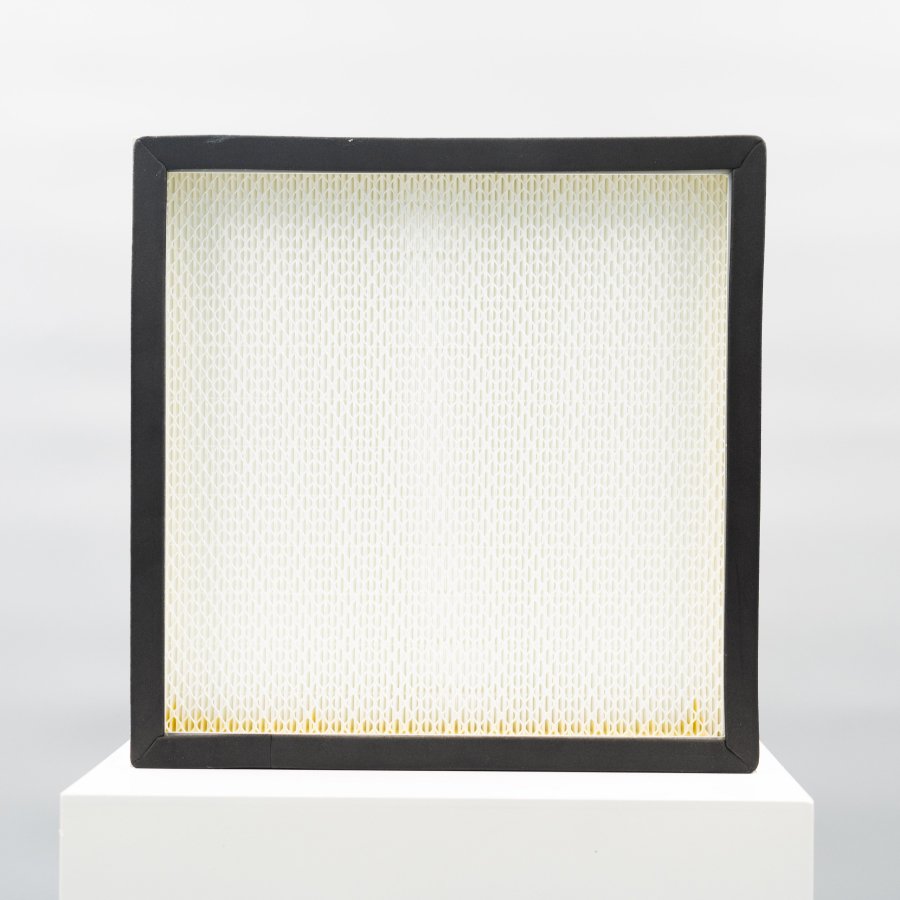
You might ask why a mini-pleat HEPA filter is special. This filter uses strong pleated glass fiber media. The pleats are packed close together. This gives the filter more area in a small space. Air moves through the filter easily. Tiny particles get trapped inside. The filter paper folds without any partitions. This helps the filter work well in places needing clean air.
Mini-pleat HEPA filters trap particles in three ways. First, impaction happens when big particles hit the fibers and stick. Second, interception grabs particles that pass near the fibers. Third, diffusion catches the smallest particles. These tiny bits move randomly and bump into the fibers. These actions help the filter catch dust, pollen, bacteria, and some viruses. You can trust this filter to keep your air cleaner.
Mini-Pleat vs. Standard HEPA
You may wonder how a mini-pleat HEPA filter is different from a standard HEPA filter. Here are some main differences:
Mini-pleat HEPA filter traps up to 99.97% of particles as small as 0.3 microns. This means it works better than most standard HEPA filters.
Standard HEPA filters may not catch the tiniest particles as well. This makes them less useful in places needing very clean air.
Mini-pleat HEPA filters have lower pressure drop. Air flows through them more easily. This helps your HVAC system work better.
You should know about dust-holding capacity and lifespan. The table below shows how mini-pleat and deep pleat HEPA filters compare:
Filter Type | Dust Holding Capacity | Lifespan |
|---|---|---|
Deep Pleat HEPA | Higher because it is deeper | May last longer |
Mini-Pleat HEPA | Lower because it is thinner | May need more replacements |
You get better airflow and high efficiency with mini-pleat filters. But you may need to change them more often.
Importance in Air Filtration
Mini-pleat HEPA filters are needed where air quality is very important. These filters are used in hospitals, labs, and cleanrooms. They trap at least 99.97% of particles as small as 0.3 microns. This includes harmful things like bacteria and viruses. The thick fibers make a maze that traps these particles. You help keep patients safe in operating rooms and ICUs by using these filters.
The mini-pleat design gives more even filtration. This means particles do not get past the filter. Important work is not disturbed. You see these filters in semiconductor factories and drug plants. Even tiny dust can cause big problems there. By choosing a mini-pleat HEPA filter, you help keep your air clean and safe.
Where Are Mini-Pleat HEPA Filters Commonly Used and Applied?
Mini-pleat HEPA filters are predominantly used in environments where high-efficiency air filtration is crucial. These include healthcare facilities, cleanrooms, pharmaceuticals, and laboratories. They are essential in maintaining sterile and contaminant-free conditions.
Cleanrooms & Labs
Mini-pleat HEPA filters are used in cleanrooms and labs. These places need very clean air. The filters catch tiny dust and germs. This keeps the air safe for important work. Studies show these filters lower PM2.5 by up to 72%. When used with HVAC systems, air gets even cleaner in operating rooms and isolation rooms.
Study Title | Findings |
|---|---|
A review of strategies and their effectiveness in reducing indoor airborne transmission and improving indoor air quality | HEPA filters remove at least 99.95% of particles that are 0.3 μm or bigger. This leads to a 31%–72% drop in PM2.5 inside. Using HEPA filters with HVAC systems cleans air well in places like operating rooms and isolation rooms. |
Evaluating and contextualizing the efficacy of portable HEPA filtration units in small exam rooms | In special rooms, HEPA filters cut 80%-93% of 0.3 µm particles in 6 minutes. By 12 minutes, they remove 98.4%-99.6% of these particles. This shows they work well to lower germs in the air. |
Healthcare Facilities
Hospitals and clinics use mini-pleat HEPA filters to keep patients safe. These filters trap bacteria and viruses. They help stop infections from spreading. Air gets better for people who are sick or have weak immune systems. Fewer people get sick in hospitals when these filters are used.
Mini-pleat HEPA filters catch germs in the air.
They make air cleaner and help stop infections.
They remove even tiny particles from the air.
These filters lower allergens and help people with asthma.
Study Title | Findings |
|---|---|
Outpatient Clinics to Long-Term Care: The Case for Better Air in Healthcare Facilities | HEPA filters catch 99.97% of tiny germs, like bacteria and viruses. This helps keep operating rooms clean and lowers the chance of hospital infections. |
Industrial & Commercial HVAC
Factories, offices, and stores use mini-pleat HEPA filters. These filters keep air clean for workers and shoppers. They hold a lot of dust and let air flow easily. This means HVAC systems use less energy.
Performance Metric | Value |
|---|---|
Initial resistance | ≤ 250 Pa |
Dust holding capacity | ≥ 500g/m² |
Particle capture efficiency |
Some places need special ratings like ISO Class 5 or explosion-proof. You save money by using filters with low pressure drop and buying many at once.
Residential & Specialty
Mini-pleat HEPA filters are used in homes and air purifiers. These filters help people with allergies and asthma. Studies show they help lower symptoms and the need for medicine. They also clean air during wildfires or pollen season.
People with ragweed allergies feel better.
Kids with asthma need less medicine.
Allergy symptoms get better in each season.
Hospitals have less mold.
People breathe fewer tiny particles during bad air events.
Mini-pleat HEPA filters help you get clean air in many places. You keep people healthy and make life more comfortable by picking the right filter.
What Are the Key Features and Specifications of Mini-Pleat HEPA Filters?
Mini-pleat HEPA filters are characterized by their compact design, high efficiency, and superior air filtration capabilities. They effectively capture 99.97% of airborne particles as small as 0.3 microns, making them ideal for environments requiring stringent air quality standards.

Filtration Efficiency (99.99%+)
You want clean air in your room. Mini-pleat HEPA filters help with this. These filters catch at least 99.97% of tiny bits. They trap things as small as 0.3 microns. Experts test filters with the hardest particles to catch. These filters stop dust, pollen, bacteria, and some viruses. In America, HEPA filters use the MERV rating system. A MERV 16 filter removes at least 95% of 0.3 micron particles. You get strong protection from bad stuff in the air.
Tip: Always look at the filtration efficiency before you pick a filter for your cleanroom, hospital, or home.
Grades: H13 & H14
You should learn about h13 and h14 grades. These grades show how well the filter traps tiny bits. H13 filters let air move easier because they are less dense. H14 filters are thicker and catch smaller bits but let less air pass. Pick the grade that fits your needs best. Hospitals and cleanrooms often use H13 filters. If you need to catch very small things, choose H14 filters.
Feature | H13 Filter | H14 Filter |
|---|---|---|
Particle Retention | Less dense, better airflow | More dense, higher filtration |
Airflow | Air moves easier | Air moves slower |
Recommended Applications | Hospitals, cleanrooms, healthcare facilities | Places with tiny pollutants |
Construction & Materials
You want your filter to last and work well. Mini-pleat HEPA filters use different materials for different jobs. Ceramic fibers handle heat up to 1100°C. They bend and fold easily. Metal fibers are strong and resist water. These work well in places with shaking or heat. Polymer fibers like polypropylene are good for safety gear. They do not soak up water but cannot take high heat. Glass fibers are used a lot but may not work in very hot places.
Material Type | Properties Impacting Durability and Performance |
|---|---|
Ceramic Fibers | Handles high heat (up to 1100°C), bends easily, good for mini-tubular designs. |
Metal Fibers | Strong, lasts long, bends, resists water, good for shaking and heat. |
Polymer Fibers | Does not soak up water, good for safety gear, not for high heat. |
Glass Fibers | Used a lot, but not great for very hot places. |
Ceramic fibers resist heat and bend easily.
Metal fibers are tough and work in busy places.
Polypropylene fibers are best for safety gear.
Glass fibers are common but not for hot spots.
High-Temperature Options
Sometimes you need a filter for hot places. High-temperature HEPA filters can take more heat than regular ones. Regular filters work up to 120°C. Special filters can work at 250°C, 350°C, or even 400°C. These filters are used in medicine, food, space, and electronics. You use them in ovens, tunnels, and nuclear plants.
Maximum Temperature | Applications | Industries |
|---|---|---|
250°C (482°F) | Oven drying, cleanrooms | Many industries |
350°C (662°F) | Sterilization tunnels, making things | Medicine |
400°C (752°F) | Nuclear plants, big factories | Space and electronics |

Medicine needs clean air for hot sterilization.
Food makers use these filters for safe drying and cleaning.
Space and electronics need clean air at high heat.
Compliance Standards (EN779)
You want your filter to follow strict rules. Mini-pleat HEPA filters must meet standards like EN779, FED:STD:209E, and IES-RP-001. EN779 is a European rule for H13 filters. It needs 99.98% efficiency for 0.3 micron bits. FED:STD:209E is for class 100 clean rooms. IES-RP-001 gives tips for making filters. You also see ISO 16890, EN 779, and ASHRAE 52.2. These rules help you pick the right filter for your job.
Standard | Description |
|---|---|
EN779 | For H13 class, 99.98% efficiency for 0.3 micron bits |
FED:STD:209E | For class 100 clean rooms and work stations |
IES-RP-001 | Tips for making filters |
ISO 16890 sets world rules for filters.
EN 779 is for European filters.
ASHRAE 52.2 checks filter efficiency in America.
Note: Always check the standards before you buy a filter. This helps you follow safety and quality rules in your field.
Now you know the main features of a mini-pleat HEPA filter. You can pick the right grade, material, and heat level for your needs. You also know why filtration efficiency and standards matter.
How Do HEPA Filter Grades Work and How Should You Select the Right One?
HEPA filter grades are determined by their ability to capture particles of different sizes, specifically those as small as 0.3 microns. The efficiency of these filters is graded based on their percentage of particle removal, typically exceeding 99.97%.

Understanding Grades (H13, H14)
You should learn about HEPA filter grades before picking one. H13 and H14 are the main grades you will see. H13 filters catch at least 99.95% of tiny particles. H14 filters trap even more, up to 99.995%. Hospitals and cleanrooms use H13 filters for safety. These places need very clean air for people and products. H14 filters are best when you must stop almost all germs in the air. Picking the right grade helps keep your space safe.
Sizes & Custom Options
Mini pleat HEPA filters come in many shapes and sizes. This makes it easy to fit them in different systems. Some filters are thick, and some are thin. You can choose box, cartridge, cylinder, or cone shapes. You also pick the material, like polypropylene, glass fiber, or PTFE. Some filters work with high heat or strong chemicals. You can ask a company to make a filter just for you. Rapid prototyping lets you test a filter before buying a lot.
Feature | Description |
|---|---|
Optional Thickness | Thickness can be from 80mm to 300mm, so it fits well. |
Dimensional Flexibility | Filters come in box, cartridge, cylinder, or cone shapes. |
Material Selection | You can pick polypropylene, glass fiber, PTFE, or mix fibers. |
Enhanced Features | Custom filters can handle high heat or strong chemicals. |
Collaborative Design | Companies work with you to make filters for your needs. |
Rapid Prototyping | You can test a filter before ordering many to check how it works. |
Choosing the Right Filter
You want to choose the best filter for your needs. First, think about where you will use it. Is it for your house, a hospital, or a factory? Next, decide how clean you want the air to be. Look at what the filter is made of and how it is built. Some use glass fiber, and some use polypropylene. Think about how much air should go through and how much wind resistance is okay. Also, make sure the brand gives good help.
Tip: Always pick the filter grade and size that match your air needs. This helps you get clean air and stay safe.
Figure out how clean you want the air.
Check what the filter is made of and how it is built.
Think about wind resistance, air flow, and brand help.
You make a good choice when you follow these steps. The right filter keeps your air clean and your system working well.
What Are the Benefits of Mini-Pleat HEPA Filters and What Tips Can Help You Choose the Best One?
Mini-pleat HEPA filters offer enhanced air filtration efficiency, space-saving design, and reduced energy consumption. These filters use a compact arrangement to maximize surface area, capturing up to 99.97% of airborne particles as small as 0.3 microns, making them ideal for environments requiring high air quality.

Advantages of Mini-Pleat HEPA Filters
You get many benefits when you use mini-pleat HEPA filters. These filters give you high filtration efficiency in a compact size. You save space in your air system. The mini-pleat design creates a large surface area, so the filter traps more dust and particles. You also get lower pressure drop, which means your system uses less energy. This helps you save on power bills.
You can trust these filters to work well in many places. Hospitals, labs, and homes all use them to keep air clean. The strong build means you do not have to change them as often. You also get better airflow, so rooms stay fresh. Mini-pleat HEPA filters help protect people from allergens, germs, and dust. You make your space safer and more comfortable.
Quick Selection Guide
You want to pick the best filter for your needs. Here are some tips from industry experts:
Choose gel seal HEPA filters if you need higher filtration efficiency and better sealing.
Always check for leaks after you install the filter. Leak detection helps you make sure the filter works right.
Inspect your filters often. Regular checks help you keep filtration strong and meet your air quality goals.
Use front-end filters like F5, F7, or F9. These protect your main filter from clogging and help it last longer.
Tip: Always match the filter type to your space and needs. Think about airflow, size, and how often you will check the filter.
You can use this guide to make a smart choice. The right filter keeps your air clean and your system running well.
You get strong air cleaning with mini-pleat HEPA filters. These filters have a large surface area and low pressure drop, so you save energy and money. You can use them in hospitals, labs, and homes. Always match the filter grade and specs to your needs. Check the table below for key points:
Checklist Item | Description |
|---|---|
Filter Grade | H13-H14 for cleanrooms |
Frame Material | Aluminum or stainless steel |
Pressure Drop | 200-250 Pa when new |
Airflow | Must fit your system |
Chemical Resistance | Needed for labs |
Lifespan | 5-10 years |
Pick the right grade for your space.
Check airflow and pressure drop.
Choose strong materials for your environment.
FAQ
How often should you replace a mini-pleat HEPA filter?
You should check your filter every 6 to 12 months. Replace it when you see dust buildup or airflow drops. Some places, like hospitals, may need more frequent changes.
Can you clean and reuse a mini-pleat HEPA filter?
You cannot wash or reuse these filters. Cleaning damages the fibers and lowers efficiency. Always use a new filter for the best air quality.
What is the difference between H13 and H14 grades?
H13 filters trap at least 99.95% of tiny particles. H14 filters catch even more, up to 99.995%. Choose H14 for the cleanest air in critical spaces.
Do mini-pleat HEPA filters remove viruses?
Yes, these filters can trap many viruses. They catch particles as small as 0.3 microns. You get better protection in hospitals, labs, and homes.
What size mini-pleat HEPA filter do you need?
You should measure your system’s filter slot. Pick a filter that fits snugly. Many companies offer custom sizes if you need a special fit.