
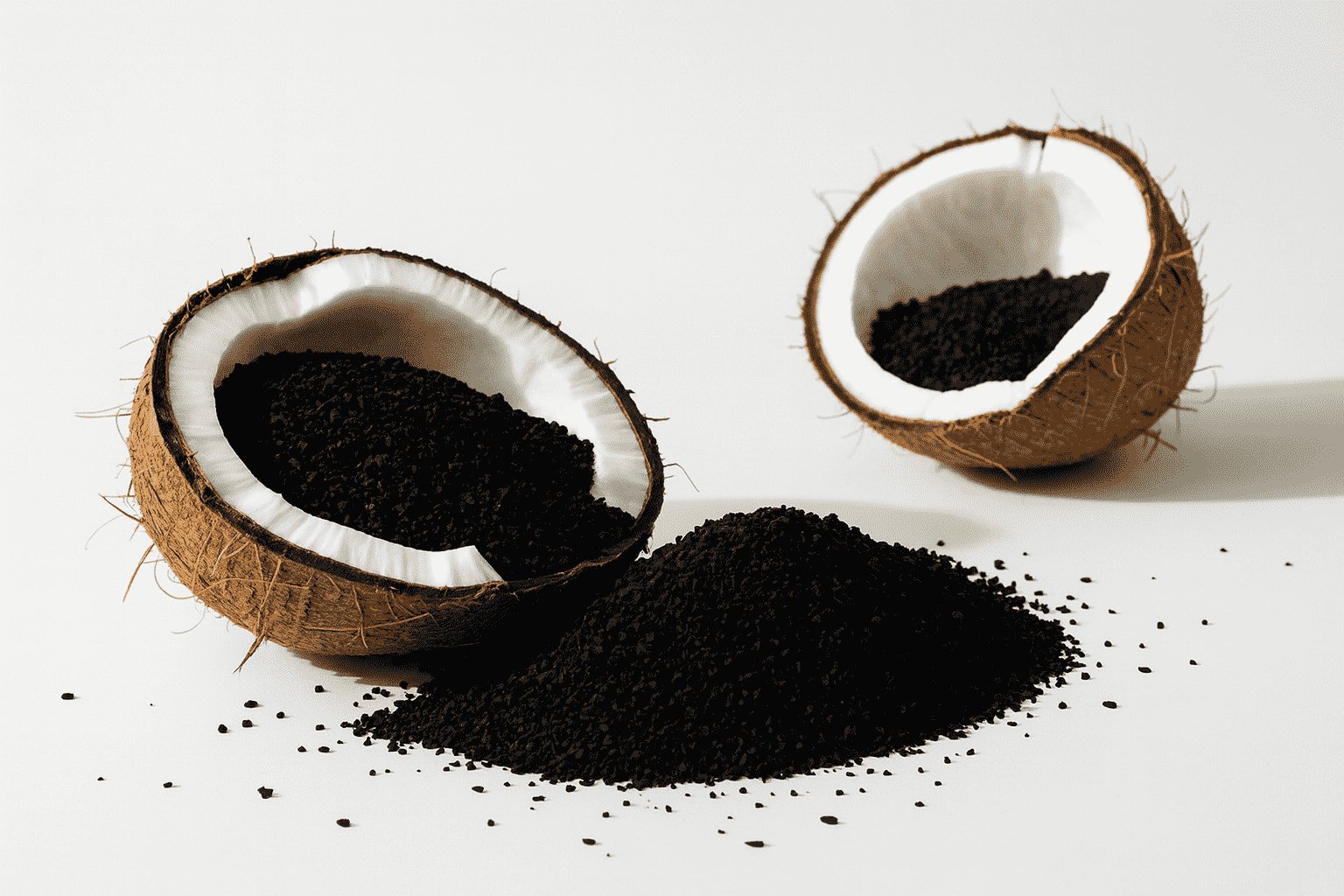
Ever think about how a coconut turns into activated carbon? First, you use hard shells. You clean them to get rid of dirt. Next, you break the shells into small pieces. Dry the pieces until they have no water. Heat them up to make charcoal. Then, you activate the charcoal. This opens tiny holes in it. That is how coconut activated carbon is made. Here are the main steps and why each one matters:
Step | Purpose |
|---|---|
Cleaning | Take away dirt and trash |
Breaking Shells | Helps heat faster and makes even charcoal |
Drying | Gets rid of water for better charcoal |
Carbonization | Changes shells into charcoal |
Activation | Makes tiny holes for better soaking up stuff |
Key Takeaways
Workers clean and dry coconut shells before making activated carbon. This step removes dirt and water to make better carbon.
The carbonization process heats the shells to very high temperatures. This turns the shells into charcoal. Keeping the right temperature is important. It makes the charcoal strong and full of tiny holes.
Activation methods, like steam and chemical activation, make small holes in the charcoal. More holes help the charcoal soak up bad things from air and water.
Coconut activated carbon is good for the environment and can be used again. It helps clean water and air. Many industries use it, so it is very useful.
Using coconut activated carbon helps the environment by cutting down waste and pollution. It also gives jobs to local people and supports earth-friendly ways of working.
How Are Coconut Shells Prepared for Making Activated Carbon?
Coconut shells are prepared for making activated carbon through a process involving cleaning, carbonization, and activation. Initially, the shells are cleaned to remove dirt and impurities. They are then carbonized at high temperatures in an oxygen-free environment to produce char. Finally, this char undergoes activation to increase its surface area and porosity.
Coconut shells are not just any waste. You might wonder why people pick them for making activated carbon. The answer is simple. Coconut shells have some amazing features that make them stand out from other materials.
They come from a renewable source and are eco-friendly.
You get them as a by-product from the agriculture industry, so nothing goes to waste.
They are lightweight and have a smaller density.
Coconut shells have strong, durable structures.
They have lots of tiny pores, which help soak up unwanted stuff from air or water.
You can use them again after cleaning, which saves money.
Their high proportion of micropores and large surface area make them perfect for high-end purification jobs.
Cleaning and Drying
Before you turn coconut shells into activated carbon, you need to get them ready. Start by picking dry, mature coconut shells. Make sure there is no husk left. You want only the hard shell.
Next, clean the coconut shells. Remove any dirt, leftover coconut meat, or husk fibers. If you skip this step, you might get poor-quality carbon later. Use water to wash off the dirt. Sometimes, people use brushes to scrub away stubborn bits.
After cleaning, you need to dry the coconut shells. Lay them out in the sun. Sun drying is simple and works well in warm places. If you want to speed things up, use a mechanical dryer. Drying is important because water in the shells can mess up the carbonization process. Dry shells give you better charcoal.
Removing Residual Material
Even after cleaning, you might find some bits of coconut meat or fiber stuck to the shells. Take a close look and remove these by hand or with a tool. You want only the pure coconut shell left. This step helps you get high-quality activated carbon in the end.
Tip: The cleaner and drier your coconut shells, the better your activated carbon will be. Don’t rush these steps!
How Does the Carbonization Process Turn Coconut Shells into Charcoal?
So, you’ve got your clean, dry coconut shells. What happens next? You start the process of turning coconut into charcoal. This step is called carbonization. It’s where the magic happens and the shells change into something new.

High Temperature Charring
You need heat to make coconut charcoal. During carbonization, you heat the shells to very high temperatures. Most people use a range between 400°C and 950°C. The heat removes water and other stuff from the shells. What’s left is mostly carbon.
Here’s a quick look at how different temperatures affect the charcoal:
Temperature Range (°C) | Effect on Charcoal Properties |
|---|---|
400–950 | Changes chemical, physical, and mechanical properties |
Up to 600 | Increases energy value and makes more pores |
600–800 | Most of the unwanted gases leave the shells |
Above 600 | Charcoal gets stronger, then weaker, then stronger again |
Prolonged soaking | Makes the charcoal even more porous and energy-rich |
You want to control the temperature carefully. If you heat the shells too fast, you might get cracks or weak charcoal. If you heat them too slow, you waste time and energy.
Tip: The right temperature gives you coconut charcoal with lots of tiny holes. These holes are important for making activated carbon later.
Kiln and Furnace Equipment
You can’t just use any oven for carbonization. You need special equipment. Most people use kilns or furnaces made for this job. One popular choice is the horizontal rotary kiln.
Here’s why people like it:
Equipment Type | Advantages |
|---|---|
Horizontal Rotary Kiln | – Heats coconut shells evenly and keeps them moving. |
– Seals tightly to keep out oxygen. | |
– Uses indirect heat, so flames don’t touch the shells. | |
– Works with gas, oil, or even gas made during the process. | |
– Saves energy by cleaning and reusing gas from the shells. |
This kind of kiln helps you get the best results. It keeps the air out, so the shells don’t burn up. It also lets you use the heat from the process again, which saves money and helps the planet.
Note: Modern kilns can trap gases that come out during carbonization. They use filters to stop pollution and keep the air clean.
Charcoal Properties
When you finish carbonization, you get coconut charcoal. This charcoal is special. It has lots of tiny pores and a big surface area. These features help it soak up bad stuff from water or air.
The way you heat the shells changes the charcoal’s properties. If you use the right temperature and equipment, you get strong, porous coconut charcoal. This is perfect for making activated carbon.
The quality of your coconut shells matters, too. If you use shells with high bulk density, you get more charcoal but need more heat. If the shells have lots of lignin, you get denser charcoal with more carbon. If the shells are light or have low lignin, you get less charcoal and more smoke or tar.
Factor | Impact on Carbonization Process |
|---|---|
Bulk Density | Heavy shells need more heat but give you more charcoal. Light shells heat up fast but can get too hot. |
Moisture Content | Wet shells use more energy and take longer to turn into charcoal. |
Structural Composition | More lignin means better charcoal. Less lignin means more waste and less yield. |
Did you know? Coconut shells absorb carbon from the air as they grow. When you make coconut charcoal, most of this carbon stays locked inside. This makes coconut charcoal a smart choice for the environment.
The carbonization process also changes the way the charcoal works. It makes the surface rough and full of holes. This helps the charcoal grab onto heavy metals and other bad stuff in water. That’s why coconut charcoal is so good for cleaning things.
But you have to be careful. If you don’t use the right kiln or don’t control the heat, you can make pollution. Gases like carbon monoxide and methane can escape. Modern kilns use filters and traps to catch these gases and keep the air clean.
So, carbonization is a key step. It turns simple coconut shells into powerful coconut charcoal. This charcoal is ready for the next step—making activated carbon.
What Activation Methods Are Used to Produce Coconut-Based Activated Carbon?
To make coconut charcoal into activated carbon, you need activation. This step is very important. There are two main ways to do it: steam activation and chemical activation. Each way makes the charcoal better at soaking things up.

Steam Activation
Steam activation uses high heat and steam. You put coconut charcoal in a furnace. Heat it to about 800 to 1000°C. Then, send steam through the hot charcoal. The steam reacts with the carbon. It makes lots of tiny holes called pores. These pores help activated carbon trap odors, chemicals, and colors from water.
People like this method because it does not use strong chemicals. It also makes activated carbon that is tough. The pores made by steam are very small. These are good for catching tiny molecules.
Chemical Activation
Chemical activation is different. You soak coconut charcoal in chemicals like phosphoric acid or potassium hydroxide (KOH). After soaking, heat the charcoal to a lower temperature, between 400 and 700°C. The chemicals break down the charcoal and make more pores.
This way can make activated carbon with a huge surface area. It also makes bigger pores called mesopores and macropores. These big pores are good for trapping larger molecules. But chemical activation can make the carbon less strong. You must be careful with leftover chemicals to protect nature.
Here is a table to show the main differences:
Feature | Steam Activation (Physical) | Chemical Activation |
|---|---|---|
Temperature | High (800–1000°C) | Lower (400–700°C) |
Pore Structure | Makes micropores | Makes mesopores and macropores |
Mechanical Strength | Strong | Not as strong |
Surface Area and Adsorption | Good for coconut shell | Very high surface area |
Environmental Impact | Eco-friendly | Depends on chemicals |
Tip: If you want eco-friendly activated carbon with strong pores, pick steam activation. If you need a super high surface area, chemical activation might be better.
Creating Porosity
Activation is all about making pores. These tiny holes give activated carbon its power. Steam or chemicals change the inside of the charcoal. They make a honeycomb shape with lots of tunnels.
KOH activation makes a honeycomb with many big pores.
You get more surface area and pore volume by making both small and big pores.
Some coconut activated carbon can reach a surface area of 2228 m²/g, which is very large.
The pores are usually 0.4 to 5 nanometers after chemical activation.
The total pore volume and micropore volume can go from 0.19 and 0.15 cm³/g to 1.07 and 0.64 cm³/g after activation.
Why do you need so many pores? The answer is easy. More pores mean activated carbon can trap more things. Activation makes the surface area bigger and helps the carbon soak up more stuff. For example, after activation, coconut activated carbon can reach a surface area of 1556 m²/g and a pore volume of 0.72 cm³/g. This means it can grab more dyes, chemicals, and smells.
Note: Without activation, coconut charcoal would not have enough pores to work well as a filter. Activation is the step that turns plain charcoal into strong activated carbon.
So, think about what you need before picking an activation method. Steam activation gives you tough, eco-friendly carbon with lots of small pores. Chemical activation gives you a huge surface area and bigger pores, but you must handle chemicals safely. No matter which way you choose, activation is what makes coconut activated carbon great for cleaning and filtering.
How Is Coconut Activated Carbon Processed and Graded After Activation?
After activation, you need to get the coconut activated carbon ready for use. This means you crush, grade, and package it so it works well for different jobs. Let’s walk through each step.

Crushing and Sizing
First, you crush the activated carbon. You use machines to break it into smaller pieces. You can make powder, granules, pellets, or even spheres. The size depends on what you need. Smaller pieces work best for water filters. Bigger chunks are good for air cleaning. You sort the carbon by size using screens or sieves. This helps you match the right type to the right job.
Here’s a quick look at how the industry grades activated carbon:
Color | Iodine | C.T.C. Adsorption | Density Appearance/Bulk Density | Moisture | Abrasion Resistance/Hardness | Total Ash | |
|---|---|---|---|---|---|---|---|
Powder | Black | Not more than 400 – 600 | 20 – 50% | 0.3 – 0.8 | Max 15% | 95% maximum | 6% maximum |
Granular | Black | Not more than 400 – 600 | 20 – 50% | 0.3 – 0.6 | Max 5% | 95% maximum | 3% maximum |
Spherical | Black | Not more than 400 – 600 | 20 – 50% | 0.3 – 0.6 | Max 5% | 95% maximum | N/A |
Pelletized | Black | Not more than 400 – 600 | 20 – 50% | 0.3 – 0.6 | Max 5% | 95% maximum | N/A |
Quality Control
You want your activated carbon to work well every time. That’s why you test it before sending it out. You check for things like how much it can soak up, how hard it is, and how much ash it has. You also look at moisture and pH. These tests help you make sure the carbon is safe and strong.
Purpose | |
|---|---|
Iodine Number Test | Measures adsorption capacity; higher values mean better performance. |
Ash Content Analysis | Ensures low ash levels for efficiency and longer life. |
Hardness Test | Checks durability for tough jobs. |
Moisture Content Check | Keeps moisture low for best results. |
pH and Purity Testing | Makes sure the carbon is clean and safe. |
Tip: Always check your activated carbon before you use it. Good quality means better results.
Packaging
Once you finish testing, you need to package the activated carbon. You use sealed containers to keep out moisture and dust. This keeps the carbon dry and clean. You store it in a cool place so it stays fresh. Good packaging helps the carbon last longer and work better.
Remember, sealed packaging protects your activated carbon from getting wet or dirty. You get the best performance when you keep it safe.
Where Is Coconut Activated Carbon Commonly Used?
Coconut activated carbon is widely used in water purification, air filtration, and gold recovery. Its high microporosity makes it effective for adsorbing contaminants, odors, and impurities from various mediums, ensuring cleaner water, air, and industrial processes.

Filtration Applications
Coconut activated carbon is used in many filters. It helps clean water in homes and cities. It also helps clean groundwater. This carbon takes out chlorine, bad tastes, and smells. It removes organic pollutants from water. It is used in air filters, too. You can find it in home air purifiers and work HVAC units. It traps harmful vapors and chemicals in the air. Food and drink companies use it to make products taste and smell better. Here are some places you might see it:
Application Area | Description |
|---|---|
Takes out chlorine, tastes, smells, and pollutants from water. | |
Air and Gas Purification | Traps vapors, smells, and pollutants in air filters. |
Cleans colors, tastes, and bad stuff in drinks and food. | |
Pharmaceutical and Medical | Purifies drugs and helps make medical charcoal for removing toxins. |
Tip: Coconut activated carbon is a great choice for clean water and fresh air.
Industrial and Medical Uses
Many industries use coconut activated carbon. Factories use it to clean water and air. Gold mining uses it to get gold from ore. Food companies use it to clean oil and take caffeine out of tea. Doctors use it to treat poison and emergencies. It helps remove toxins from the body. Hospitals use it in machines to clean blood. Drug companies use it to filter and purify medicines.
Used for poison treatment and emergencies
Cleans blood in artificial kidneys
Removes bad stuff in drug making
Helps in food and drink processing
Used for gold recovery and oil cleaning
Did you know? Coconut activated carbon is also in animal feed and can be used as fuel.
Environmental Benefits
Using coconut activated carbon helps the environment. Coconut shells grow back and are not wasted. Making this carbon creates less pollution than coal carbon. This means less greenhouse gas. Local farmers and workers get jobs from making coconut carbon. Turning waste shells into carbon helps communities in tropical places. Coconut activated carbon works well and has little ash, so it is pure and strong.
Uses coconut shells that grow again, so less waste
Makes less pollution when produced
Helps local farmers and workers
Is a cheap and green way to clean up the environment
When you pick coconut activated carbon, you help keep water clean, air fresh, and the planet healthy.
Coconut shells go through cleaning, carbonization, activation, and grading. Each step helps make activated carbon with lots of surface area. This carbon can soak up many things. Coconut activated carbon is good for the planet and helps cut down waste. You can use it in water filters and air purifiers. It also works in new energy technology. Here are some reasons why coconut activated carbon is a smart pick:
Uses coconut shells that grow back, so less waste
Soaks up things well and conducts electricity
Works for cleaning water and powering new tech
Follows tough rules to protect the environment
Choosing coconut activated carbon means you help keep things clean and green now and in the future.
FAQ
What makes coconut activated carbon better than coal-based carbon?
Coconut shells make a cleaner carbon. Coconut activated carbon has more tiny pores. It works well for cleaning water and air. Using coconut shells helps the environment because they grow back.
Can you reuse coconut activated carbon?
You can use it again if you clean or reactivate it. Some people heat it to get rid of trapped stuff. After a while, it does not work as well. You should get new carbon when it stops working.
Is coconut activated carbon safe for drinking water?
Yes, it is safe to use. Many home water filters use it. It takes away bad tastes and smells. It does not put harmful chemicals in your water.
How do you store coconut activated carbon?
Keep it dry and sealed tight. Put it in a cool spot. Moisture and dust can make it worse. Use airtight containers to keep it fresh.