
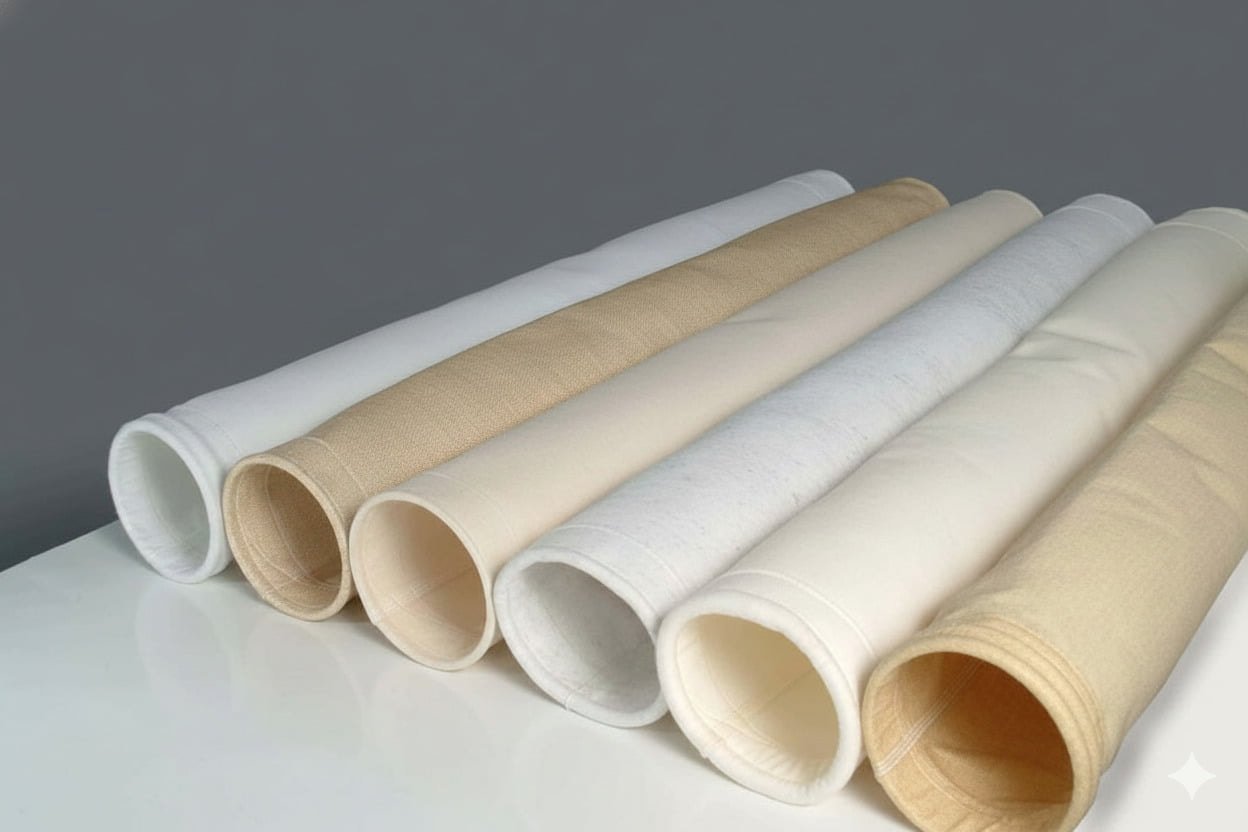
You may ask why many companies use PPS Filter Bag media in their dust systems. This filter is made with polyphenylene sulfide. This material is strong against harsh acids and alkalis. It can also handle very high heat. Here are some important features:
Property | Description |
|---|---|
High Temperature Resistance | Works up to 160°C (320°F). Handles surges to 190°C (375°F). |
Chemical Resistance | Stays strong against acids, alkalis, and solvents. |
Moisture Resistance | Works well in high humidity and wet places. |
Mechanical Strength | Does not tear easily and lasts longer in hard jobs. |
If your job has fine or rough dust in tough places, this filter media might be what you need.
Key Takeaways
PPS Filter Bags can handle heat up to 375°F. This makes them good for very hot places in factories. These filters are very strong against chemicals. They keep working well even when things get tough. PPS Filter Bags trap tiny dust with over 99.9% success. This helps make the air cleaner and keeps workers safe. The non-woven felt design makes them last longer. This means you do not need to fix or change them as much. Picking the right filter media, like PPS, helps follow rules about pollution. It also makes the whole system work better.
Why Is Filter Media Important in Dust Collection Systems?
Filter media is crucial in dust collection systems because it captures and holds dust particles, maintaining air quality and ensuring system efficiency. Proper filter media selection extends equipment life and reduces maintenance costs by preventing dust accumulation in machinery.
Role in Industrial Filtration
Filter media does more than just catch dust. It helps keep workers safe and machines working well. If you pick the wrong filter media, you can have big problems. For example, you might pay more for repairs. Your system can get blocked and need cleaning a lot. You could break air quality rules and get fined or shut down. Dust can hurt your machines. Workers might get sick and ask for help because of bad air.
You want your building to work well and follow the rules. The right filter media helps you do this. Here is how filter media helps you:
Evidence | Description |
|---|---|
Importance of filter media | Picking the right filter media helps you meet emissions rules and keep air clean. |
Compliance support | You get guidance on choosing media that fits your regulatory needs. |
Role in facility operations | Good air filters help you keep indoor air quality high and save energy. |
PPS Filter Bag vs. Other Media
There are many types of filter bags. PPS Filter Bag works best for hard jobs. Let’s see how it compares to other types:
Filter Media | Max Operating Temperature | Filtration Efficiency | Lifespan | Chemical Resistance |
|---|---|---|---|---|
PPS Filter Bag | 375°F | Excellent | N/A | Good against alkalis and mineral acids |
Aramid | 375°F | Excellent | Long | Excellent against acids and alkalis |
Fiberglass | 400°C | 99%+ | Long | Corrosion resistant |
Nomex | 260°C | High | Very Long | Excellent against a wide range of chemicals |
If you need a filter for high heat and strong chemicals, PPS Filter Bag is a good pick. It works well and helps stop system problems and extra costs.
What Key Features Define PPS Filter Bag Media?
PPS filter bag media is characterized by its exceptional resistance to high temperatures and harsh chemical environments, making it ideal for demanding filtration applications. These filter bags are primarily used in industrial settings where temperatures can reach up to 190°C (374°F) and where acid and alkali resistance is required.

Polyphenylene Sulfide Composition
You might wonder what makes PPS Filter Bag media so tough. The answer is polyphenylene sulfide, or PPS for short. This material stands out because it resists acids, alkalis, and even high temperatures. You can count on it to keep working in places where other filters might fail. PPS fibers do not break down easily, so you get a filter that lasts longer and keeps your air cleaner.
The process of making PPS Filter Bag media involves several careful steps. Here’s how manufacturers create this strong filter material:
Raw material selection and preparation: They pick the right fibers for the job.
Fiber opening: Machines open up the fibers to get them ready for mixing.
Blending: The fibers are mixed together to make a smooth blend.
Carding: The fibers line up and form a thin web.
Crosslapping: Layers are stacked to make the filter stronger.
Pre-needling: The fibers get lightly tangled for some early strength.
Needling: Barbed needles push and pull the fibers to lock them together.
Heat setting: The felt is heated to make it stable.
Filter media treatment: Special treatments boost how well the filter works.
Finishing: The edges are trimmed and checked for any problems.
This careful process gives you a filter that can handle tough jobs and keep working day after day.
Non-Woven Felt Construction
PPS Filter Bag media uses a non-woven felt design. This means the fibers are tangled together, not woven like cloth. You get a thick, sturdy layer that traps dust and dirt. The felt construction helps the filter catch even tiny particles, so your air stays cleaner.
Non-woven felt also means you do not have to worry about the filter tearing or wearing out too soon. The way the fibers are locked together gives the filter extra strength. You can use it in places with lots of dust or high heat, and it will still hold up.
Tip: Non-woven felt filters are great for places with fine or abrasive dust. They last longer and work better than many woven options.
Available Weights and Admixtures
When you choose a PPS Filter Bag, you can pick from different weights and special blends. The weight of the filter media affects how well it works and how long it lasts. Most PPS felt comes in weights like 16 or 18 ounces per square yard (about 500 grams per square meter). Heavier filters can handle more dust and last longer.
Here’s a quick look at what you get with standard PPS filter media:
Specification | Value |
|---|---|
Weight (g/m²) | 500 |
Continuous working temperature (℃) | ≤190 |
Short time working temperature (℃) | 230 |
Anti-acid | Excellent |
Anti-alkali | Excellent |
Anti-abrasion | Excellent |
You can also find PPS Filter Bag media with special admixtures. These extra fibers and treatments make the filter even better for tough jobs. Some common admixtures include:
Polyimide fibers: These boost how well the filter catches dust and help it last longer.
PTFE fiber support: This adds more filtration power.
Microfibers: These help trap even the smallest dust particles.
Oil and water repellent treatment: This keeps the filter working in wet or oily places.
Protective treatment against acids, alkalis, and hydrolysis: This makes the filter last longer in harsh settings.
Two-sided glazing: This improves how well air flows through the filter and helps it catch more dust.
With all these options, you can find a PPS Filter Bag that fits your needs. Whether you need extra strength, better dust capture, or protection from moisture, there’s a filter out there for you.
What Are the Main Advantages of PPS Filter Bags?
PPS filter bags are highly valued for their exceptional chemical resistance and thermal stability, making them ideal for harsh industrial environments. They effectively capture fine particles even at elevated temperatures, ensuring consistent performance and durability.

High-Temperature Performance
Some places get very hot inside. Not all filters can work in high heat. PPS Filter Bag keeps working when it gets hot. You can use it up to 375°F all the time. Other filters like fiberglass, P84, and PTFE can handle even higher heat. But PPS Filter Bag gives you a good mix of heat resistance and strength.
Material | |
|---|---|
Fiberglass | 500°F |
PPS | 375°F |
P84 | 500°F |
PTFE | 500°F |

If your dust system gets hot often, you need a filter that does not melt. PPS Filter Bag stays strong in tough heat.
Tip: If your plant gets sudden heat spikes, PPS Filter Bag can handle short bursts up to 190°C (375°F) and still work well.
Chemical and Moisture Resistance
Factories use strong chemicals. You might see acids or alkalis in the air. PPS Filter Bag does not just survive—it works well. It resists acids and alkalis, so it keeps its shape and keeps filtering. You do not have to worry about it breaking down.
PPS filter bags resist acids and alkalis, so they last longer.
You keep filtration strong, even when chemicals are around.
Chemical resistance is important in places like chemical plants.
PPS Filter Bag is made to resist chemicals in your workplace.
Moisture can hurt many filters. PPS Filter Bag stands up to wet air and high humidity. It has great hydrolysis resistance, so it keeps working even when there is condensation. Studies show that when humidity goes up, the filter cake gets more porous. This helps PPS Filter Bag keep filtering well, even in damp air.
Note: If your plant has wet air or chemical fumes, PPS Filter Bag helps you save money and keeps your system running.
Fine Dust Capture
Dust comes in many sizes. Big dust is easy to catch, but fine dust is hard. PPS Filter Bag traps even tiny dust. It has filtration efficiency above 99.9%. This means cleaner air for your team and machines.
Filter Media Type | Filtration Efficiency | Stability | Notes |
|---|---|---|---|
PPS | High | Best performance stability after long operation | |
PTFE | >99.9% | Moderate | |
PI | >99.9% | Moderate | |
Coated Filter | Lower than PPS | – | Film formation process affects performance |
Gradient Filter | Second best | – | |
Conventional Filter | Lower than gradient | – | |
Blended Filter | Lower than conventional | – | |
Blended Ultrafine | Lowest | – |
You want a filter that keeps working for months. PPS Filter Bag gives you that. It keeps your air clean and helps your dust system work better.
Callout: If you need to catch fine or rough dust, PPS Filter Bag is one of the best choices for long-lasting results.
Where Are PPS Filter Bags Most Commonly Used?
PPS filter bags are most commonly used in industries with high-temperature applications and challenging chemical environments, such as power plants, waste incineration, and cement production. They excel in these settings due to their exceptional resistance to heat, acids, and alkalis.

Power Generation and Incineration
PPS Filter Bags work in power plants and incinerators. These places get very hot and dusty. Sometimes, the air has little oxygen, even as low as 9%. PPS Filter Bags still work well in these tough spots. They also handle rough dust that can wear out other filters. You want a filter that lasts and keeps things running.
Here are some problems you might see:
New filters can cost a lot at first.
Using the wrong bag means more failures.
You might need more repairs and get less use from your system.
You could break emissions rules and get in trouble.
Even with these problems, PPS Filter Bags help you stay safe. They keep working when other filters might stop.
Cement, Steel, Chemical Industries
Cement, steel, and chemical factories need strong filters. These places have high heat and strong chemicals every day. PPS Filter Bags resist acids and alkalis, so they last longer. You also get better dust control, which means cleaner air.
People use PPS Filter Bags for:
Dust collection in coal boilers
Rubbish incinerators
Power plants
Here are some real results:
A cement company in Asia used PPS Filter Bags. They cut dust by more than 90%. Workers now breathe cleaner air.
A cement plant in Europe upgraded its system. They saw less dust, cleaner air, lower costs, and longer equipment life.
Here is a table showing other industries that use PPS Filter Bags and what they need:
Industry | Filtration Requirements |
|---|---|
Oil and Gas | High temperature resistance, chemical compatibility |
Paint Manufacturing | Fine particulate removal, long service life |
Electronics | Strong filtration for fine dust |
Pulse Jet Baghouse Use
You often see PPS Filter Bags in pulse jet baghouses. These systems clean themselves while running, so you get less downtime. PPS Filter Bags work well in places with little oxygen and rough dust. They resist acids and alkalis, stay flexible, and keep working in high heat.
Why pick PPS Filter Bags for pulse jet baghouses?
They resist acids and alkalis very well.
They stay strong and flexible.
They filter dust really well.
They work up to 190°C (375°F).
You need fewer bags, so you save space.
Pulse jet baghouses clean better and use less room. PPS Filter Bags help your system work well, even in hard places.
Tip: If your plant has hot, dirty, or low-oxygen air, PPS Filter Bags are a smart pick for good dust control.
You get a lot of value when you choose PPS filter bag media for your dust system. Here’s what makes it stand out:
Stays strong in wet or humid air
Lasts longer and cuts down on maintenance
Keeps air clean with low emissions
Fits many types of industrial jobs
Experts say you should check your filters often, watch pressure, clean them right, and train your team. This helps your system work better and last longer.
If you want even better results, look into new coatings or stronger PPS blends. You can always talk to a filtration specialist for advice.
FAQ
What does PPS stand for in filter bags?
PPS stands for polyphenylene sulfide. This is a strong synthetic fiber. You see it used in filter bags because it handles heat, chemicals, and moisture very well.
How long does a PPS filter bag last?
You can expect a PPS filter bag to last one to three years. The life depends on dust type, temperature, and how well you maintain your system.
Can I use PPS filter bags in wet or humid places?
Yes, you can. PPS filter bags resist moisture and keep working in damp air. You do not have to worry about them breaking down from water.
Are PPS filter bags safe for food or medical use?
No, PPS filter bags are not for food or medical use. You find them in factories, power plants, and other heavy industries. They are not made for direct contact with food or medicine.