
Custom Mini-Pleat HEPA Filter Supplier
Engineered for critical cleanroom environments. Delivering ultra-clean air with optimized aerodynamics and uncompromising structural integrity.
-
Verified Efficiency: H13, H14, and U15 grades rigorously tested to EN 1822 / ISO 29463 standards.
-
Energy Optimized: Separatorless hot-melt design ensures ultra-low initial pressure drop.
-
Fully Customizable: Exact L×W×D dimensions and frames (Anodized Aluminum / Stainless Steel) to fit any FFU or ceiling grid.
-
Factory-Direct Supply: Scalable in-house production supporting both rapid project delivery and long-term OEM programs.
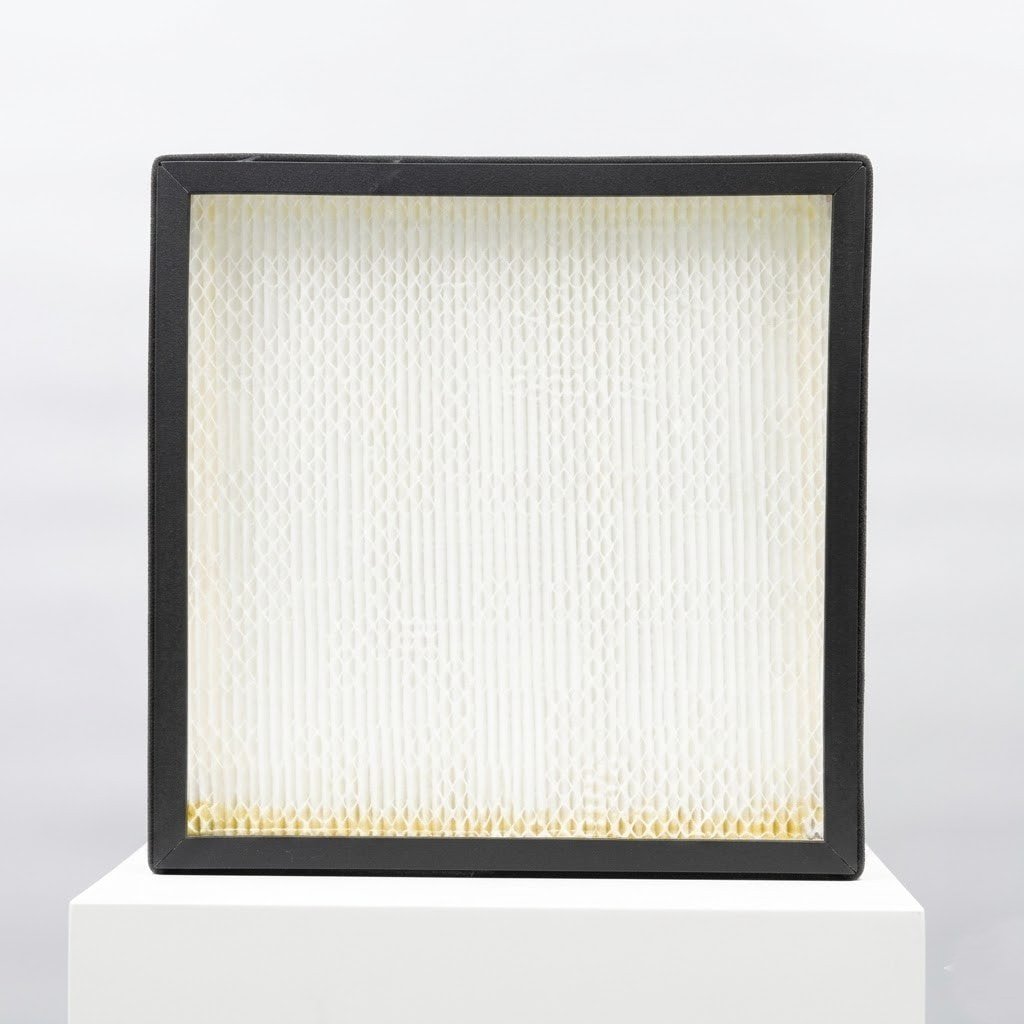
Mini-Pleat HEPA Filter Technical Specifications
| Specification | Standard / Typical Value |
|---|---|
| Series | Mini-Pleat Terminal HEPA Series |
| Frame Material | Extruded Anodized Aluminum / Galvanized Steel / Stainless Steel |
| Filter Media | Ultra-fine Micro-glass Fiber (Water-resistant) |
| Separator | Precise Hot-melt Adhesive |
| Sealant | Seamless Polyurethane (PU) |
| Efficiency Rating | H13 (99.95%) / H14 (99.995%) at MPPS (0.3 μm) per EN 1822 |
| Max. Temperature | ≤ 70°C (158°F) for Standard Continuous Operation |
| Max. Humidity | ≤ 100% RH |
| Initial Pressure Drop | ≤ 160 Pa (varies by specific dimensions and nominal airflow) |
| MOQ | 50 Units (Customization supported for project batches) |
| Certifications | ISO 9001, CE, RoHS, Individual Leak Test Report |
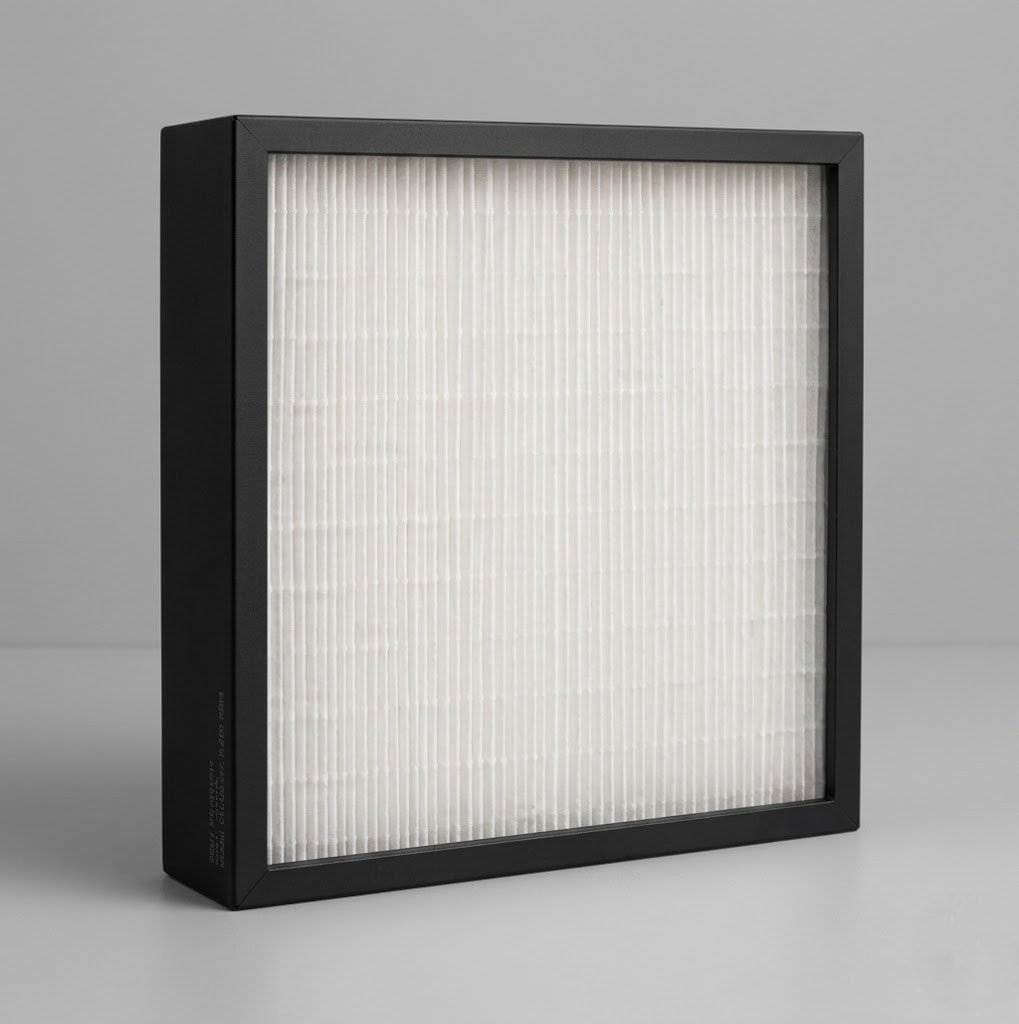
Mini-Pleat HEPA Filter Series & Configurations
Explore our comprehensive range of terminal filtration solutions. As we manufacture these in-house, each series can be engineered to meet your specific airflow and cleanroom class requirements.
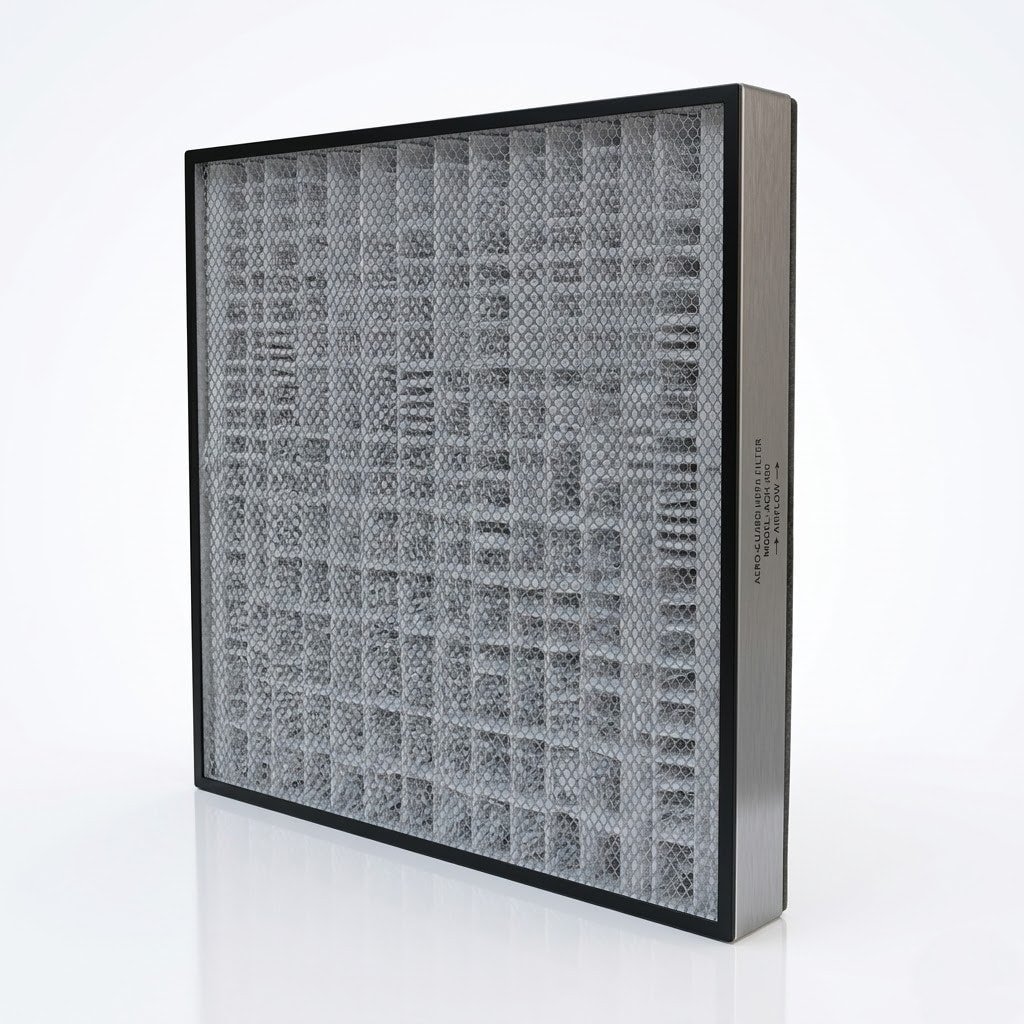
Standard Mini Pleat HEPA Panel
Our flagship mini pleated hepa filter is designed for universal cleanroom ceiling grids. It features a lightweight anodized aluminum frame and ultra-fine glass media for exceptional H13/H14 efficiency.
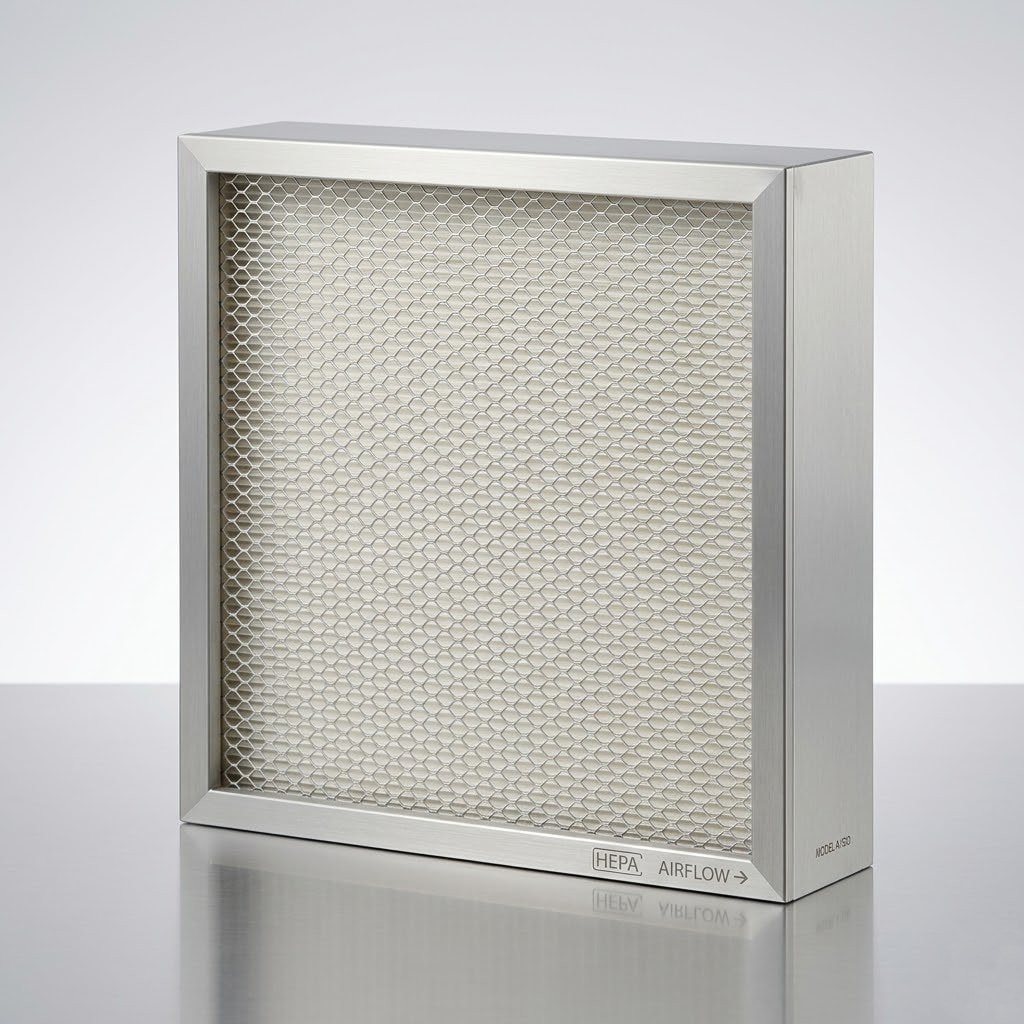
High-Flow HEPA Mini Pleat Filter
Engineered for high-velocity HVAC applications, these mini pleat hepa filters utilize a V-bed structure to pack more media area into the same footprint, drastically lowering pressure drop.
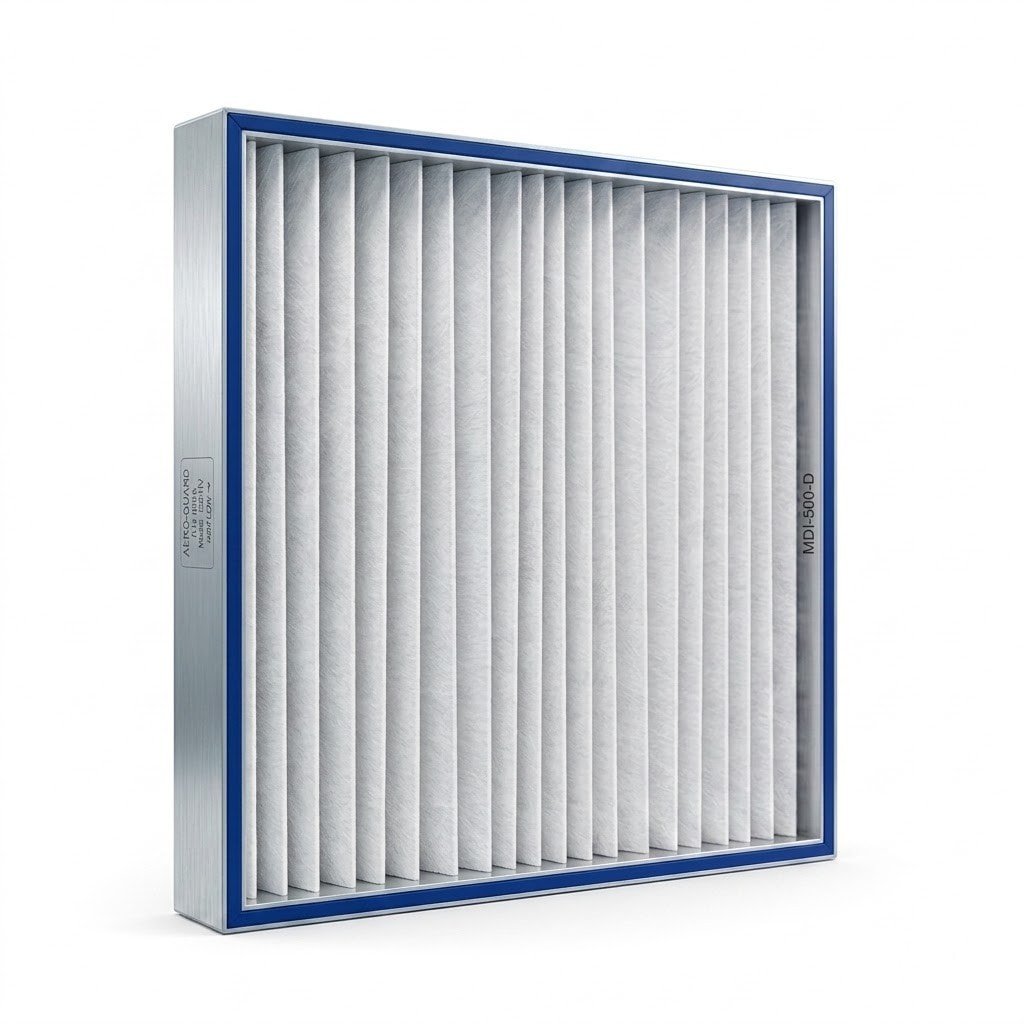
Gel-Seal Mini Pleated HEPA Module
A specialized mini-pleat hepa filter featuring a perimeter channel filled with non-curing polyurethane fluid. This ensures a 100% bypass-free, knife-edge seal required for strict GMP validations.
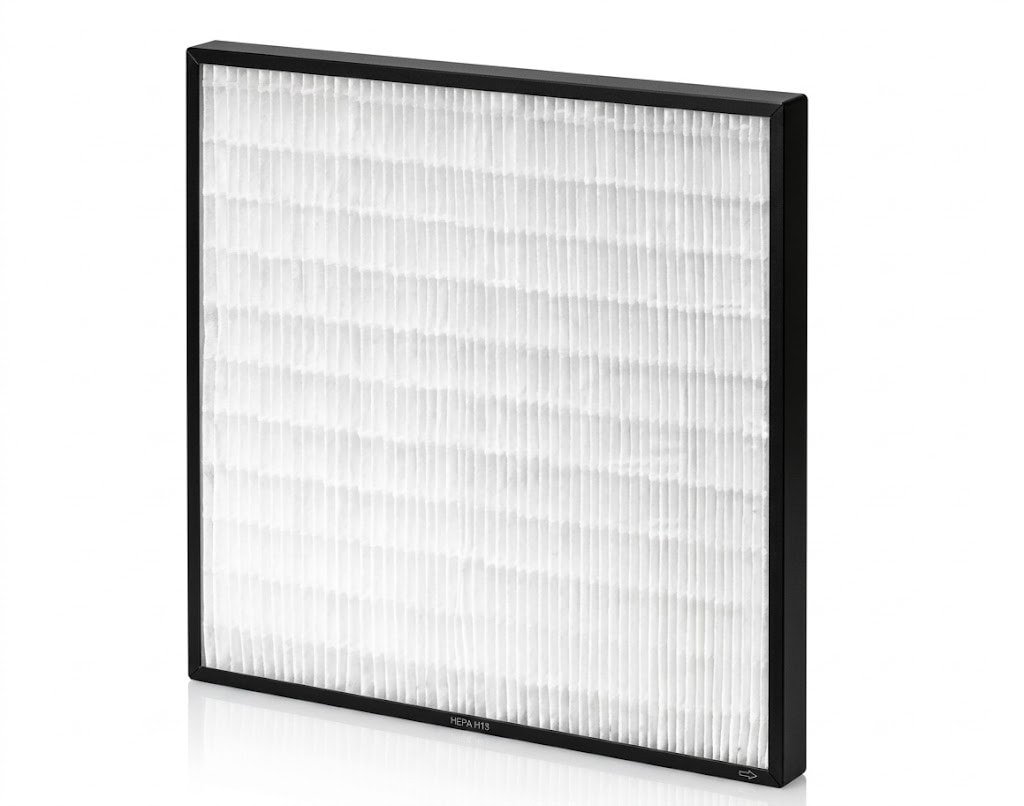
FFU-Optimized Mini Pleated HEPA Air Filter
Low-profile mini pleated hepa filters specifically calibrated to match the aerodynamic output of Fan Filter Units. The shallow depth design reduces continuous motor load and vibration.
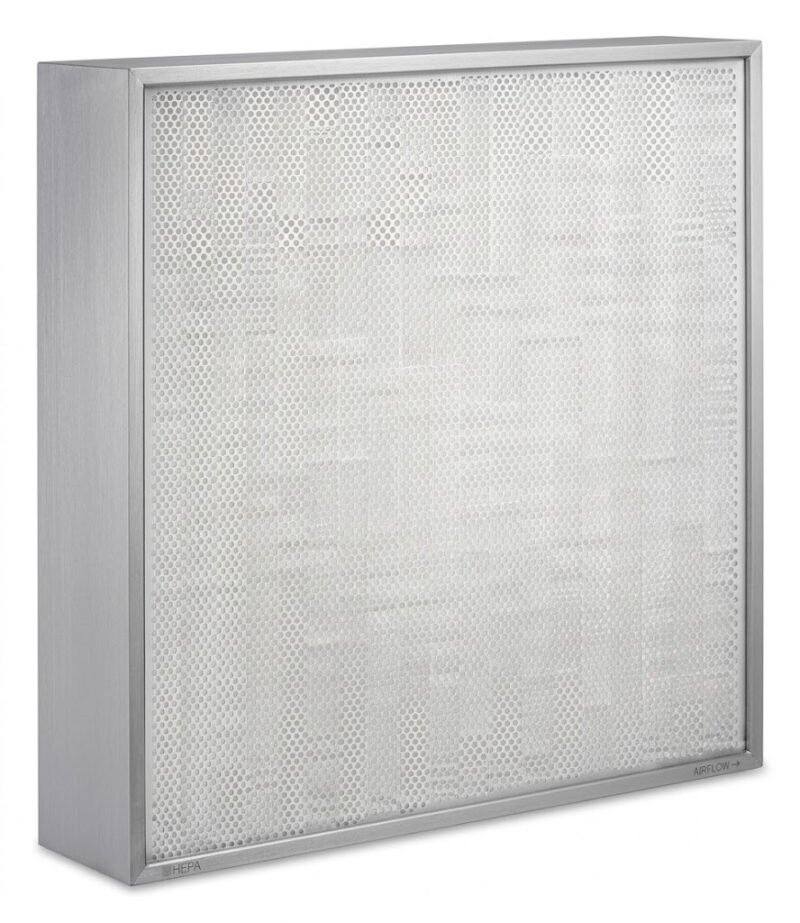
Custom Mini-Pleated HEPA Filter Solutions
Need a specific dimension? We offer flexible sizing, including the highly requested pleat hepa filter mini configurations for restricted-space equipment housings and custom OEM projects.
Core Advantages of Our Mini-Pleat HEPA Technology
Optimized Aerodynamic Performance
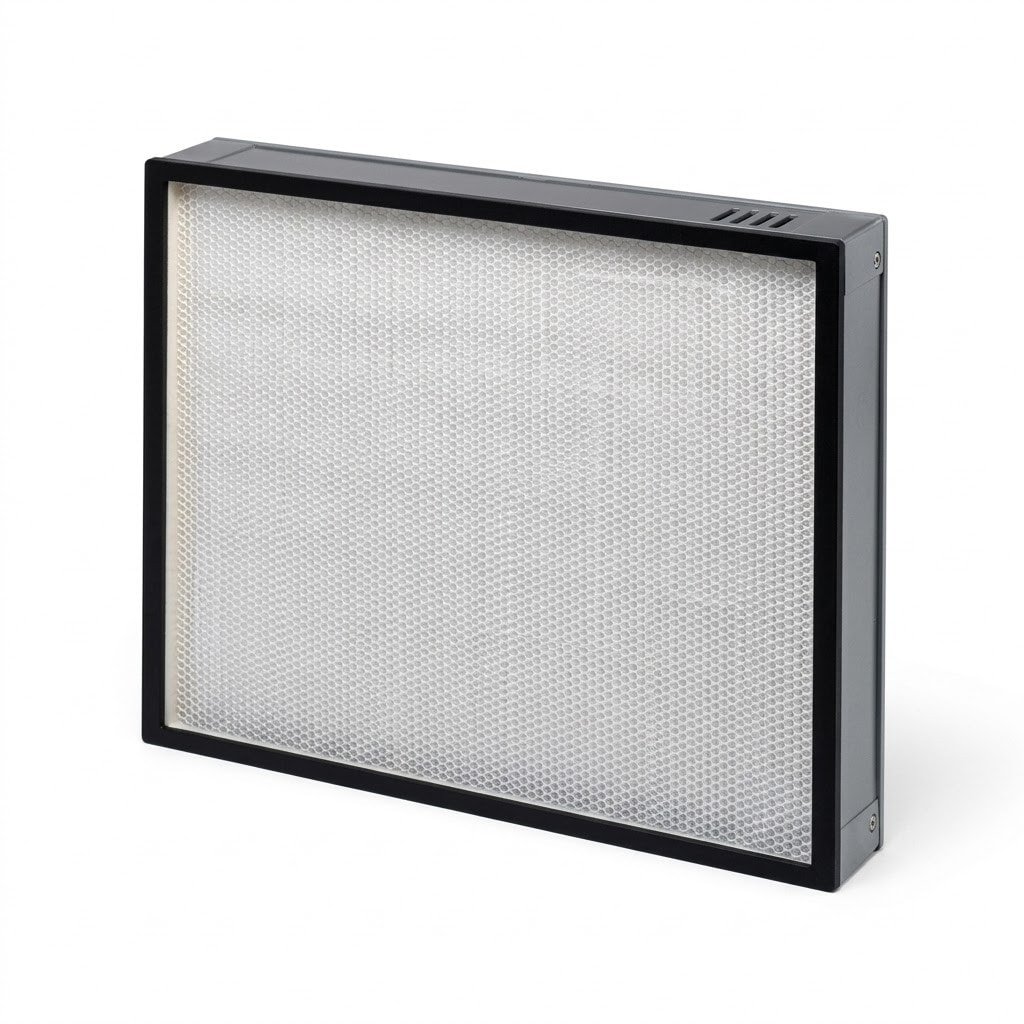
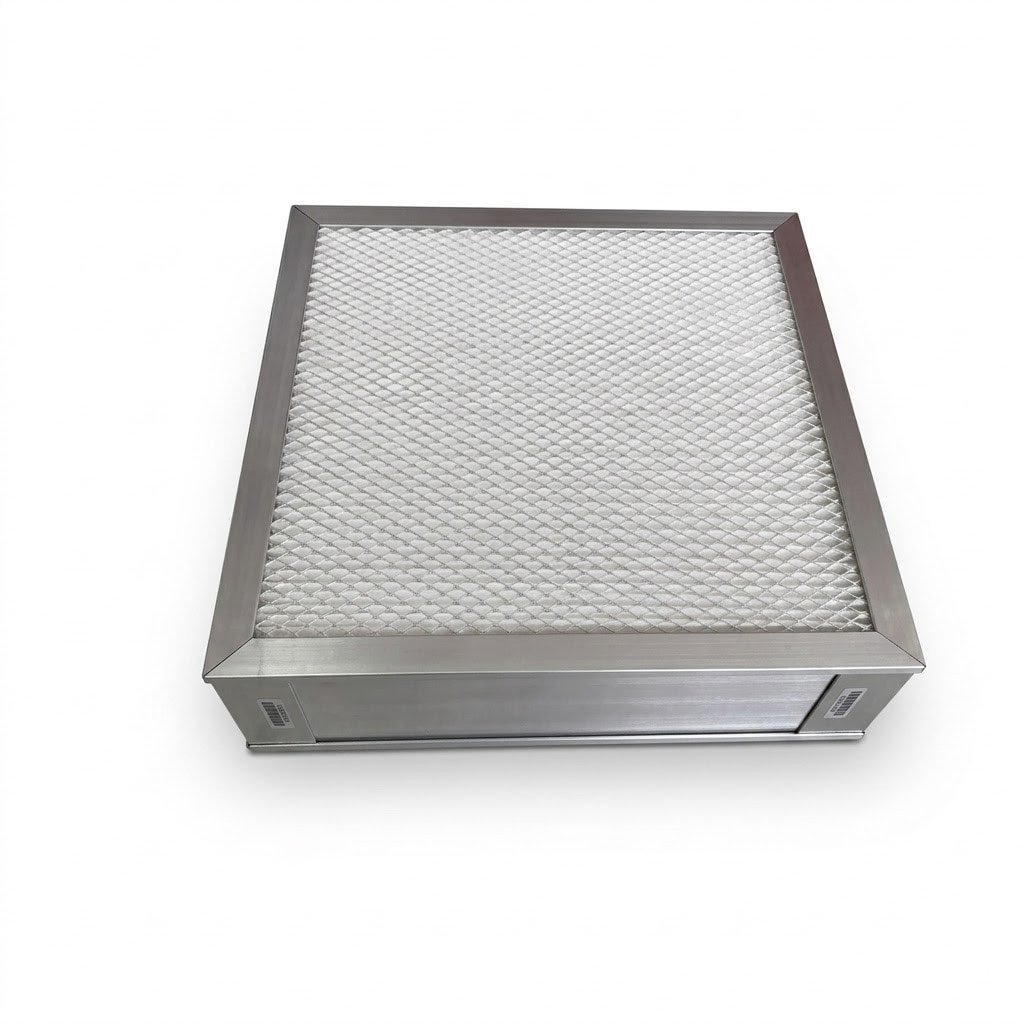
Our Mini-Pleat HEPA filters feature ultra-fine micro-glass media combined with precise hot-melt separation technology to maintain perfect pleat geometry. This structural stability ensures continuous H13/H14 filtration efficiency with minimal initial pressure drop, helping buyers extend service life and significantly reduce HVAC energy consumption.
Comprehensive Customization Capabilities
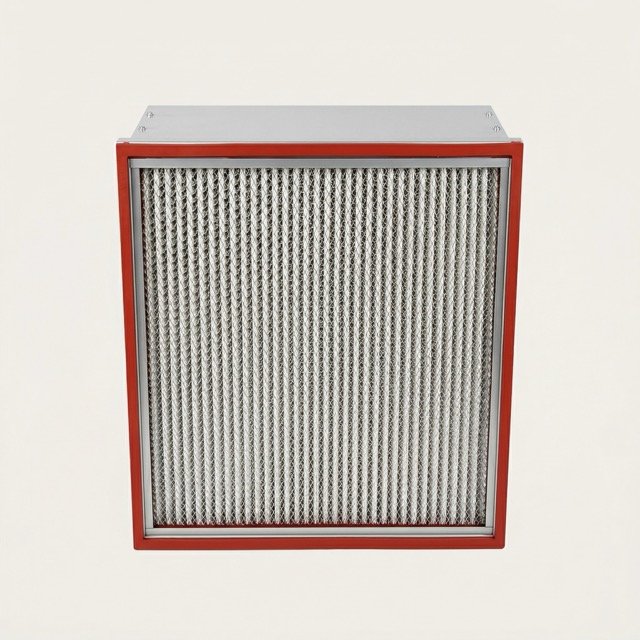
As an in-house manufacturer, we offer full flexibility in frame materials (anodized aluminum, galvanized, or stainless steel), precise custom dimensions, and specific efficiency ratings (ranging from H13 to U15). This end-to-end customization allows buyers to seamlessly integrate our filters into any existing cleanroom ceiling grid or equipment housing without requiring costly retrofits.
Strict Batch Consistency & Certification
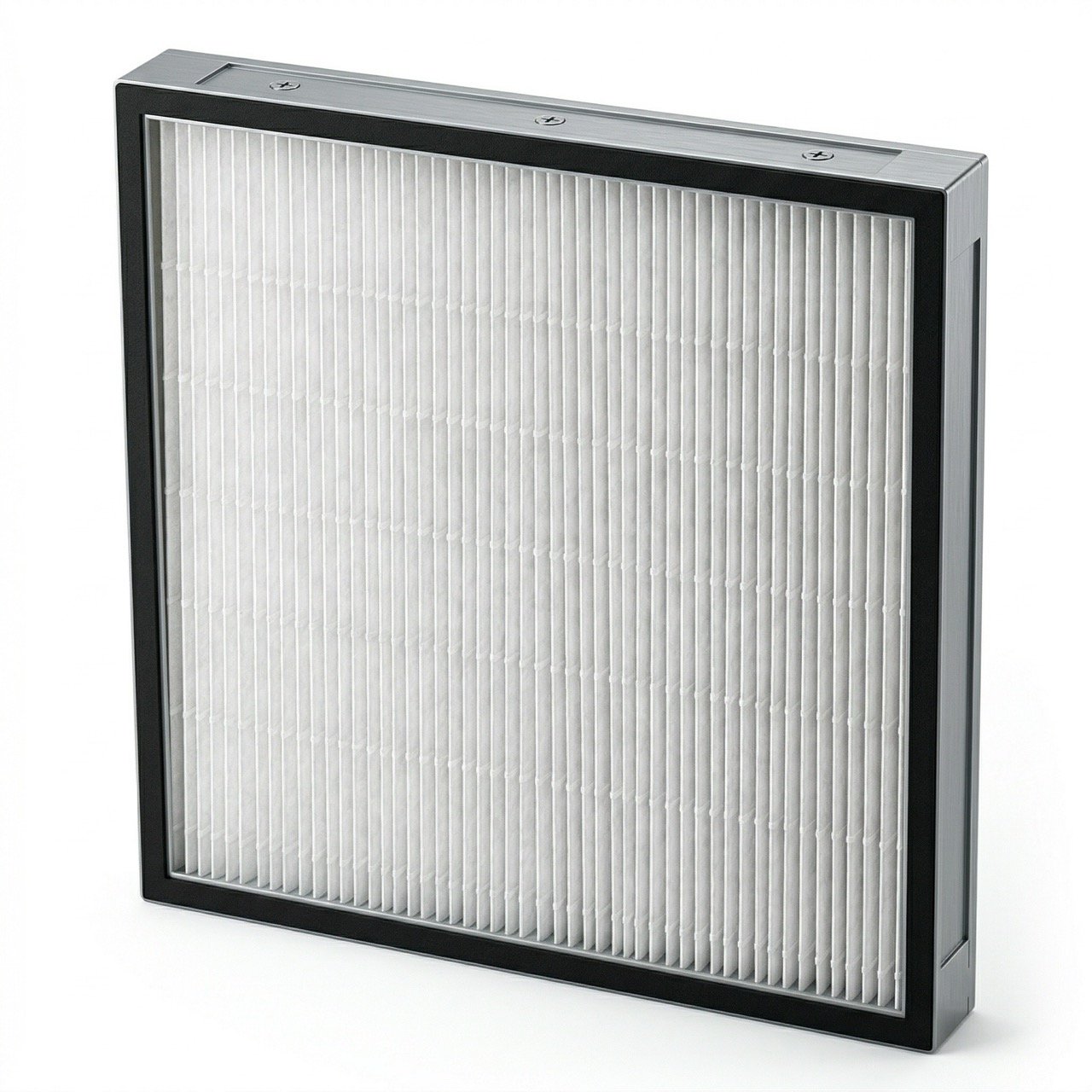
Every individual filter undergoes rigorous automated scanning and DOP/PAO leak testing in strict accordance with EN 1822 and ISO 29463 standards before leaving our facility. By providing comprehensive, traceable test reports with each shipment, we guarantee batch-to-batch consistency and give buyers absolute confidence when facing strict GMP, FDA, or ISO audits.
Scalable Manufacturing & Reliable Lead Times
Leveraging our automated mini-pleat production lines and a highly stable raw material supply chain, we maintain high daily output capacity for both standard bulk orders and tailored OEM programs. This robust production capability ensures buyers receive consistent, on-time global deliveries, eliminating supply chain bottlenecks and reducing inventory holding costs.
High-Performance in Critical Environments
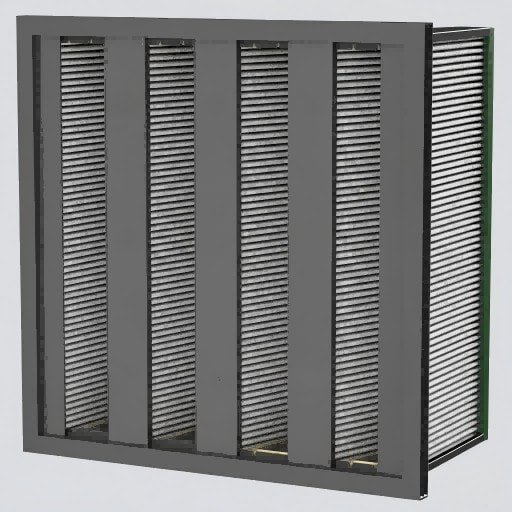
Our filters are engineered with high-strength frames, seamless polyurethane (PU) fluid sealing, and optional specialized media (such as low-boron or PTFE) to withstand demanding operational stresses. This provides buyers with highly reliable, long-lasting clean air solutions perfectly adapted for strict applications like semiconductor fabrication, pharmaceutical cleanrooms, and biosafety laboratories.
Factory Tested Data: Standard HEPA Specifications
Engineered data you can trust. Below are our most commonly requested dimensions for standard cleanroom applications.
| Model | Dimensions (mm) | Airflow (CMH) | Initial Resistance (Pa) | EN1822 Std. | |
|---|---|---|---|---|---|
| CF-MP-22 | 610 × 610 × 69 | 1000 | 110 | H14 | |
| CF-MP-24 | 610 × 1220 × 69 | 2000 | 115 | H14 | |
| CF-MP-33 | 915 × 915 × 90 | 2200 | 120 | H14 | |
| CF-MP-44 | 1220 × 1220 × 90 | 4000 | 120 | H14 |
Mini-Pleat HEPA Solutions for Airflow Challenges
Engineered to overcome traditional filtration limitations, delivering uncompromising performance for critical environments.
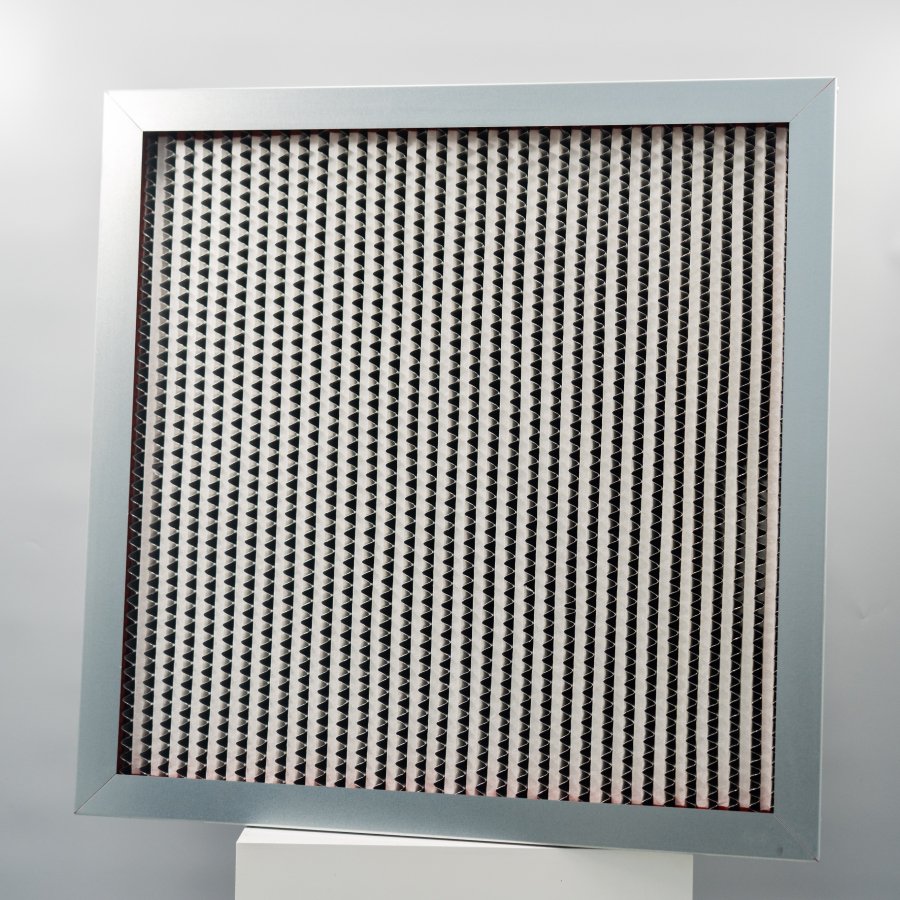
High Energy Consumption and Operational Costs
Traditional HEPA filters often suffer from high initial pressure drops, forcing HVAC systems to work harder and consume significantly more electricity.
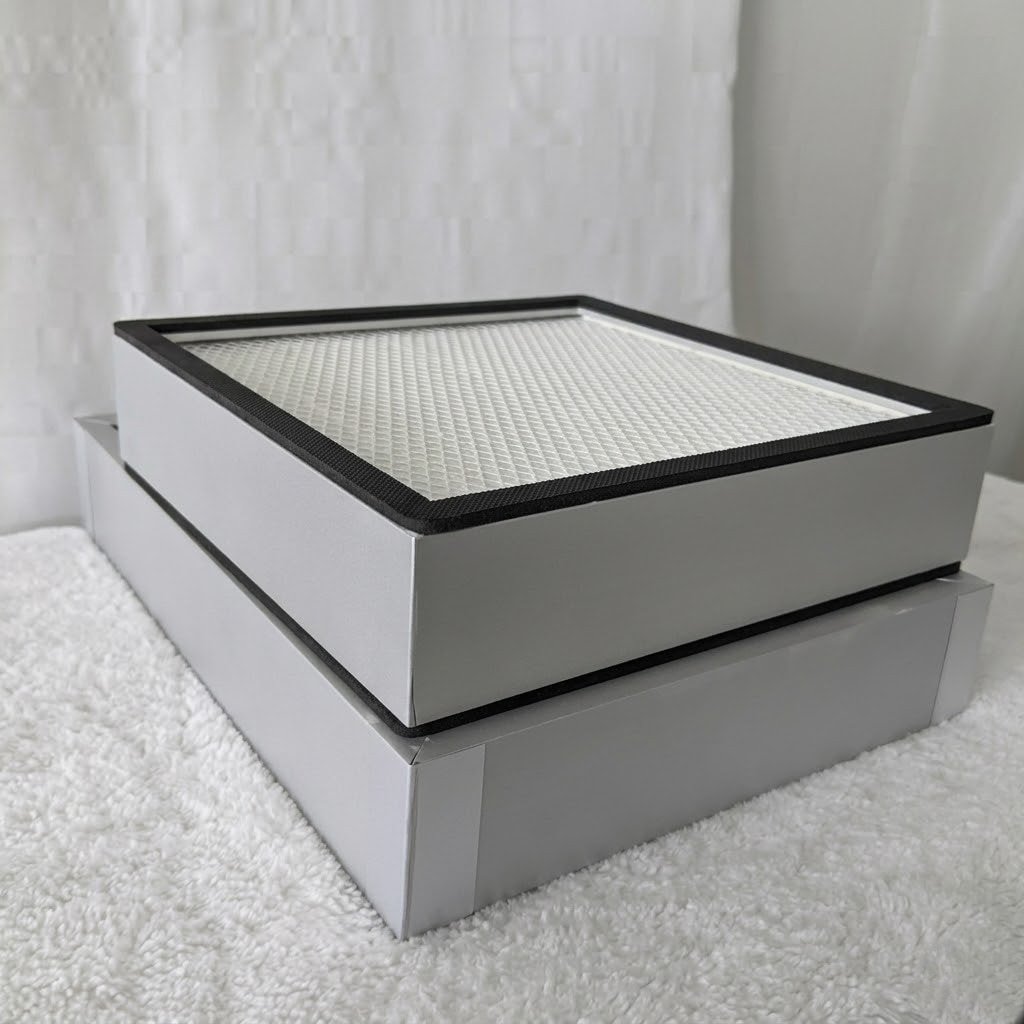
Premature Clogging and Frequent Replacements
Inefficient pleat designs cause filter media to blind off, leading to rapid dust accumulation and pressure spikes.
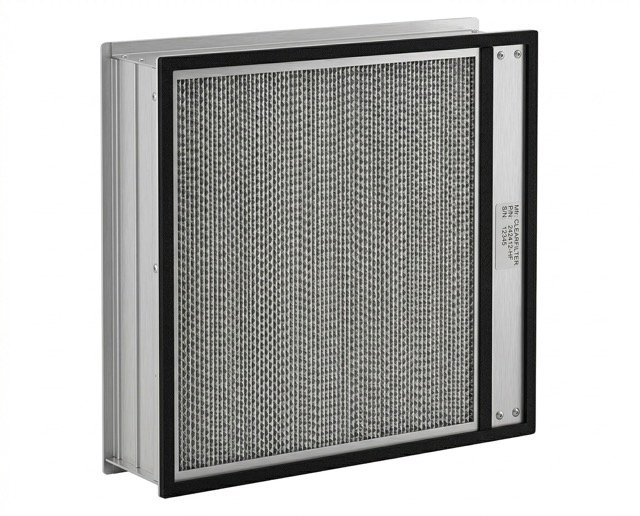
Media Damage and Leak Test Failures
Fragile filter media can easily sustain micro-tears during transport, resulting in failed DOP/PAO leak tests.
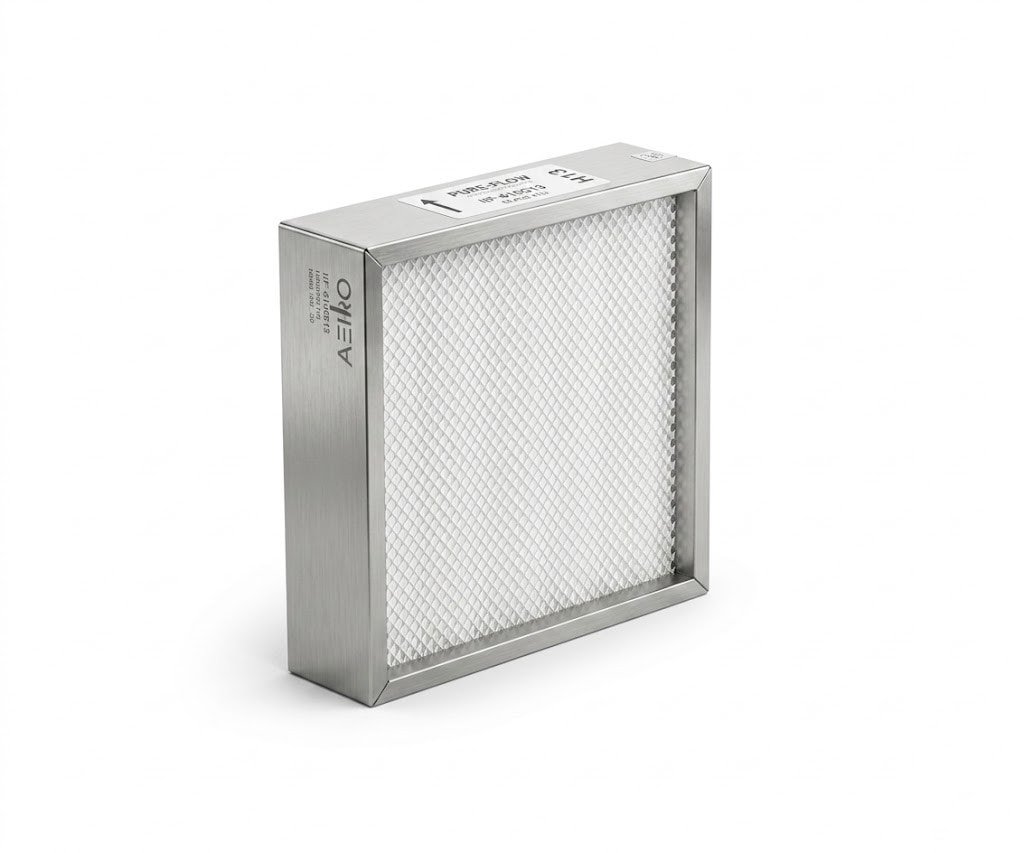
Uneven Airflow and Turbulence in Clean Zones
Inconsistent filter resistance disrupts laminar flow, increasing the risk of cross-contamination.
Mini-Pleat HEPA Filter Energy Efficiency
The true cost of a HEPA filter extends beyond its initial purchase price; it includes the continuous electricity required to push air through the media. By optimizing pleat density, we keep the initial resistance below 120 Pa. Lower aerodynamic drag means your HVAC infrastructure draws less power over the filter's operational lifespan, directly reducing facility overhead.
The Economics of Pressure Drop
The relationship between filter resistance and energy consumption is defined by the fan power equation:
Every Pascal of unnecessary resistance translates to wasted kilowatt-hours. Our low-resistance design objectively lowers the pressure drop variable, delivering measurable, long-term economic benefits and accelerating ROI.
Mini-Pleat HEPA Filter Industry Applications
Engineered for critical environments requiring stringent contamination control. Our factory-direct filtration solutions ensure absolute compliance with ISO 16890 and EN 1822 standards.
Microelectronics / Semiconductor
Microelectronics / Semiconductor
In environments where even the smallest particulate can compromise wafer yield, our Mini-Pleat HEPA filters deliver exceptional structural performance. We emphasize the prevention of Airborne Molecular Contamination (AMC) through ultra-low outgassing materials and precision hot-melt spacing, ensuring absolute yield protection for semiconductor fabrication and microelectronics assembly.
Pharmaceutical / GMP
Pharmaceutical / GMP
Strict adherence to GMP standards requires flawless contamination control. Our filters undergo rigorous dust emission testing (unit-by-unit DOP/PAO scanning) and feature advanced Gel Seal technology (polyurethane sealing) to guarantee zero-bypass filtration. This ensures a sterile, compliance-ready environment for pharmaceutical manufacturing and cleanroom laboratories.
Healthcare / Hospital Operating Rooms
Healthcare / Hospital Operating Rooms
Designed for critical care environments, our HEPA/ULPA filters provide long-term high dust-holding capacity and absolute operational reliability. By maintaining ultra-clean, unidirectional airflow in hospital operating rooms and isolation wards, we help healthcare facilities protect patients and staff from airborne pathogens continuously, minimizing maintenance downtime.
Zero Compromise Testing
Unit-by-unit DOP/PAO scan leak testing ensures 100% compliance before factory dispatch.
Vertical Integration
End-to-end control from media pleating to frame forming for Factory Direct Economics.
Mini-Pleat HEPA Filter Manufacturing Facility
Source-level vertical integration delivering end-to-end quality control and factory-direct economics. We operate a physical manufacturing facility engineered for high-precision industrial air filtration.
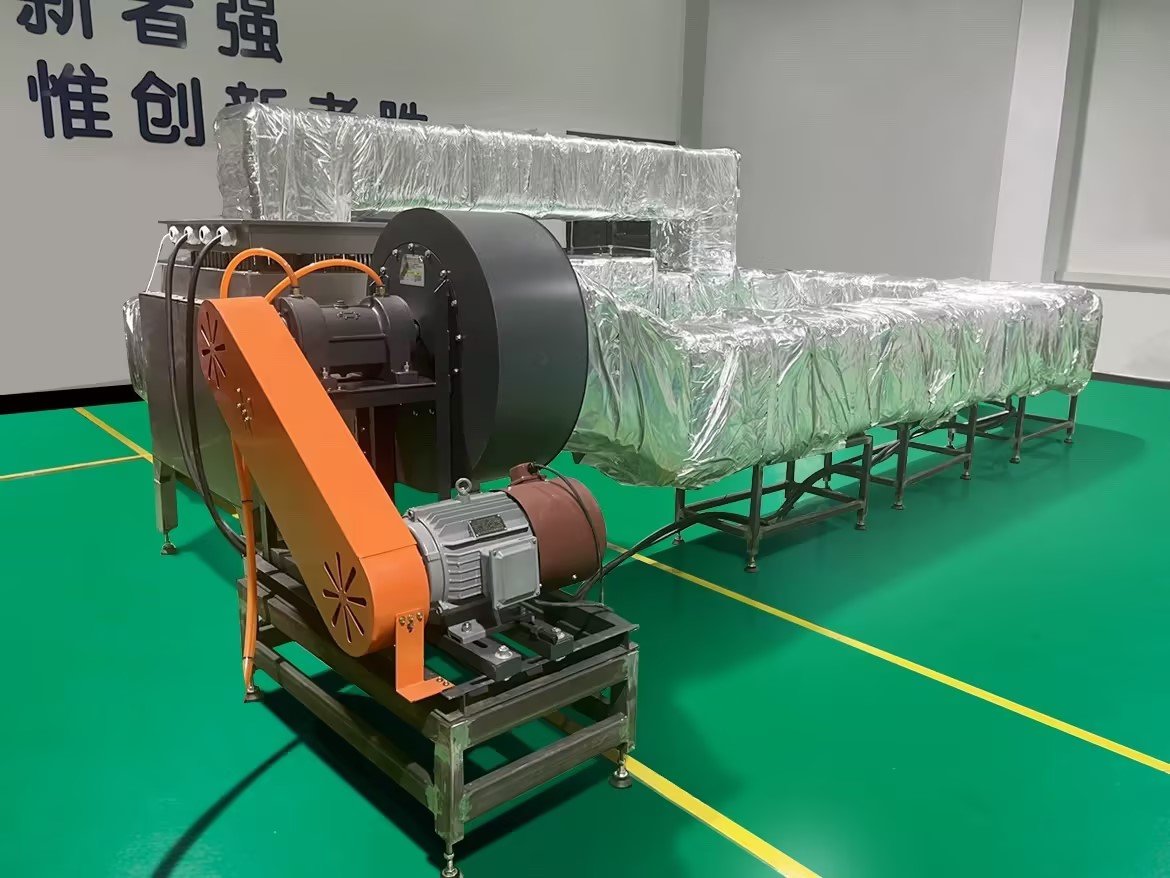
Adhesive Carbonization
Traditional sealants decompose under extreme heat, releasing chemical odors and volatile compounds into environments requiring 100% pure air output.
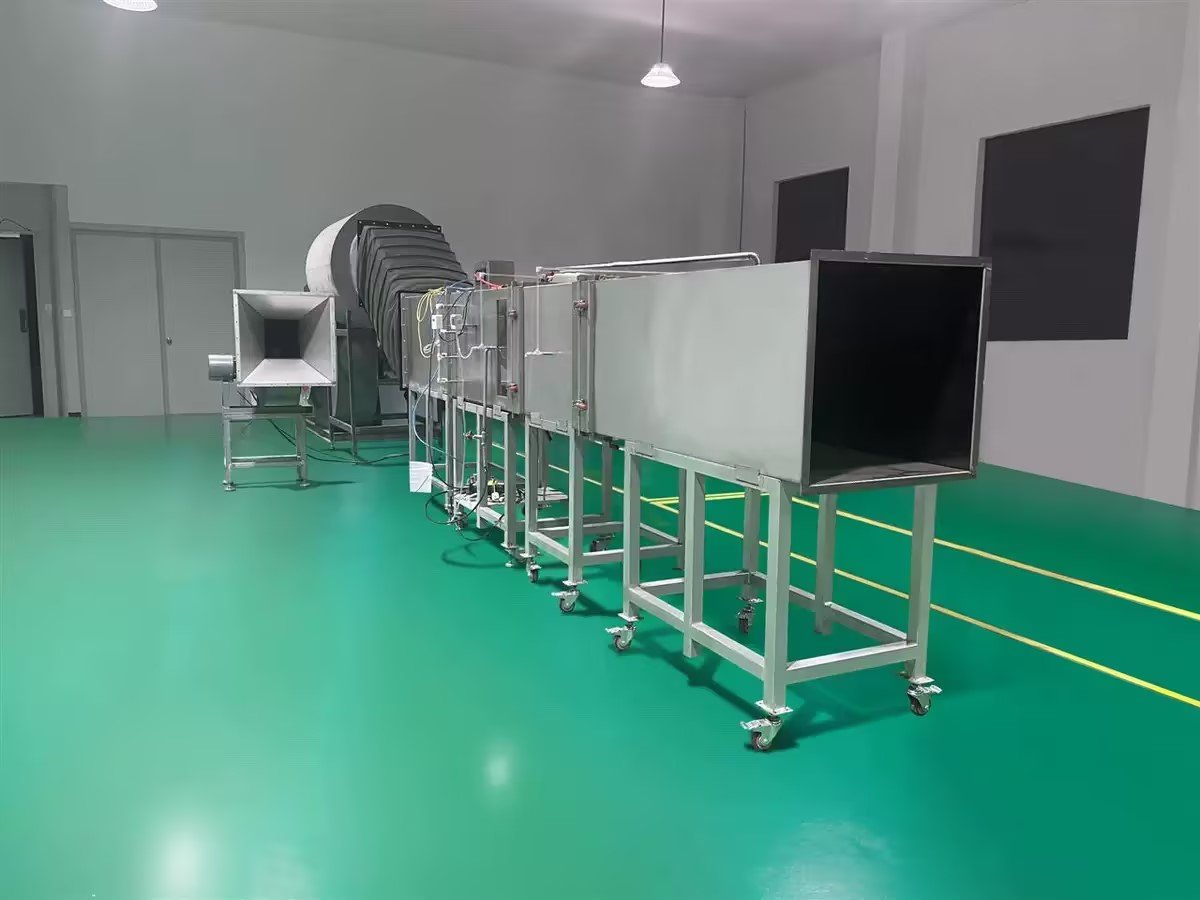
Media Shedding
Substandard media fractures under extreme heat weathering, causing secondary particulate contamination that threatens downstream production lines.
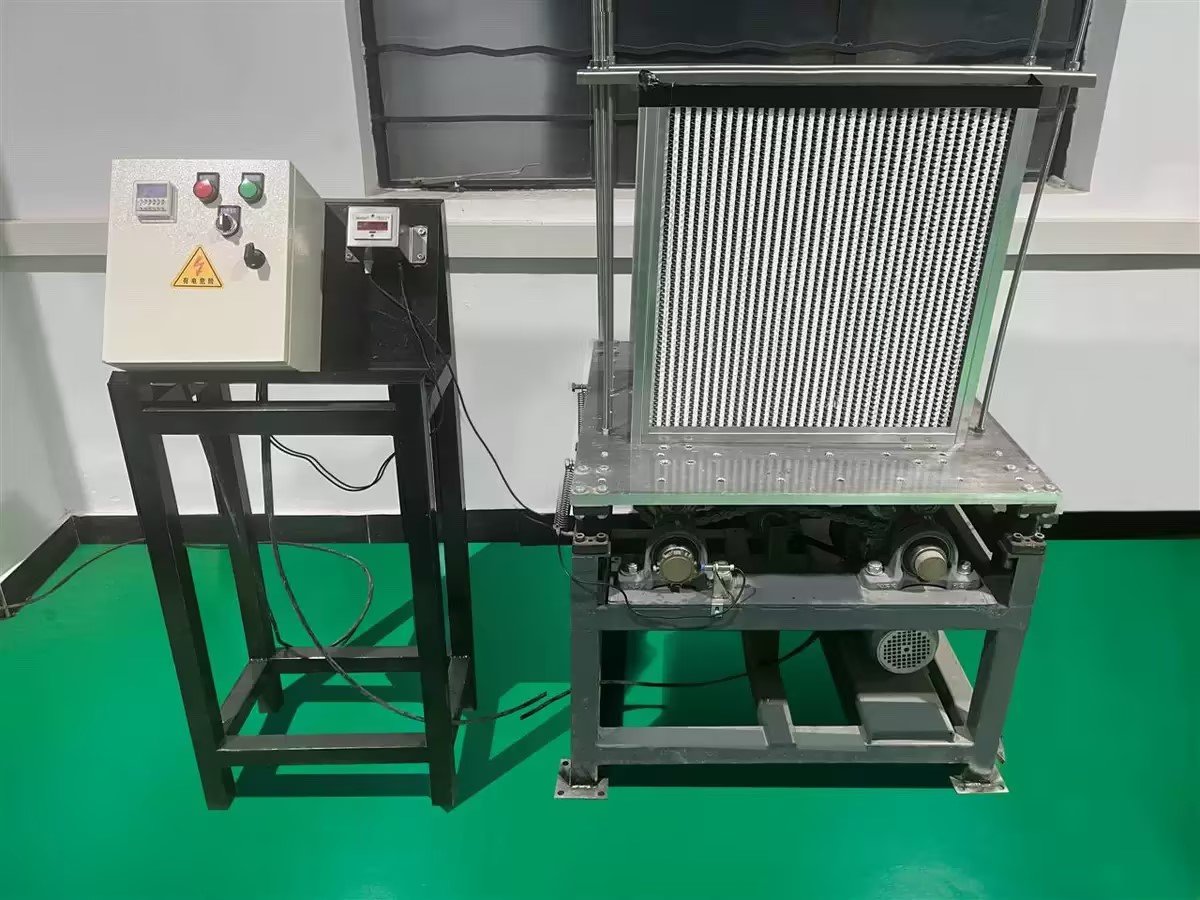
Bypass Leakage
Thermal expansion and contraction compromise rigid frames, creating bypass gaps that allow unfiltered air to bypass the media entirely.
What Is a Mini-Pleat HEPA Filter?
Advanced contamination control for critical environments requiring ISO Class 1 to ISO Class 8 air purity.
H13 / H14 Classification
EN 1822 & ISO 29463 Compliant
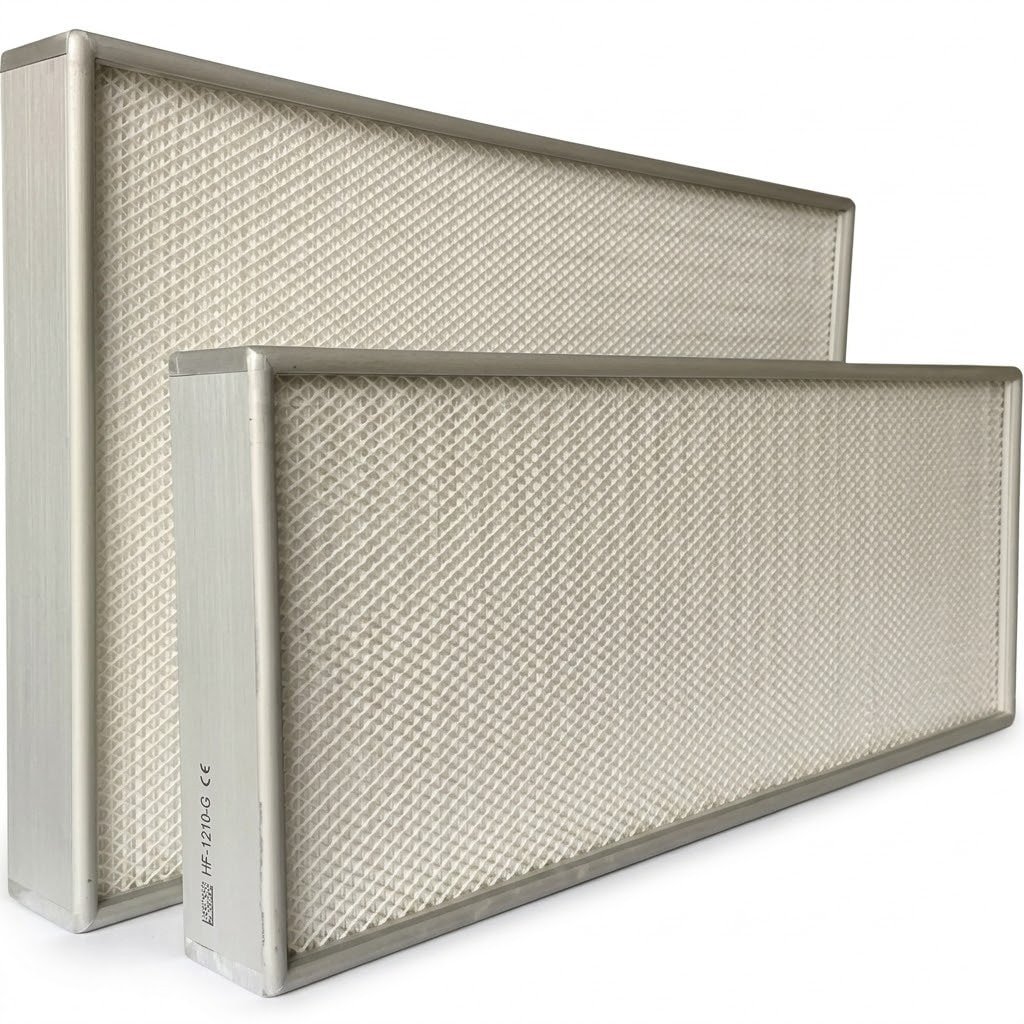
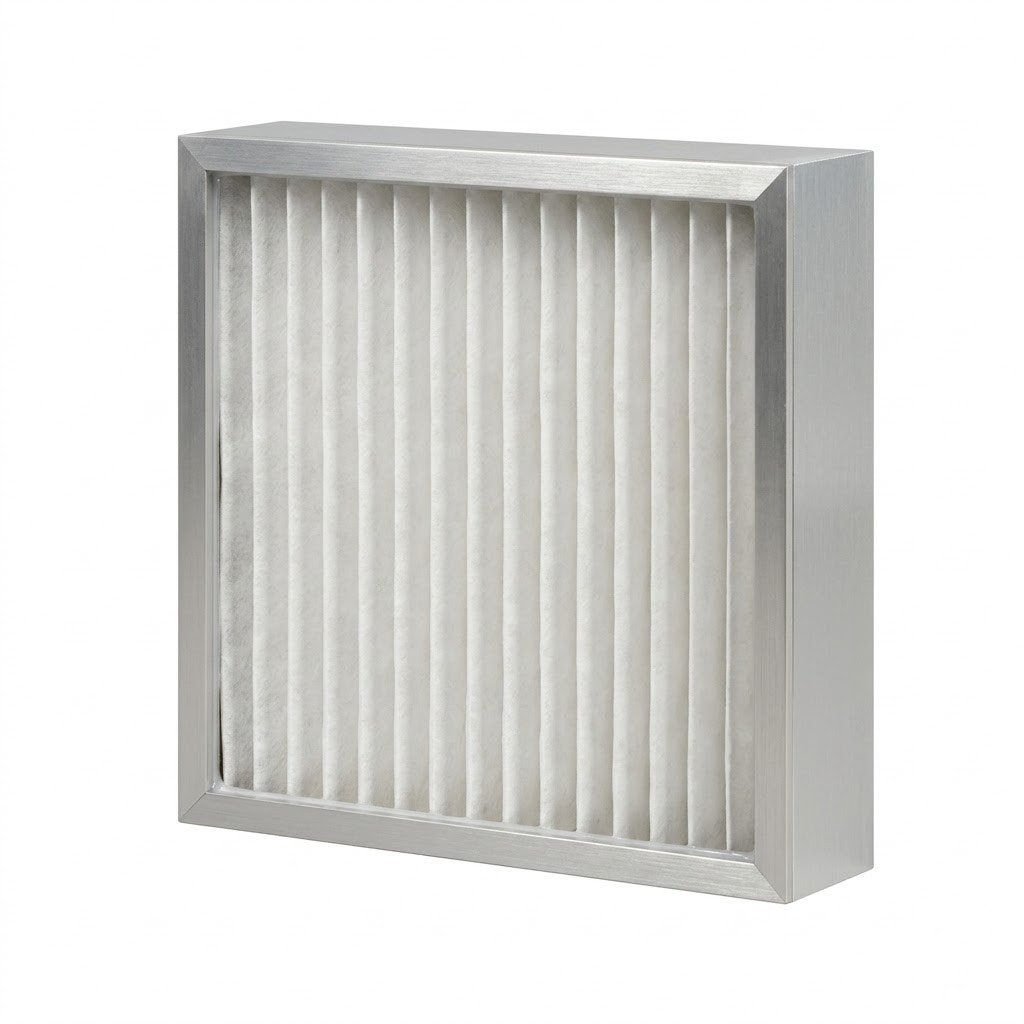
A Mini-Pleat HEPA (High-Efficiency Particulate Air) filter is an advanced terminal filtration device designed to capture ultra-fine airborne particles in critical environments. Unlike traditional deep-pleat HEPA filters that rely on bulky corrugated aluminum separators, the mini-pleat design utilizes thin strings of hot-melt adhesive to separate the filter media.
This structural innovation packs a significantly higher media surface area into a compact, shallow frame, reducing both overall weight and initial airflow resistance.
Performance & Standards
Industrial Applications
How to Specify Your
Mini-Pleat HEPA Filter
in 4 Steps
To ensure perfect integration with your cleanroom HVAC system, gather the following specifications before requesting a quote:
Define Your Efficiency Grade
H13, H14, or U15Determine your target ISO cleanroom class. H13 (99.95%) is standard for general clean environments, while H14 (99.995%) and U15 are mandatory for critical semiconductor or sterile pharmaceutical zones.
Confirm Physical Dimensions
L x W x DAccurate measurements are critical. Measure the exact length, width, and frame depth to ensure a perfect fit in your Fan Filter Units (FFUs) or ceiling grids, avoiding bypass air leaks.
Select Frame & Media Materials
Environment SpecificChoose anodized aluminum for lightweight structural integrity, or stainless steel for highly corrosive/chemical environments. Let us know if you require specialized media like PTFE for low-boron applications.
Match Airflow & Pressure Drop
CFM/CMH RequirementsCalculate the required Air Changes Per Hour (ACH). Provide us with your target airflow volume and the maximum initial pressure drop your current fan system can handle to maintain system efficiency.
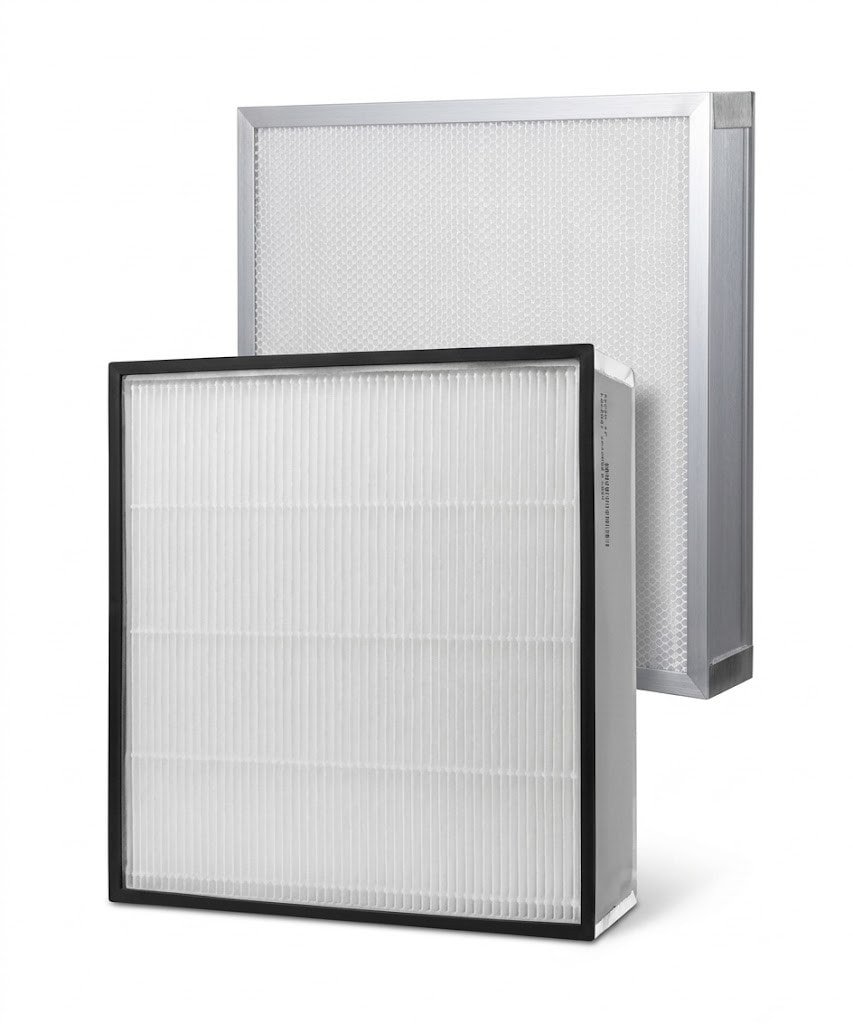
Expert Engineering Assistance
Need help defining your exact specifications? Our filtration engineers are ready to assist with custom calculations and material selection to guarantee compliance.
-
Custom CAD Dimensions & Prototyping
-
On-site Installation Troubleshooting
-
Housing Compatibility Verification
Compare Mini-Pleat and Deep-Pleat Designs
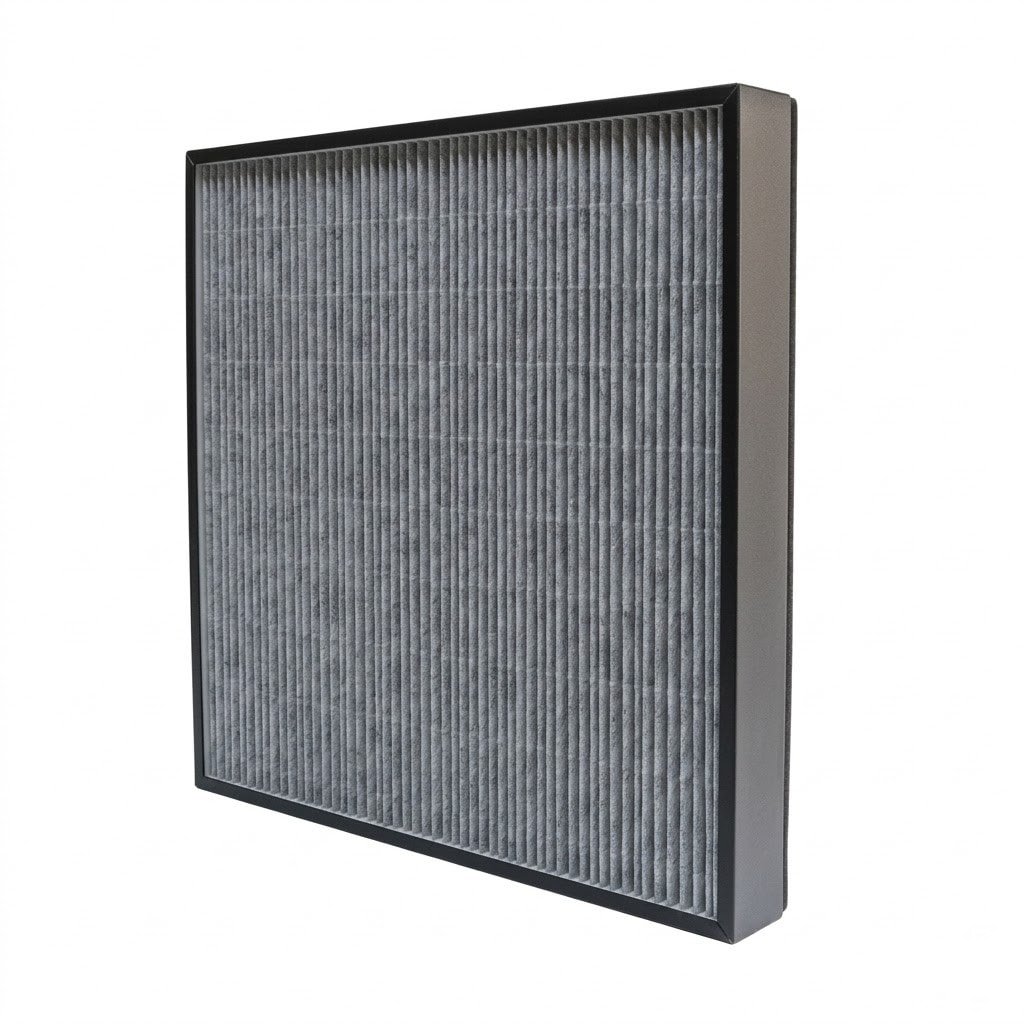
Filter construction directly impacts operational costs and airflow stability. Here is an objective breakdown of how traditional aluminum separators compare to hot-melt technology.
| Engineering Dimension | Mini-Pleat HEPA (Hot-Melt) | Deep-Pleat HEPA (Aluminum) |
|---|---|---|
| Media Area |
|
|
| Initial Pressure Drop |
|
|
| Handling & Weight |
|
|
| Airflow Uniformity |
|
|
Procurement & Engineering FAQ
Should I choose a dry gasket (PU/Neoprene) or a fluid gel seal for my cleanroom ceiling grid?
It depends on your cleanroom's classification and grid system. Dry EVA or Polyurethane (PU) gaskets are standard for most ISO 7 to ISO 9 applications and require perfectly even, mechanical clamping pressure to prevent leaks. For strict ISO 5 or better environments (such as GMP pharmaceuticals or semiconductor fabs), a fluid Gel Seal (typically polyurethane or silicone-based) is highly recommended. The knife-edge of the ceiling grid embeds directly into the non-curing gel, ensuring a 100% bypass-free, airtight seal without relying on complex clamping mechanisms.
What is the exact difference between an H14 Mini-Pleat HEPA and a U15 ULPA filter for critical cleanrooms?
The distinction lies in their filtration efficiency and the target particle size. An H14 HEPA filter is tested to provide ≥99.995% efficiency at the Most Penetrating Particle Size (MPPS, typically 0.3 microns). A U15 ULPA (Ultra-Low Penetration Air) filter provides ≥99.9995% efficiency for even smaller particles (typically 0.12 microns). While ULPA offers higher purity required for advanced microelectronics, it also introduces a significantly higher pressure drop, requiring more robust HVAC blower systems and higher energy consumption.
Do you offer low-outgassing or Boron-free HEPA filters for semiconductor manufacturing?
Yes. Standard micro-glass HEPA media contains trace amounts of boron, which can off-gas and react with airborne molecular contaminants (AMCs), potentially causing critical defects in advanced semiconductor wafer fabrication. For strict microelectronics applications, we specify Boron-free PTFE (Polytetrafluoroethylene) membrane filters. PTFE media completely eliminates boron outgassing, offers exceptionally low chemical extractables, and provides higher mechanical strength compared to traditional fiberglass.
What is the recommended face velocity for standard Mini-Pleat HEPA panels to prevent media damage?
For standard cleanroom terminal applications, the nominal face velocity for a 2-inch or 3-inch deep Mini-Pleat HEPA panel is engineered at 90 to 100 FPM (0.45 to 0.5 m/s) to maintain strict laminar flow. While our hot-melt separator architecture is physically robust, pushing airflows significantly beyond the rated capacity (e.g., above 150 FPM) will exponentially increase the differential pressure, accelerate filter dust loading, and risk disrupting the uniform unidirectional airflow required for ISO-certified spaces.
Are your Mini-Pleat filters compatible with standard PAO (Polyalphaolefin) aerosol scan testing?
Absolutely. Our standard micro-glass Mini-Pleat HEPA filters are fully compatible with industry-standard PAO and DOP cold or hot aerosol challenge tests used during initial cleanroom commissioning and annual certifications. Note: If your facility specifically utilizes PTFE membrane HEPA filters, special considerations or alternative testing aerosols (like PSL microspheres) may be required, as high concentrations of standard oil-based aerosols can permanently blind the ultra-fine pores of PTFE media.
Get Technical Drawings & Factory Direct Quotes: Contact Our Engineers
"Send us your system airflow requirements, target purification class (like H14/U15), or simply a photo of your current filters. Our engineering team will match the right model and provide detailed CAD dimensions and a factory quote within 24 hours."
Email Us
Annie.chen@clearfilterpro.com
Call Direct
+86 13538992575
Factory Location
30 Andeli, West Yuhua Road, Nanjing