
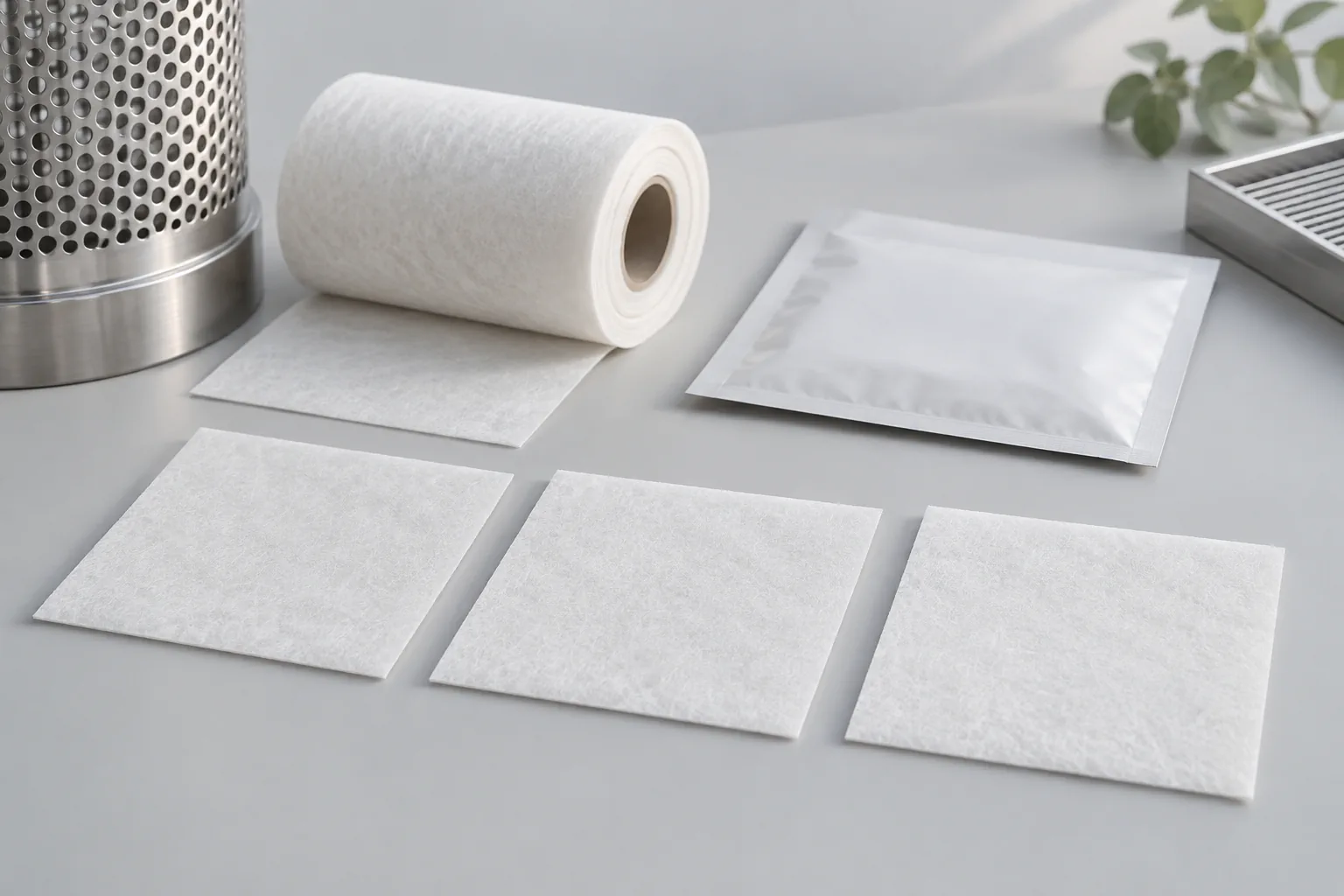
Medical Filter Paper Manufacturer for Hospital and Pharmaceutical Ventilation
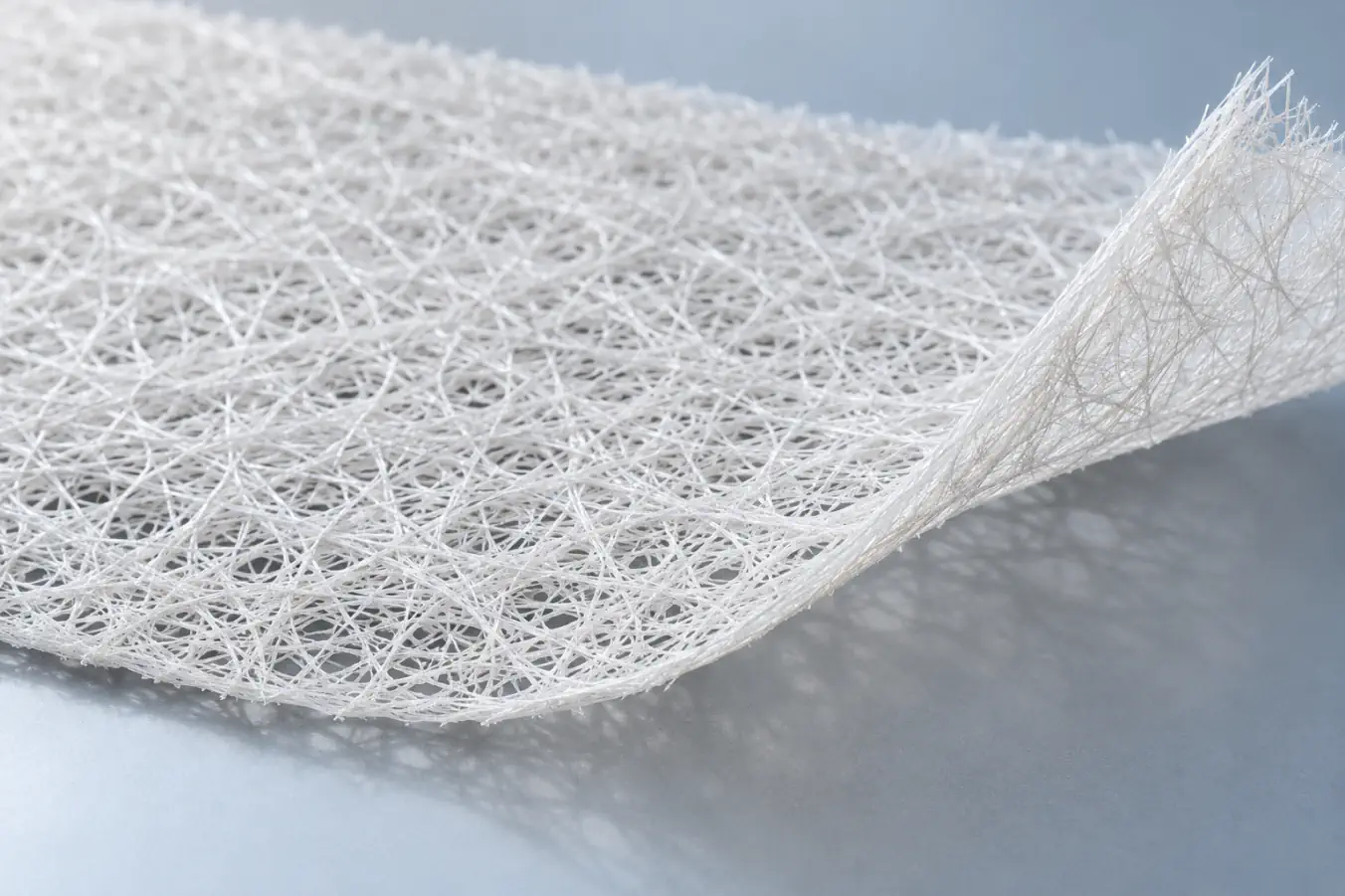
We manufacture glass fiber filter paper for high-efficiency air-filter development in hospitals and pharmaceutical clean environments. CFH7463PH, CFH7663PH and CFU9263 offer three documented material options, with model-specific efficiency tests, pressure-drop limits and shared mechanical properties for converting and filter design.
Three media grades · 0.33±0.03 mm thickness · Water resistance ≥650 mmH&₂O
Compare Our Medical Air Filter Paper Grades
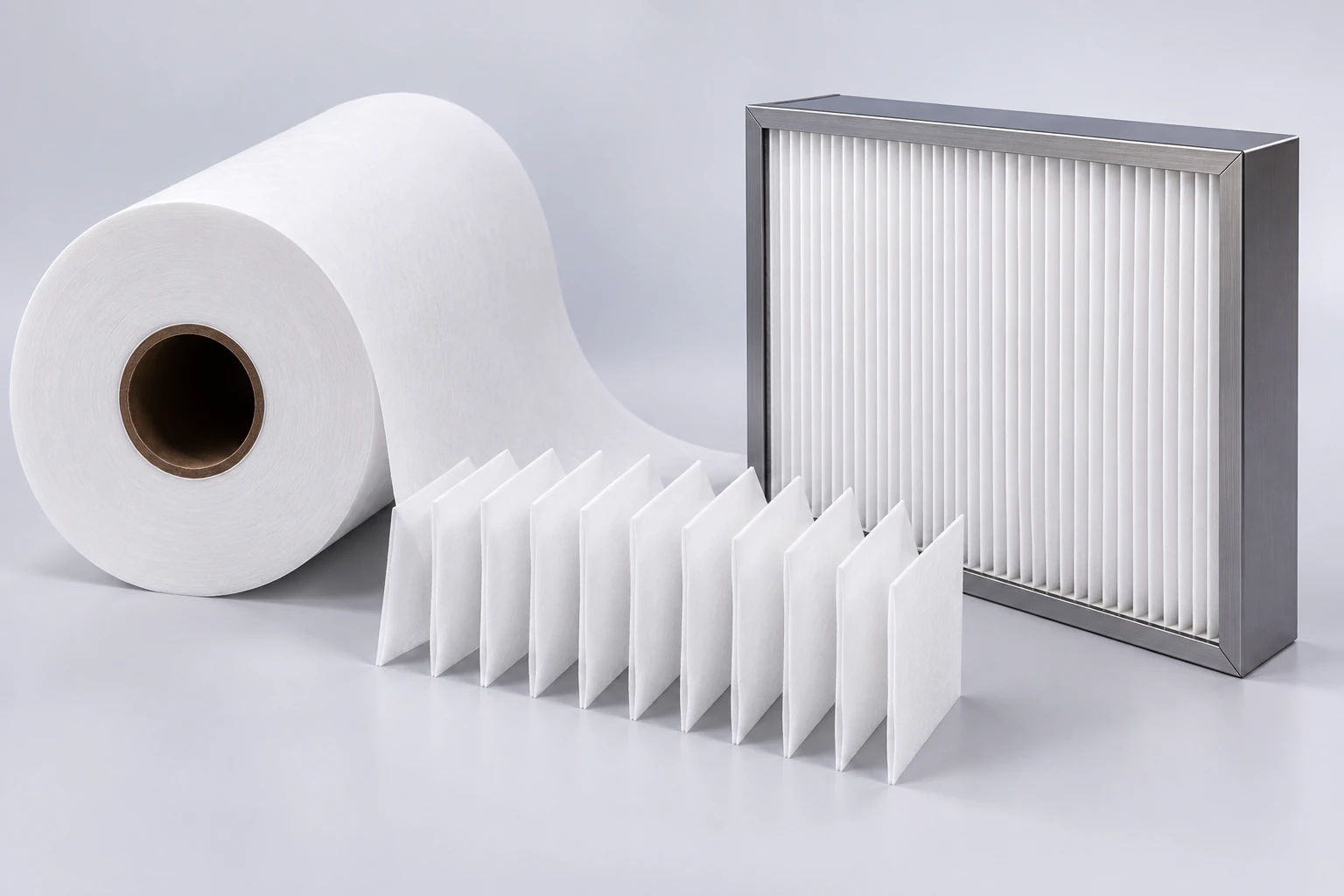
CFH7463PH
Efficiency ≥99.99% at 0.3 μm and 5.3 cm/s. Pressure drop ≤330 Pa at 5.3 cm/s. This model has the lowest specified pressure-drop limit of the three and is a starting point when that efficiency target fits the filter design.
Discuss CFH7463PHCFH7663PH
Efficiency ≥99.998% at 0.3 μm and 5.3 cm/s. Pressure drop ≤390 Pa at 5.3 cm/s. Choose this PH grade for evaluation when the higher specified 0.3 μm capture threshold is required and the design allows the resistance limit.
Discuss CFH7663PHCFU9263
Efficiency ≥99.999% at MPPS and 2.5 cm/s. Pressure drop ≤380 Pa at 5.3 cm/s. This grade provides an MPPS-based efficiency specification for projects requiring that measurement approach.
Discuss CFU9263
Engineered for Excellence.
Built for Industry.
We specialize in manufacturing high-performance filtration systems tailored for rigorous environments. From premium HEPA and High Temperature filters to robust Ventilation and Activated Carbon solutions, our precision-engineered Pleated Filter Cartridges ensure optimal air purity and operational safety.
Driven by innovation and uncompromising quality control, we partner with global enterprises to deliver reliable, high-efficiency purification technologies that exceed industry standards.
- High-Efficiency HEPA
- Extreme Temp Resilience
- Activated Carbon Tech
- Precision Pleated Cartridges
Medical Filter Paper Specifications
| Model | Efficiency | Efficiency test | Pressure drop at 5.3 cm/s (Pa) | Thickness at 100 kPa (mm) | Basis weight (g/m²) | Tensile MD (kN/m) | Tensile CD (kN/m) | Gurley stiffness MD (mg) | Water resistance (mmH&₂O) | Loss on ignition (%) |
|---|---|---|---|---|---|---|---|---|---|---|
| CFH7463PH | ≥99.99% | TSI 8130A; 0.3 μm; 5.3 cm/s | ≤330 | 0.33±0.03 | 75±3 | 0.85–1.2 | 0.45–0.7 | ≥950 | ≥650 | 8 |
| CFH7663PH | ≥99.998% | TSI 8130A; 0.3 μm; 5.3 cm/s | ≤390 | 0.33±0.03 | 75±3 | 0.85–1.2 | 0.45–0.7 | ≥950 | ≥650 | 8 |
| CFU9263 | ≥99.999% | TSI 3160; MPPS; 2.5 cm/s | ≤380 | 0.33±0.03 | 75±3 | 0.85–1.2 | 0.45–0.7 | ≥950 | ≥650 | 8 |
Note: Pressure-drop values are measured using TSI 8130A at 5.3 cm/s. MD means machine direction; CD means cross direction. Values describe the filter medium. Finished-filter classification and installed-system performance require their own evaluation.
Media Properties That Support Filter Manufacturing
Defined Capture and Resistance Targets
Our PH grades share a 0.3 μm efficiency-test condition, making their stated capture thresholds and resistance limits directly useful for grade screening. CFU9263 adds an MPPS specification for projects using that test basis.
Consistent Physical Specifications
All three grades use a thickness of 0.33±0.03 mm and a basis weight of 75±3 g/m². Shared physical specifications simplify the first comparison, while each candidate still needs to be evaluated in the intended pleat geometry and filter pack.
Strength and Stiffness for Converting
MD tensile strength of 0.85–1.2 kN/m, CD tensile strength of 0.45–0.7 kN/m and MD Gurley stiffness of at least 950 mg give filter manufacturers defined material values for web handling, folding and assembly trials.
Water Resistance Across the Range
Each grade specifies water resistance of at least 650 mmH&₂O. This provides a common material criterion when assessing moisture exposure in air-handling systems, together with drainage, sealing and the assembled filter’s operating conditions.
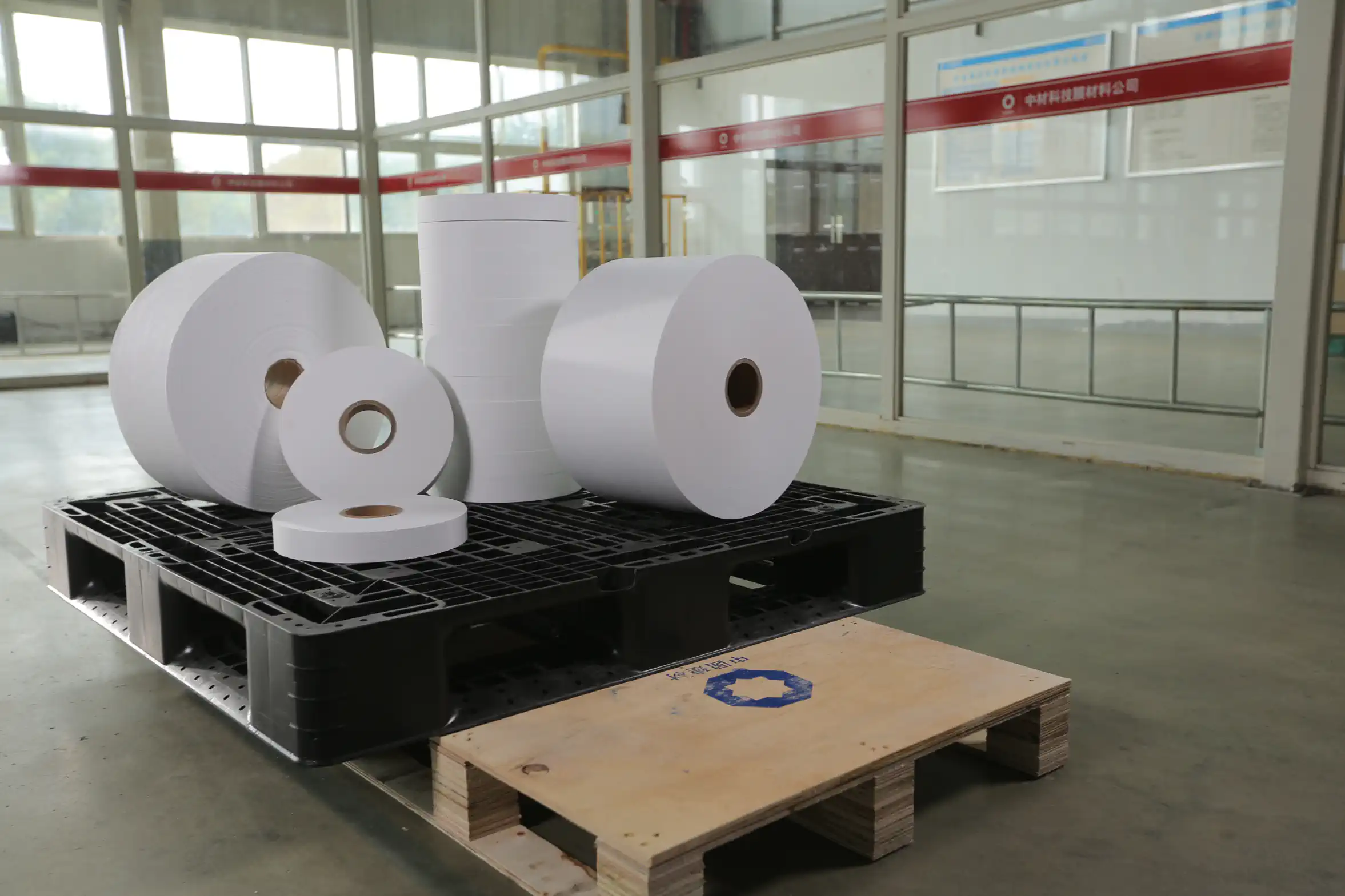
Wet-Laid Glass Fiber Media and Application Development
We use glass fiber web formation and a controlled binder system to develop the media structure. Fiber distribution, formation and bonding are reviewed together because capture performance and converting behavior depend on more than a single efficiency figure.
Our in-house media production and filtration laboratory support laboratory trials, pilot evaluation and batch manufacture. Raw-material checks cover glass fibers, binders and additives, while application development connects material properties with the intended filter construction.
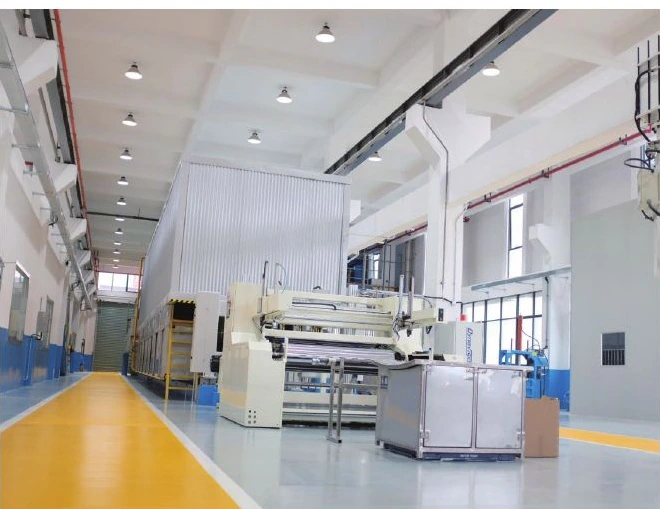
Development Sequence
We can provide media test reports and consistency documentation to support the customer’s qualification and change-control work. The scope is the supplied media and agreed tests; installation qualification and room performance are assessed in the complete project.
Choose the Grade Around the Filter Design
| Decision | What to compare | Product-specific starting point |
|---|---|---|
| A 0.3 μm capture target is specified | Compare values at the same face velocity | CFH7463PH and CFH7663PH share the 5.3 cm/s efficiency-test condition. |
| The project requires MPPS data | Use an MPPS result at the specified test velocity | CFU9263 specifies ≥99.999% at MPPS and 2.5 cm/s. |
| The fan has limited static-pressure allowance | Review the complete filter’s pressure drop at design airflow | Media pressure-drop limits are ≤330, ≤390 and ≤380 Pa respectively, each at 5.3 cm/s. |
| Pleat tips crack or the pack distorts | Check handling, fold geometry, bonding and supports | All three grades provide the same specified strength and stiffness ranges for initial trial planning. |
| Qualification requires repeatable records | Agree model, lot, test conditions and acceptance fields | Our media reports and consistency documentation can support the materials portion of the review. |
CFU9263 has a lower stated pressure-drop limit than CFH7663PH, but their efficiency values use different test velocities and particle-size definitions. These data do not establish a universal performance ranking.
Air Filtration for Healthcare and Pharmaceutical Environments
Hospital ventilation
Our three grades can be evaluated for filter development serving operating departments, critical-care areas, hospital pharmacies and laboratories. Selection follows the ventilation design, required finished-filter performance and maintenance conditions.
Pharmaceutical clean air
PH grades provide 0.3 μm specifications, while CFU9263 provides an MPPS option for terminal-filter development. Cleanroom classification depends on the complete air system, installation, operation and qualification programme.
Controlled laboratory environments
Media selection should account for the required capture test, filter integrity and exposure conditions. Containment and decontamination requirements are assessed at equipment and facility level.
Medical Air Filter Paper Questions
What does “medical filter paper” refer to here?
How do I choose between CFH7463PH and CFH7663PH?
Why does CFU9263 use an MPPS test?
Do these efficiency values establish a HEPA or ULPA filter class?
Can you support pharmaceutical qualification documentation?
Can these grades be used at 250°C or with repeated disinfectant exposure?
Does water resistance or loss on ignition establish a safety certification?
Discuss Medical Air Filter Paper for Your Project
Share the target media test, finished-filter design and intended operating conditions. We can review a PH or CFU grade and the supporting material documentation.
Contact ClearFilter
- Annie.chen@clearfilterpro.com
- +86 13538992575
- 30 Andeli, WestYuhua Road, Nanjing