
Gas Turbine Filter Media Manufacturer for Air Intake Filtration
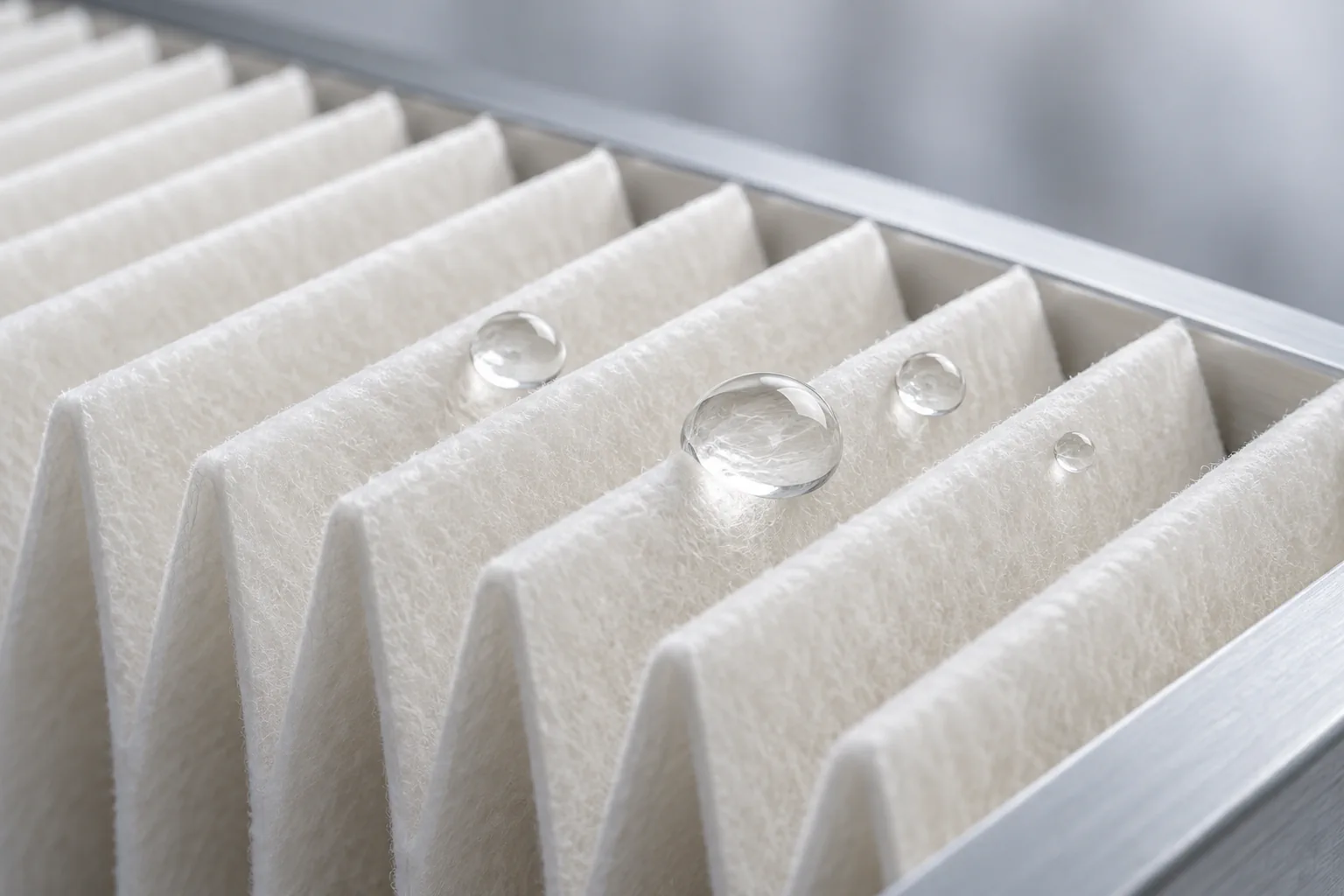
We manufacture glass fiber filter media for gas turbine and compressor air intake filters. Our CFA SS, CFE SS and CFH SS series offer ten grades with defined efficiency, pressure drop and water resistance, supported by consistent mechanical specifications for filter production.
Media Grades for Staged Intake Filtration
Efficiency is specified at 0.3 μm and 5.3 cm/s using TSI 8130A. Pressure drop is specified at 5.3 cm/s. Stage suitability depends on the complete filter and intake system.
CFA SS Series
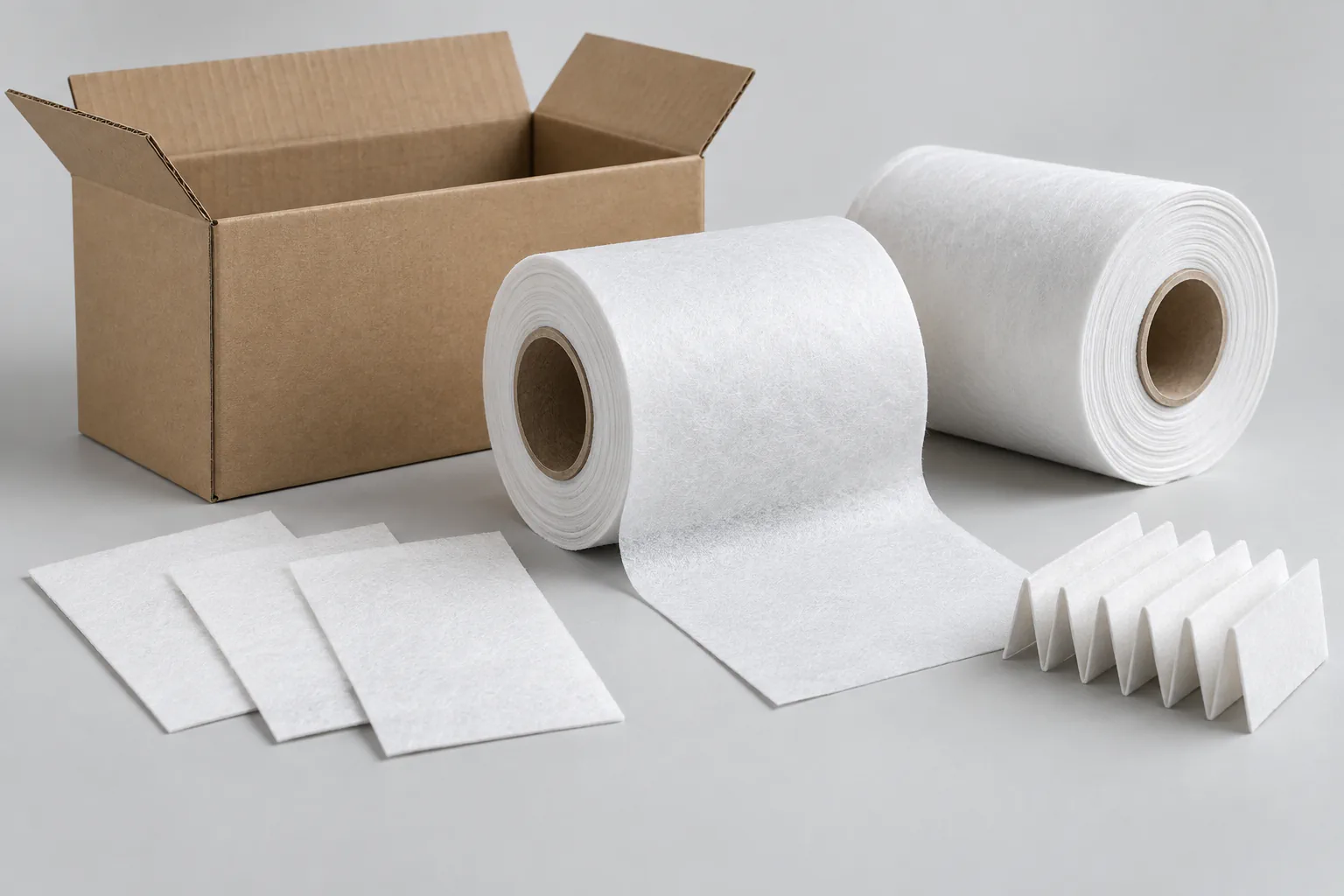
Models: CFA0263SS, CFA0463SS, CFA1663SS and CFA1863SS.
Specified efficiency thresholds range from ≥20% to ≥80%, with pressure-drop limits from ≤15 to ≤75 Pa. Water resistance is ≥500 or ≥600 mmH₂O by model. Evaluate CFA SS grades for lower-resistance filtration stages and upstream load management within the approved intake design.
Discuss CFA SS Media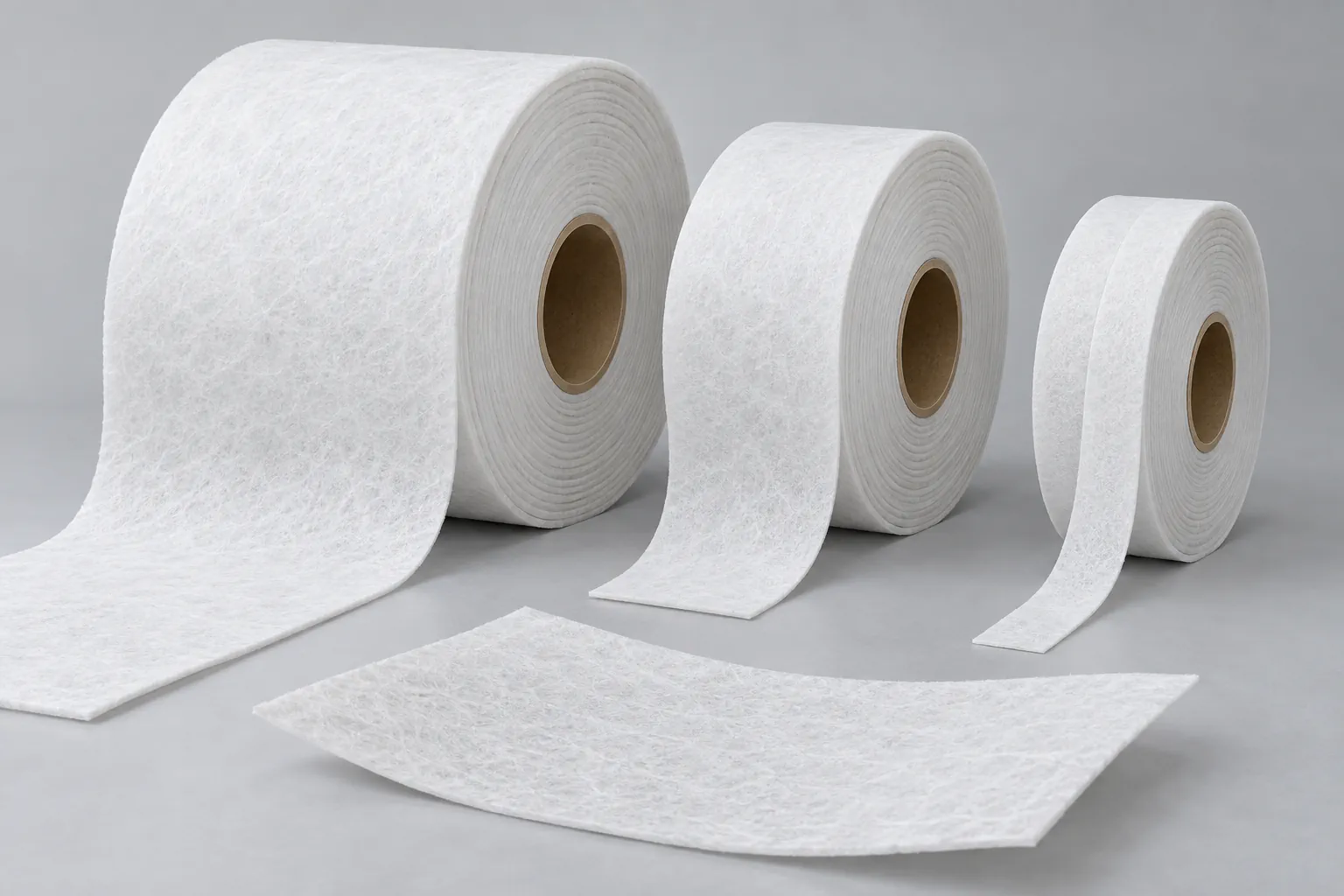
CFE SS Series
Models: CFE3263SS, CFE3663SS, CFE5663SS and CFE5863SS.
Specified efficiency thresholds range from ≥94% to ≥99.9%, with pressure-drop limits from ≤120 to ≤245 Pa. Water resistance is ≥600 mmH₂O for CFE3263SS and ≥800 mmH₂O for the other three grades. Use the model data to compare finer particle capture against resistance and moisture requirements.
Discuss CFE SS Media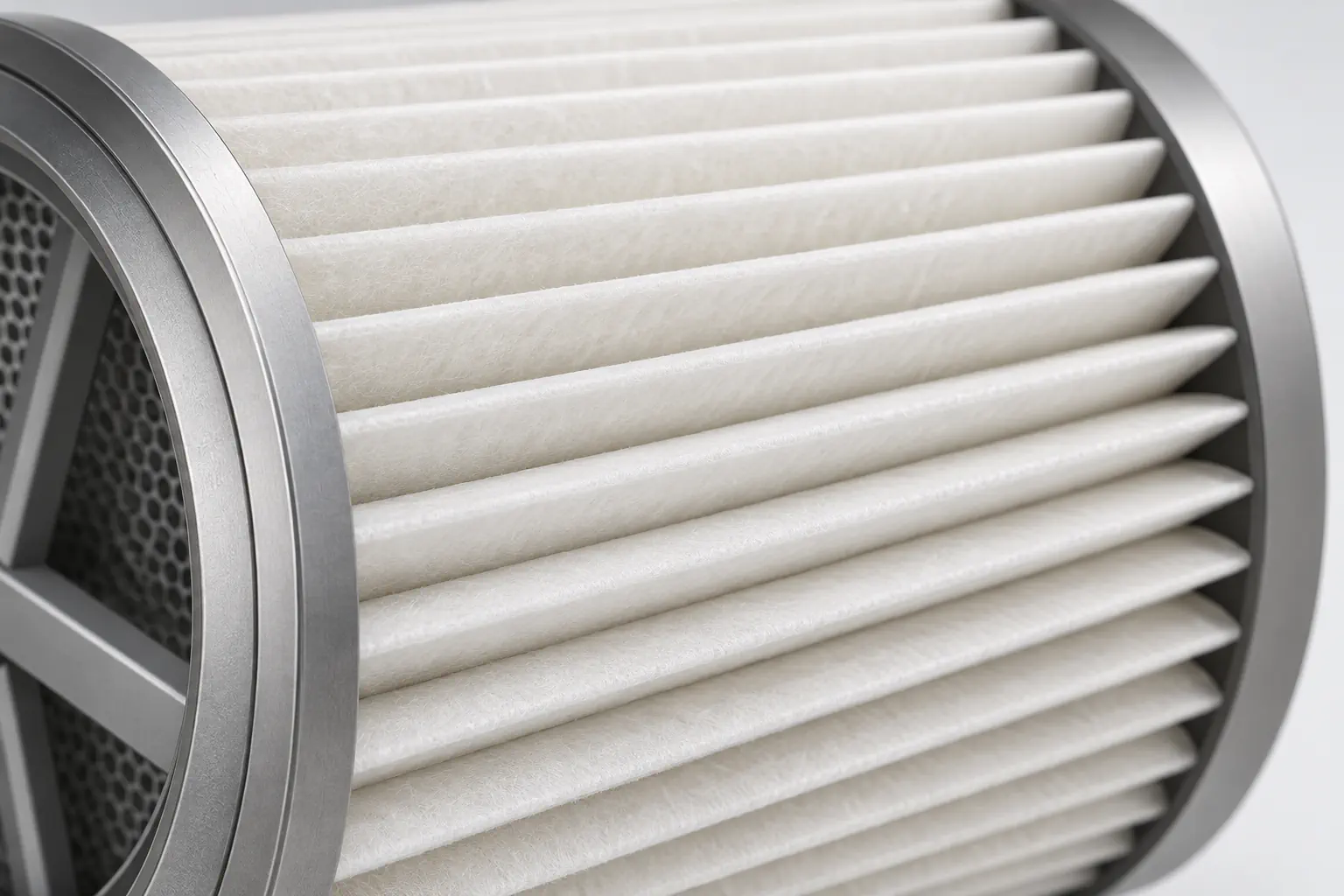
CFH SS Series
Models: CFH7263SS and CFH7463SS.
These grades specify ≥99.97% and ≥99.985% efficiency respectively, with pressure-drop limits of ≤290 and ≤320 Pa. Both specify water resistance of ≥800 mmH₂O. They provide high-capture media options for final-stage filter development where the system design requires them.
Discuss CFH SS MediaGas Turbine Filter Media Specifications
| Model | Thickness at 100 kPa (mm) | Basis weight (g/m²) | Efficiency at 0.3 μm (%) | Pressure drop (Pa) | Tensile MD (kN/m) | Tensile CD (kN/m) | Gurley stiffness MD (mg) | Water resistance (mmH₂O) | Loss on ignition (%) |
|---|---|---|---|---|---|---|---|---|---|
| CFA0263SS | 0.37±0.03 | 72±3 | ≥20 | ≤15 | 1.50 | 0.60 | ≥1000 | ≥500 | 10 |
| CFA0463SS | 0.37±0.03 | 72±3 | ≥50 | ≤35 | 1.50 | 0.60 | ≥1000 | ≥500 | 10 |
| CFA1663SS | 0.36±0.03 | 72±3 | ≥60 | ≤50 | 1.50 | 0.60 | ≥1000 | ≥600 | 10 |
| CFA1863SS | 0.36±0.03 | 72±3 | ≥80 | ≤75 | 1.50 | 0.60 | ≥1000 | ≥600 | 10 |
| CFE3263SS | 0.34±0.03 | 72±3 | ≥94 | ≤120 | 1.50 | 0.60 | ≥1000 | ≥600 | 10 |
| CFE3663SS | 0.34±0.03 | 72±3 | ≥98 | ≤160 | 1.50 | 0.60 | ≥1000 | ≥800 | 10 |
| CFE5663SS | 0.33±0.03 | 72±3 | ≥99.5 | ≤220 | 1.50 | 0.60 | ≥1000 | ≥800 | 10 |
| CFE5863SS | 0.33±0.03 | 75±3 | ≥99.9 | ≤245 | 1.50 | 0.60 | ≥950 | ≥800 | 10 |
| CFH7263SS | 0.33±0.03 | 75±3 | ≥99.97 | ≤290 | 1.50 | 0.60 | ≥950 | ≥800 | 8 |
| CFH7463SS | 0.33±0.03 | 75±3 | ≥99.985 | ≤320 | 1.50 | 0.60 | ≥950 | ≥800 | 8 |
Efficiency and pressure-drop values use TSI 8130A at a face velocity of 5.3 cm/s; the efficiency specification is stated at 0.3 μm. MD is machine direction and CD is cross direction. The 100 kPa condition applies to thickness measurement, not the operating pressure of the finished filter.

Filter Media Manufacturing and Test Support
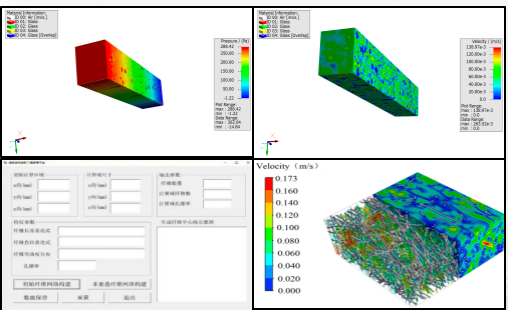
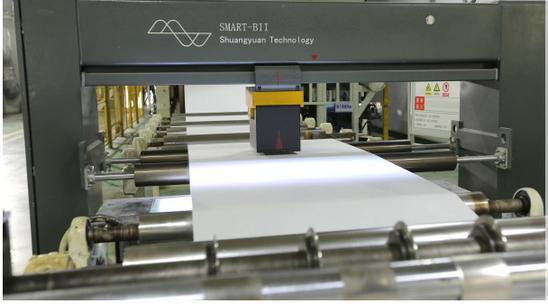
ClearFilter combines an in-house filter media production line with a professional filtration R&D laboratory. The team can evaluate media properties, microstructure and filtration performance, and can coordinate laboratory trials, pilot evaluation and batch production for application-specific development.
Incoming glass fiber, binder and additive checks
Process and thickness monitoring
Media property and filtration testing
Batch outgoing test report or COA for agreed inspection items
Define the required test method, acceptance values and report fields during technical review so that repeat orders can be compared on the same basis.
Balance Capture, Resistance and Moisture Exposure
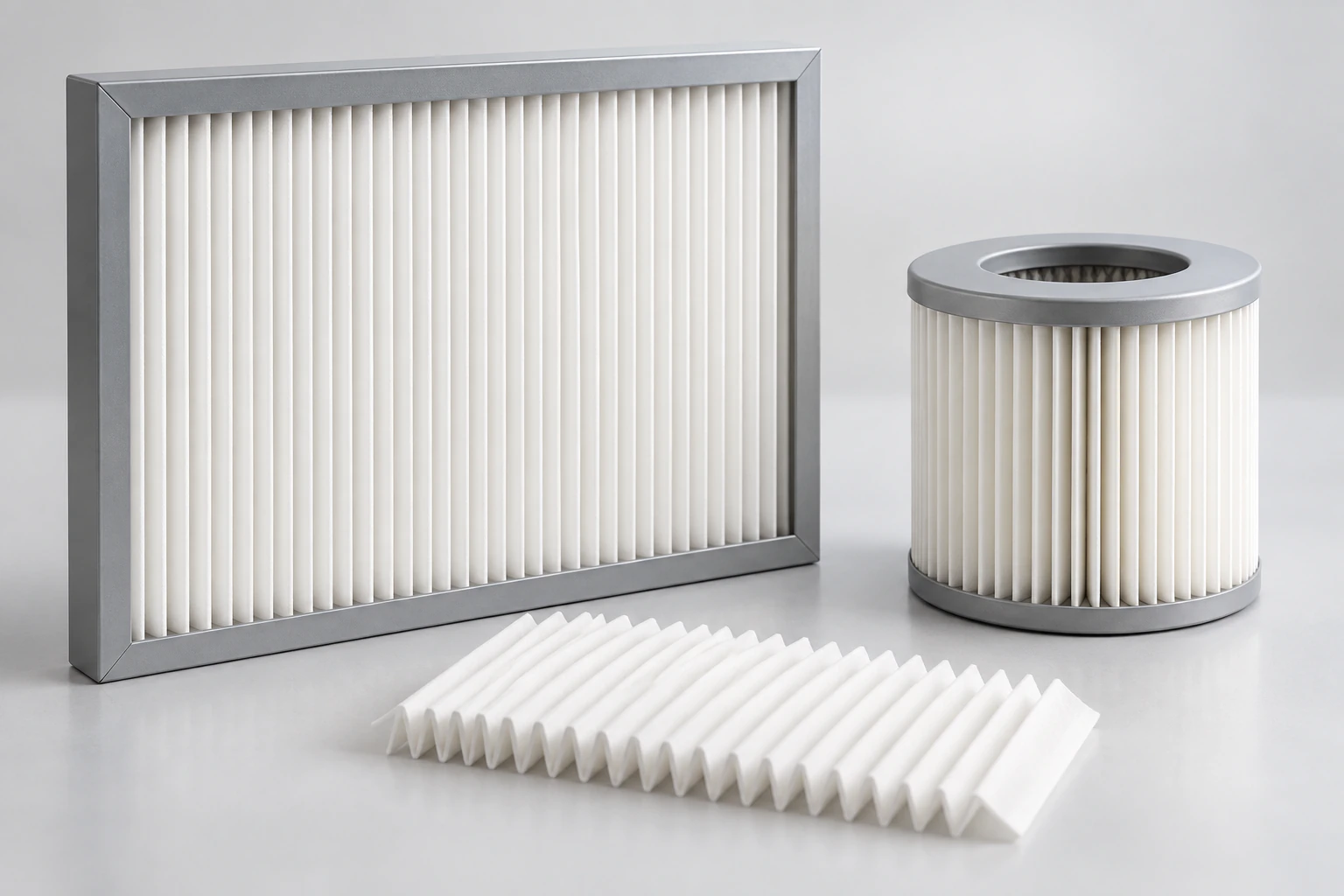
Select against the required particle-control performance and total intake-pressure allowance. Filter area, pleat design, weather protection and contamination loading determine how the media behaves in the installed system.
Review My Intake Conditions| Selection priority | Grades to examine | Defined trade-off |
|---|---|---|
| Lower initial media resistance | CFA0263SS to CFA1863SS | Increasing capture thresholds across CFA are paired with pressure-drop limits of 15, 35, 50 and 75 Pa. |
| Finer capture with water-resistance options | CFE3263SS to CFE5863SS | CFE3263SS specifies ≥600 mmH₂O; the remaining CFE grades specify ≥800 mmH₂O, with higher resistance limits. |
| High particle-capture targets | CFH7263SS and CFH7463SS | The two grades share physical properties and ≥800 mmH₂O water resistance, with different efficiency and resistance limits. |
Strength and Media Structure for Intake Filter Production
Mechanical Properties Across All Ten Grades
Every SS model lists MD tensile strength of 1.50 kN/m and CD tensile strength of 0.60 kN/m. Gurley stiffness is specified at ≥1000 mg for CFA and the first three CFE grades, and ≥950 mg for CFE5863SS and CFH. These values provide a defined basis for converting and pleat-support evaluation.
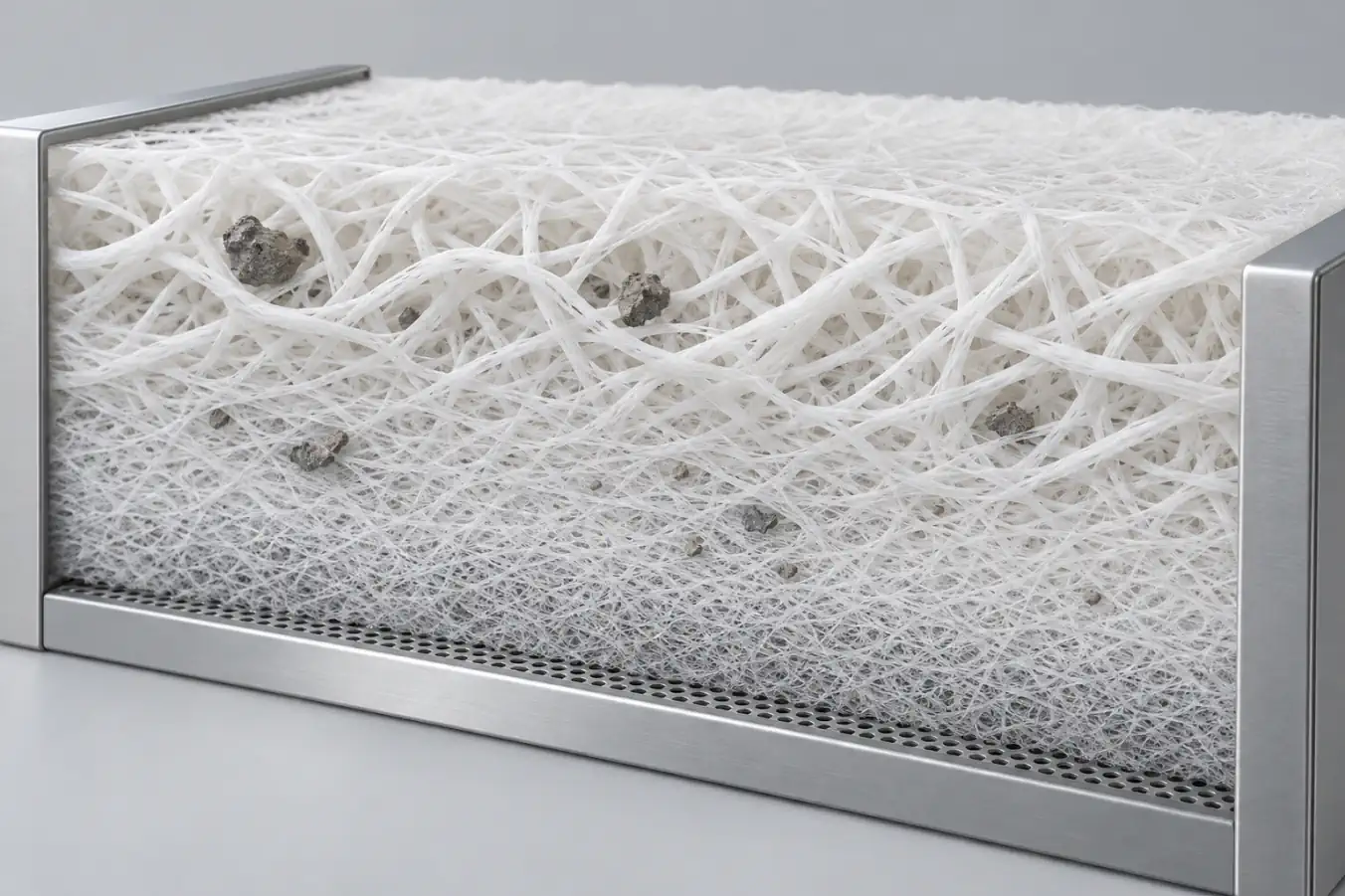
Gradient Depth Construction
We use a gradient media structure to distribute particle capture through the material. Web formation and bonding are developed around the filtration requirement, with performance evaluated together with the intended filter construction.
Model-Specific Water Resistance
The range offers ≥500, ≥600 and ≥800 mmH₂O water-resistance specifications. This makes moisture exposure a measurable material-selection criterion alongside capture performance and pressure drop.
Controlled Thin Media Formats
Specified thicknesses range from 0.33±0.03 to 0.37±0.03 mm, with basis weights of 72±3 or 75±3 g/m². These dimensions support comparison for compact pleated designs without assuming a finished-filter flow rating.
Evaluate the Media Against Your Site Conditions
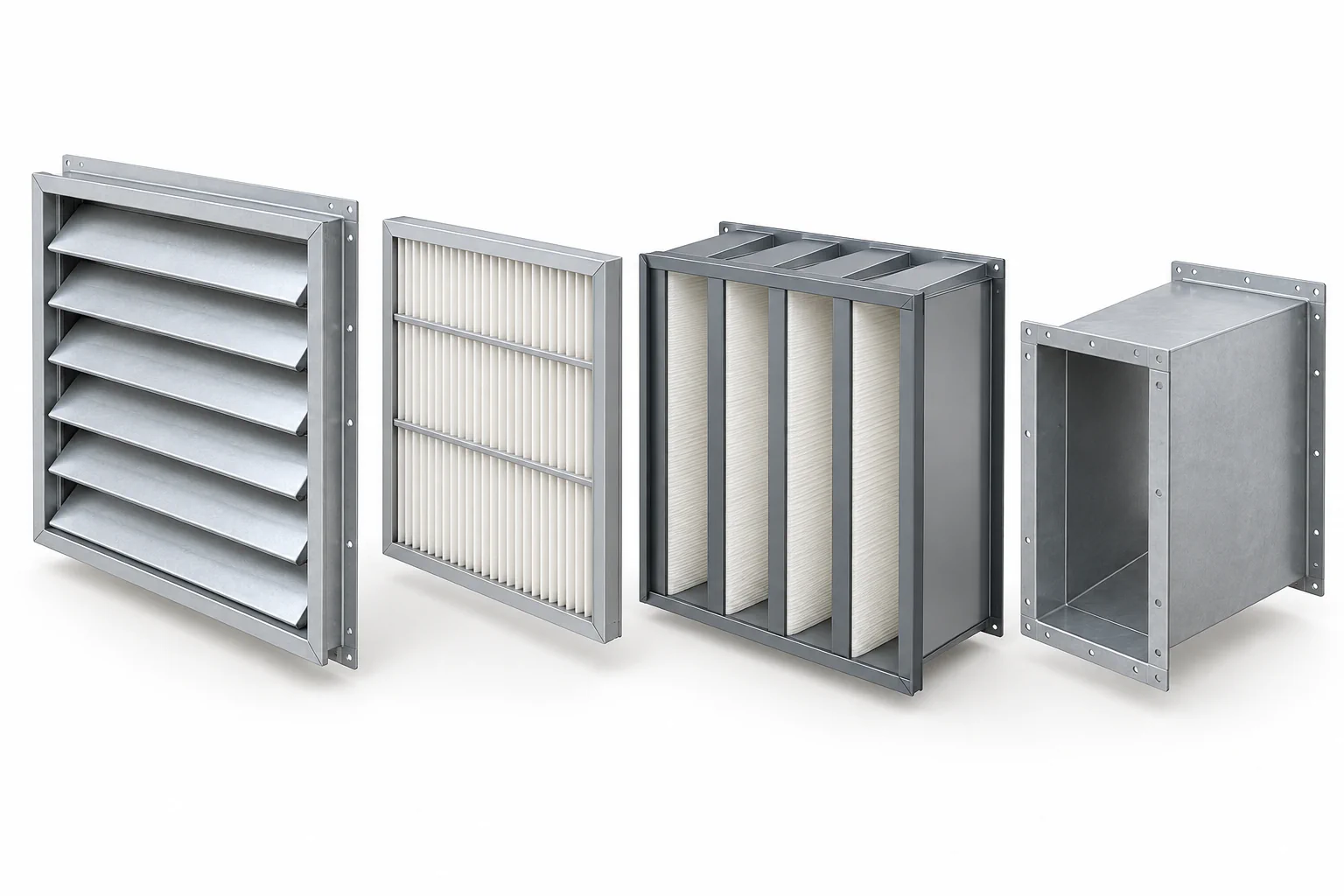
Conceptual intake stages. The final arrangement is determined by the system design.
| Operating environment | Main selection concern | Starting points in our range |
|---|---|---|
| Desert and dry, dusty sites | Contamination loading, dust distribution and total pressure drop | Evaluate CFA SS for upstream duty and CFE/CFH SS for downstream particle control according to the turbine requirement. |
| Coastal and humid power stations | Moisture, salt aerosol and wet-condition pressure behavior | Compare CFE3263SS at ≥600 mmH₂O with CFE3663SS and higher-capture SS grades at ≥800 mmH₂O. |
| Offshore platforms | Salt exposure, access constraints and final-stage integrity | CFH7263SS and CFH7463SS are high-capture candidates; validate wet and salt performance in the assembled filter. |
| Urban industrial sites | Fine dust, soot and mixed particulate contamination | CFE SS and CFH SS provide finer-capture options after upstream loading control. |
| Rainy inland sites | Moisture combined with deposited dust | Review the CFE water-resistance options together with drainage, weather protection and loaded-filter behavior. |
A media water-resistance value does not measure salt-removal efficiency or prove weatherproof performance of an assembled filter. Evaluate the selected construction under the site’s moisture and aerosol conditions.
Address the Causes of Intake Filter Mismatch
Rising pressure drop
Dust loading and moisture can change filter behavior during operation. Our grade table establishes the initial material comparison; loaded-filter evaluation helps determine the final choice and maintenance approach.
Converting damage
Handling tension, pleat geometry and support design can affect media integrity. Use the shared SS tensile values and model-specific stiffness with manufacturing trials before releasing the filter design.
A specification based only on efficiency
A high percentage omits important operating information. Our model comparison brings efficiency, resistance, water resistance and mechanical properties into the same selection process.
In-House Media Manufacturing and Filtration R&D
We manufacture filter media and support application-specific development from laboratory trials through pilot evaluation and batch production. Raw-material controls include checks on glass fibers, binders and additives.
Our filtration laboratory supports material-property evaluation, microstructure analysis and filter-performance development. The engineering discussion connects the SS grade, converting process and intended intake-filter construction.
Samples and small trial orders are available for customer evaluation. We can agree the test conditions and acceptance criteria for the media before the project moves to repeat production.
Gas Turbine Filter Media Selection Questions
Should every site use the highest-efficiency grade?
Can I use the listed media pressure drop as the intake-system pressure drop?
Does ≥800 mmH₂O establish salt protection or rain resistance?
Are these media approved for pulse-jet cleaning?
What testing should be considered for a gas turbine intake filter?
Does the listed loss on ignition prove flame retardancy?
Can you provide samples or develop a custom grade?
Related Air Filtration Capabilities
Direct Contact
Annie.chen@clearfilterpro.com
+86 13538992575
30 Andeli, WestYuhua Road, Nanjing
Discuss Gas Turbine Intake Filter Media
Tell us about the site environment, target filtration performance and filter design. We can help evaluate an SS grade or define a custom media development project.