
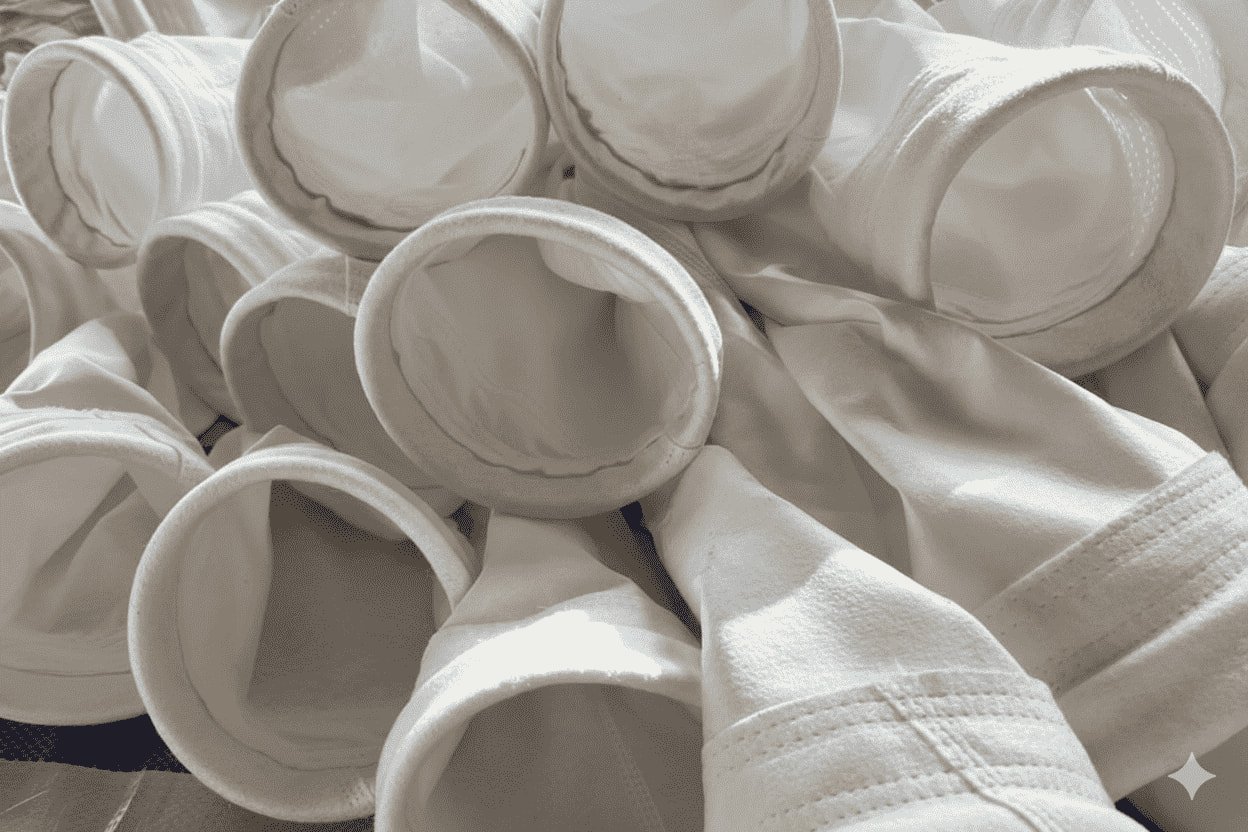
PTFE Filter Bag is special in industrial filtration. It catches very tiny dust and removes particles as small as 0.3 microns. It does this with over 99.8% efficiency. Many industries use this technology to lower harmful emissions. It helps keep the air cleaner. PTFE membrane filter bags last longer than standard options. The table below shows how durable they are.
Filter Type | Average Service Life (Years) |
|---|---|
PTFE Membrane Filter Bags | 4-6 |
Standard Filter Bags | 2-4 |
These filters can handle strong chemicals, acids, and high heat. Their performance stays good in tough conditions. PTFE membrane filter bags help factories stay safe and work well.
Key Takeaways
PTFE membrane filter bags catch very small particles. They work with over 99.8% efficiency. This helps keep air clean in factories and plants.
These filter bags last longer than regular ones. They can work for 4-6 years. Regular bags only last 2-4 years. This saves time and money because you replace them less often.
PTFE filters need less care because they have a non-stick surface. This means you clean them less often. It also helps keep airflow working well.
Using PTFE membrane filter bags can save a lot of energy. Their smooth surface makes cleaning easier. It also lowers the pressure in the system.
These filters are very strong. They can handle high heat and tough chemicals. This makes them good for many types of factories.
What Are the Basic Functions of a Standard Filter Bag?
A standard filter bag primarily functions to capture and retain unwanted particles from liquids or gases, ensuring cleaner output. It efficiently separates particulates by trapping them within its porous material, which allows the fluid to pass through while retaining contaminants.

Filtration Process
Standard filter bags help collect dust in factories. They catch dust and tiny bits from the air. This keeps work areas clean and safe. These bags are made from materials like polypropylene, polyester, Nomex®, and Teflon®. Each material can trap different sizes of particles. For example:
Standard felt filter bags catch particles from 1 to 200 microns.
Standard mesh filter bags use special threads and trap 1 to 1500 micron particles.
High efficiency filter bags work for particles from 1 micron up to 100 microns.
Factories pick the right filter bag for their dust and particle size. Cleaning is important too. Different filter bags use different ways to clean:
Type of Filter Bag | Cleaning Mechanism |
|---|---|
Pulse-Jet Bags | Cleaned with a quick blast of air while working. |
Reverse-Air Bags | Cleaned by blowing air backwards for a gentle clean. |
Shaker Bags | Shaken to drop dust, good for simple designs. |
These cleaning methods help the bags last longer. They also keep the air moving well.
Common Limitations
Standard filter bags have some problems. They may not catch very tiny particles as well as cartridge filters. Many standard bags need more room in the dust collector. This gives enough space for filtering. Bigger bags can make it harder for air to move through. The system then uses more energy. Over time, these things can cost more money and need more fixing.
Many factories now want better options like PTFE Filter Bags. These new bags work better and last longer. They are a smart choice for tough jobs.
How Does PTFE Membrane Technology Improve Filter Bag Performance?
PTFE membrane technology enhances filter bag performance by providing exceptional filtration efficiency and durability. The PTFE (Polytetrafluoroethylene) membrane acts as a barrier to dust particles, allowing only clean air to pass through while maintaining high filtration efficiency and reducing emissions. It also offers chemical resistance and thermal stability, extending the lifespan of filter bags.
Membrane Structure
PTFE membrane filter bags are special because of their design. These bags have a thin PTFE membrane on top of a base filter. The membrane stops dust and particles from going inside the filter. It keeps them on the surface. The membrane has tiny holes, from 0.1 to 5 microns wide. This helps the filter catch very small particles like PM2.5 right away.
The table below shows how PTFE membrane filter bags are different from standard filter bags:
Feature | PTFE Membrane Filter Bags | Standard Filter Bags |
|---|---|---|
Material | Microporous PTFE membrane | Polyester or fiberglass |
Filtration Mechanism | Surface filtration | Depth filtration |
Filtration Efficiency | >99% for sub-micron particles | Lower efficiency |
Cleaning | Easy pulse-jet cleaning | More frequent cleaning |
Durability | Lasts 2-3 times longer | Shorter lifespan |
Cost-Effectiveness | Reusable, lowers costs | Higher maintenance costs |
The PTFE membrane is smooth and does not let dust stick. This makes cleaning simple and helps the filter last longer.
Filtration Mechanism
A PTFE Filter Bag uses surface filtration to work. The membrane makes a dustcake that holds particles on top. Standard filters need a thick dust layer to work well. PTFE membranes work with only a little dust. They can trap more than 99.99% of even tiny particles.
The ePTFE membrane is made by stretching and heating PTFE. This makes it strong and full of tiny holes. It traps gases, pollution, and fine dust. This helps keep the air clean and helps factories follow rules. The membrane’s surface does not let water or gases pass through. This makes the filter work better.
Tip: PTFE membranes have a non-stick surface. Less dust stays on the filter. This means cleaning needs less energy. It can save over 30% energy compared to regular filters.
PTFE membrane filter bags can handle high heat and strong chemicals. These features make them a good choice for factories that need strong and safe dust control.
What Are the Key Benefits of PTFE Membrane Filter Bags?
PTFE membrane filter bags offer superior filtration efficiency and chemical resistance, making them ideal for industrial applications. Their ability to withstand high temperatures and corrosive environments ensures longevity and consistent performance, reducing maintenance costs and downtime.

High Filtration Efficiency
PTFE Filter Bag technology works really well. These filter bags catch tiny particles smaller than 1 micron. They do this almost perfectly. Most sizes of particles get trapped every time. For particles between 0.3 and 0.5 microns, they catch 99.98%. This helps factories control dust better than before.
PTFE membrane filters catch very fine dust.
They help keep air clean at work.
They help factories follow strict rules for emissions.
Extended Service Life
PTFE Filter Bag products last much longer than regular filter bags. Their strong build can handle heat and chemicals. In hot places, these filter bags keep working when others stop. Workers do not need to replace them often. This saves time and money. Longer life means fewer stops and less waste.
Low Maintenance Needs
Factories save a lot on maintenance with PTFE membrane filter bags. These filter bags need less cleaning and fewer changes. The smooth surface stops dust from sticking. Cleaning is easier. Less pulsing means less damage to the bags and system.
Benefit | Description |
|---|---|
Longer bag life | PTFE membrane bags last up to twice as long as regular bags, so change-outs cost less. |
Reduced need for pulsing | Less pulsing means less damage to bags and system parts. |
Lower maintenance costs | Fewer changes and less downtime save money on maintenance. |
Improved airflow | Air moves better because there is less clogging, so the system works well and costs less. |
Labor savings on change-outs | Fewer bag changes mean workers spend less time replacing them. |
Reduced plant downtime | Fewer problems with dust collectors mean the factory runs more often. |
PTFE membrane filter bags work at top efficiency right away. Regular filters need a thick dust layer to work best. PTFE membrane filters keep pressure low and air moving well.
Energy Savings
PTFE Filter Bag systems help factories use less energy. Their smooth surface makes cleaning easy and keeps pressure low. The system uses less energy and needs less air for cleaning. Factories can pay less for energy and help the environment.
Environmental Impact
PTFE membrane filter bags help the environment by lowering emissions and waste. They remove more dust from the air, even when it is hot. This helps factories follow tough rules and keeps workers safer.
Material Type | Temperature (°C) | Catalyst Loading (g/m²) | |
|---|---|---|---|
Base PTFE Material | 99.61 | 140 | 250 |
VMo/CeTi-PTFE Composite | 99.98 | 140 | 250 |
Base PTFE Material | 99.55 | 220 | 500 |
VMo/CeTi-PTFE Composite | 99.97 | 220 | 500 |
VMo/CeTi-PTFE Composite | 99.975 | 250 | 250 |
VMo/CeTi-PTFE Composite | 99.981 | 500 | 500 |
PTFE membrane filter bags make air cleaner at work.
They help industries follow emission rules.
They help keep plants clean and lower city air pollution.
Applications

Industrial Uses
PTFE membrane filter bags are used in many industries. Cement plants use them to control dust and keep air clean. Steel factories use them because they work in high heat and with strong chemicals. Construction sites need these filters to catch small dust and protect workers. Power plants use them to lower emissions and follow safety rules. Mining and metallurgy also use these filters for dust control.
Other places use PTFE membrane filter bags too:
Metalworking and foundries
Woodworking shops
Food processing plants
Agriculture facilities
Chemical and pharmaceutical manufacturing
Automotive and aerospace production
Plastics and rubber processing
These filters help each place follow air quality rules and keep workers safe.
PTFE membrane filter bags can handle heat up to 260°C (500°F). They do not get damaged by any chemicals, even acids or alkalis. This makes them good for tough jobs.
Selection Tips
Picking the right PTFE membrane filter bag means looking at a few things. The table below shows what to think about:
Factor | Description |
|---|---|
Filtration Efficiency | PTFE filter bags catch 99.9% of tiny dust, so air stays clean. |
Permeability | High permeability lets air move well and saves energy. |
Differential Pressure | Low pressure helps the filter work better and protects equipment. |
Micron Ratings | Lower ratings mean the filter catches smaller dust, so air is cleaner. |
Service Life | Good materials and correct use make filters last longer and cost less. |
Energy Consumption | Filters that work well use less energy and save money. |
Workers should check the heat and chemicals in their workplace. PTFE membrane filter bags work well in hot and harsh places. Checking filters often helps find damage early. Cleaning gently and backwashing keeps the filter working well. Workers should use cleaners that are safe for PTFE.
Good installation and picking the right material stop problems like rips or holes. Regular care helps the filters last longer and keeps everyone safe.
PTFE membrane filter bags work very well in factories. They are good at catching dust and tiny particles. These bags last a long time and do not get damaged by heat or chemicals. This makes them a smart pick for many factories. The table below shows how PTFE filter bags are better than standard ones:
Metric | PTFE Membrane Filter Bags | Standard Filter Bags |
|---|---|---|
Filtration Efficiency | Lower | |
Chemical Resistance | High | Moderate |
Thermal Stability | High | Low |
Durability | Longer service life | Shorter service life |
Non-Stick Properties | Yes | No |
Factories that use PTFE filter bags spend less money fixing and cleaning them. These filters help factories follow air rules and keep workers safe.
FAQ
What makes PTFE membrane filter bags different from regular filter bags?
PTFE membrane filter bags have a thin, non-stick layer. This layer keeps fine dust on the outside. Regular filter bags use depth filtration and can miss small particles.
How long do PTFE membrane filter bags usually last?
Most PTFE membrane filter bags last 4 to 6 years. Standard filter bags need changing after 2 to 4 years. PTFE bags can handle heat and chemicals, so they last longer.
Can PTFE membrane filter bags handle high temperatures?
PTFE membrane filter bags work in heat up to 260°C (500°F). They do not break down in hot places. Many industries pick them because of this.
Are PTFE membrane filter bags safe for food or pharmaceutical use?
PTFE membrane filter bags follow strict safety rules. Many food and medicine plants use them to keep air clean. The non-stick layer also helps stop contamination.